
Reviewed · THE SIMIENS
3 Day Simien Mountains Tours
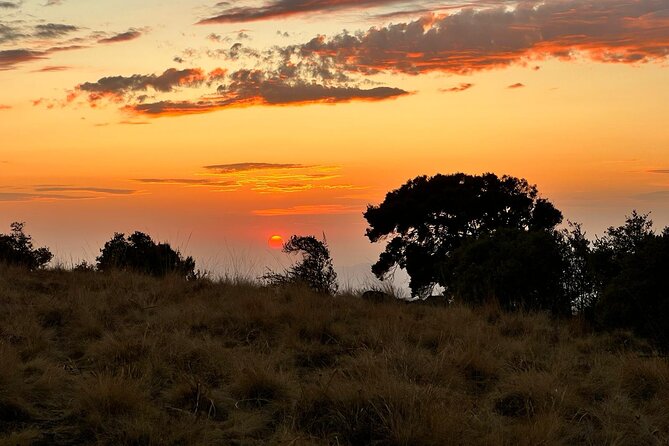
The Simien Mountains deliver the kind of scenery that makes you stop talking. You walk along high ridges above huge cliffs, pass cultivated fields and heather forests, and look down toward Jinbar Falls as it drops hundreds of meters into the gorge. The star attraction is the wild, high-altitude scenery, with Gelada baboons often appearing in large foraging groups.
I like the way this trip mixes serious mountain views with ordinary Ethiopian life. A coffee ceremony in Gich gives the trek a human touch, while sightings of Gelada baboons and lammergeyers add real wildlife interest. The included guide, scout, mule support, meals, camping gear, and park fees also make the $350 price easier to justify.
The main drawback is the altitude. Much of the route sits above 3,200 meters, and the daily walks last five to seven hours. Also, check the pickup details carefully: the itinerary describes collection from a hotel or airport in Gonder, while the meeting point is listed on Cameroon Street in Addis Ababa.
Key points at a glance
- Jinbar Falls viewpoint: Reach a dramatic escarpment lookout where the waterfall drops several hundred meters into the gorge.
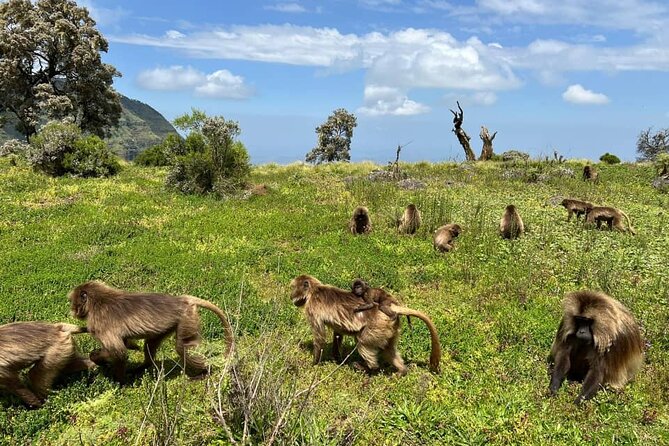
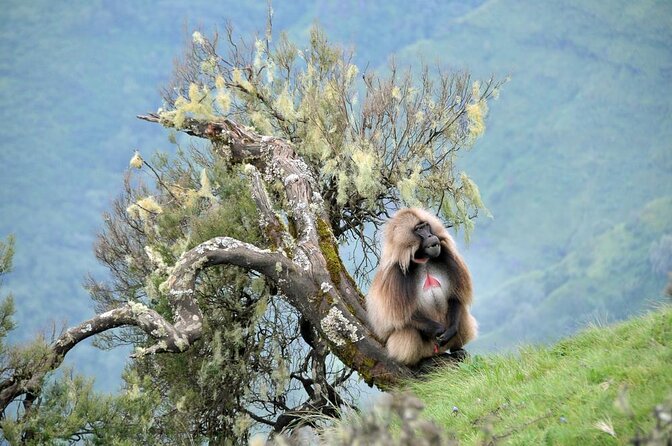
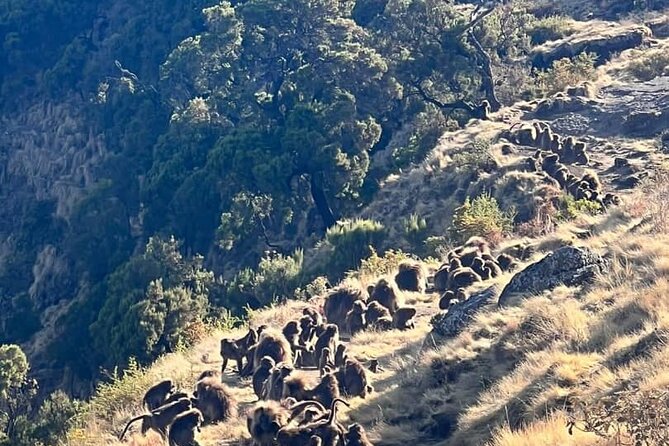
- Gelada baboons: Watch these distinctive Ethiopian monkeys forage in large groups across the highland grasslands.
- Three nights of mountain scenery in three days: Walk from Sankaber through Gich and onward to Imet Gogo, with camping each night.
- High-altitude hiking: Expect five to seven hours of walking per day, including steep sections and elevations above 3,200 meters.
- Local support included: A guide, park scout, mule and mule handler help carry camping and cooking equipment.
- Good package value: At $350 per person, the tour includes transport, park entry, meals, tents, mattresses, sleeping bags, and government taxes.
Why the Simien Mountains are worth the effort
The Simien Mountains National Park is a UNESCO-protected area in northern Ethiopia known for enormous escarpments, sharp peaks, deep valleys, and high plateaus. You are not simply walking from one scenic point to another. The route gives you changing views every day, from ridge-top panoramas to fields, forests, waterfalls, and isolated mountain villages.
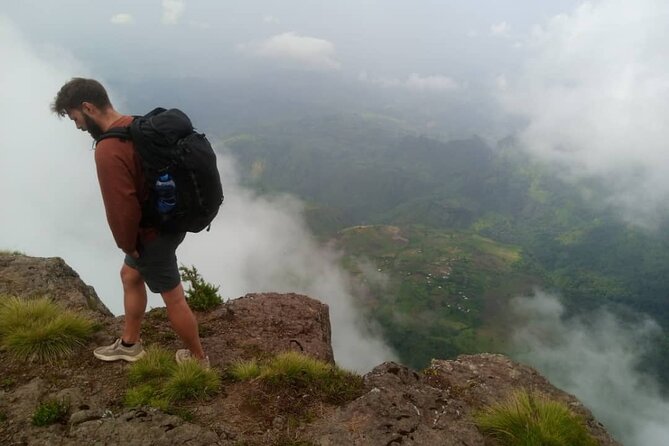
The setting has a grand scale. Cliffs rise and fall across the horizon, and the walking often takes place close to the edge of a broad escarpment. The comparison to Colorado’s Grand Canyon is understandable, though the Simien experience feels different because people still farm parts of the highlands and villages sit close to the trail.
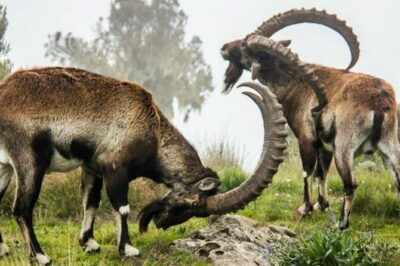
Wildlife is another reason to choose this trip. The park supports more than 20 large mammal species and more than 130 bird species. You might see the endemic Walia ibex, the Ethiopian wolf, the caracal, the lammergeyer, and the thick-billed raven. The Gelada baboon is the most realistic wildlife highlight on this three-day route, since the animals often gather in open groups and are easier to spot than shy predators.
The tour information also refers to Ras Dashen, Ethiopia’s highest point at 4,543 meters. That is important context, but you should not assume this three-day itinerary climbs Ras Dashen. The scheduled route focuses on Sankaber, Gich, Jinbar Falls, and Imet Gogo at 3,925 meters. If summiting Ras Dashen is your goal, ask the operator for a longer or different route before booking.
More Simien Mountains treks:
- 12 Days SIMIEN MOUNTAIN-LALIBELA-DANAKIL-TIGRAY CHURCHES
★ 5.0 · 45 reviews - Danakil Depression, Lalibela, Omo Valley and Simien Mountains
★ 5.0 · 23 reviews - Simien Mountains Trekking Adventure
★ 5.0 · 8 reviews
Day 1: From Gonder to Sankaber
The first day begins with a pickup around 9 a.m. and a roughly two-hour drive to Debark. The road to Debark is paved, and the trip is by air-conditioned 4×4 or minibus. Debark is where you sign in at park headquarters, meet the local guide and scout, and prepare to enter the mountains.
This administrative stop matters because the park scout is part of the support system for the trek. After registration, the vehicle continues toward Sankaber, the first camp, but you get out before camp for a three to four-hour acclimatization walk.
That first walk is not just a warm-up stroll. You are already at significant altitude, and the route includes a short but demanding climb. The best part comes early, when the ridge opens to views across the cliffs and valleys. You will likely spend plenty of time stopping for photographs, taking in the scale, and adjusting to thinner air.
A picnic lunch is included, which keeps the schedule simple. After the climb to Sankaber, fresh coffee, tea, and snacks are served at camp. That small ritual is especially welcome after a high-altitude walk and gives you a chance to slow down before dinner.
You spend the night camping at Sankaber. Tents, mattresses, and sleeping bags are provided, although bringing your own sleeping bag is recommended. The included equipment is useful for keeping luggage light, but you should still confirm what type and condition of gear will be available before departure.
Day 2: Gelada baboons and the Jinbar Falls escarpment
The second day covers about 12 kilometers and takes around five to six hours. The route passes through highland grasslands, heather forests, and cultivated fields before following the escarpment.
This variety makes the day feel more like a real mountain journey than a repeated viewpoint walk. The cultivated land reminds you that these mountains are not empty wilderness. The highland is also home to communities, and the trail brings you into contact with the working countryside rather than keeping you apart from it.
Gelada baboons are the day’s likely wildlife highlight. They forage in large groups, and their presence can turn a quiet stretch of trail into a memorable wildlife stop. Keep your distance and let the animals carry on with their routine. Their reddish chest markings and unusual faces make them one of Ethiopia’s most recognizable animals.
The route reaches a viewpoint over Jinbar Falls after some rock scrambling. This is one of the places where the tour’s moderate fitness requirement becomes clear. You are not described as doing technical climbing, but clambering over rocks at altitude is more tiring than the same movement at sea level.
The waterfall plunges several hundred meters into the abyss, so the viewpoint is likely to be one of the most dramatic moments of the three days. The setting rewards patience. Give yourself time to look beyond the falling water toward the cliffs and ridges around it.
At day’s end, the route passes through Gich village. A local coffee ceremony is arranged there, and this is more than a quick cup served from a flask. Coffee has an important social role in Ethiopia, and stopping in the village gives you a direct connection with local culture.
The second camp is close to Gich. You will have another night in a tent, with dinner included. Since the days are active and the nights are spent at altitude, a warm sleeping layer and a reliable sleeping bag matter more here than stylish trekking clothes.
Day 3: Imet Gogo and the return to Gonder
The final day is described as the most scenic part of the trek. You walk for roughly five to six hours, including a short detour to Imet Gogo, which rises to 3,925 meters.
Imet Gogo is the high point of this scheduled walking route and offers wide views in several directions. The altitude makes the detour feel demanding, but the payoff is a strong final mountain viewpoint without committing to the much longer Ras Dashen summit route.
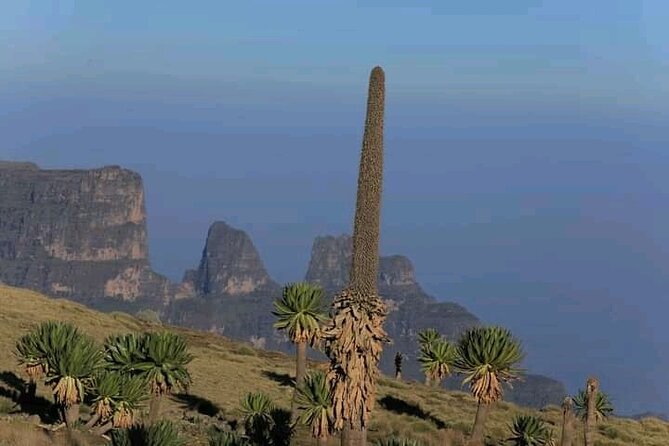
The Gich plateau is known for giant lobelia, a striking highland plant with tall, sculptural forms. You may also see lammergeyers circling in the sky and thick-billed ravens around the plateau. The lammergeyer, or bearded vulture, is especially impressive because of its broad wingspan, reported here at up to three meters.
After the mountain section, the route continues from Gich toward the southeast, across a deep gully toward Inatye. Lunch is included, then you leave the trail and meet the vehicle near Ambaras for the drive back to Gonder.
The day is listed as about eight hours in total, so the return transfer makes it a long finish. That timing is worth considering if you have a flight or another fixed appointment afterward. The tour ends back at the meeting point, but the supplied details contain two different location references: Gonder for the airport or hotel pickup, and Cameroon Street in Addis Ababa as the start and end point. Confirm the exact transport plan before paying.
A few more Addis Ababa trips to weigh up
- 3 Day Danakil Depression Ertale and Dallol Tours
★ 5.0 · 44 reviews - 3 Days Dankile Depression group Tours
★ 5.0 · 40 reviews - 2-Night 3-Day Danakil Depression Tour without Flights
★ 4.8 · 31 reviews - Trekking at Bale Mountains 3 Days
★ 5.0 · 28 reviews
What the $350 price includes
At $350 per person, this is a practical package for a three-day highland trek. You are paying for more than a guide and a park entrance ticket.
Included items are:
- Airport transfers and road transport by private minibus
- An air-conditioned vehicle
- Simien Mountains National Park entrance fees
- Local guides and park scouts
- Tents, mattresses, and sleeping bags
- A mule and mule handler for camping and cooking equipment
- Two breakfasts
- Two dinners
- Three lunches
- Government taxes
The transport is particularly useful because the walking route is far from the main urban base. Having a vehicle handle the Debark and Gonder connections also removes a major planning chore.
The mule support adds value in a less obvious way. You still need to carry your personal belongings, but the cooking materials and camping equipment do not all ride on your back. That is a meaningful benefit during long walks at altitude.
The food arrangement covers all three lunches and the two nights of dinner and breakfast. Personal spending, tips, souvenirs, and photo or video fees are not included. Set aside extra money for those costs, and ask about photography charges if you plan to use professional equipment.
Fitness, altitude, and what to pack
You should have a moderate level of physical fitness for this trek. The walking time ranges from three to seven hours, and the route includes climbs, rocky sections, and long stretches at high altitude.
Altitude is the main issue, not technical difficulty. Much of the route sits above 3,200 meters, with Imet Gogo reaching 3,925 meters. Even a fit person can feel slower, breathless, or tired at these elevations. Walk steadily, take the breaks offered, and do not treat the first day as a race.
Pack warm layers, sturdy walking shoes, sun protection, water, personal medication, and a headlamp. The supplied equipment includes a sleeping bag, but bringing your own is recommended. A warm sleeping bag can make a real difference during cold mountain nights.
You should also bring a small day bag for the walking hours. Keep your camera, water, extra layer, snacks, and rain protection close at hand. The mule support is for shared gear, not a reason to bring an oversized suitcase.
The group limit is listed inconsistently as a maximum of 10 and a maximum of 15 people. Ask for the confirmed group size. A small group will make it easier to match walking speed and spend time at wildlife and viewpoint stops.
Guide support and the feel of the trek
A local guide and scout accompany the mountain portion. One account of the trip describes a guide who spoke good English and made time for conversation, which is useful when you want more than directions between camps.
The support structure is one of the stronger features here. The guide helps with the route, the scout provides park support, and the mule handler moves the camping and cooking gear. You are not left to organize every practical detail while trying to enjoy the views.
The coffee stop at Gich is also important. It gives the trek a local rhythm. Instead of spending three days only looking at mountains, you pass through a village and take part in a familiar Ethiopian social custom.
The experience can feel personal if the group is small. A previous departure ended up with just one participant after two cancellations, which meant more direct conversation with the guide. That is not something you can count on, but it shows that group size may change.
Who should book this Simien Mountains tour?
I would choose this trip if you want a compact introduction to the Simien Mountains without arranging park entry, camping supplies, meals, transport, guides, and pack animals separately.
It suits you if:
- You want major viewpoints without a week-long expedition.
- You are comfortable hiking five to seven hours a day.
- You want to see Gelada baboons in their natural setting.
- You value local contact, especially the coffee ceremony in Gich.
- You prefer a supported trek with camping equipment provided.
- You are staying in or passing through Gonder.
It is less suitable if you want a relaxed sightseeing trip with short walks. It is also not the right choice if your main goal is reaching the summit of Ras Dashen, since the published three-day route goes to Imet Gogo instead.
The trip has received a top overall rating from three recorded evaluations, with the strongest praise focused on the scenery, organization, guide service, and family-friendly sense of adventure. Those qualities match what the itinerary actually offers: a well-supported mountain route with demanding walking and memorable views.
Should you book it?
Book this tour if you want the Simien Mountains’ cliffs, wildlife, waterfalls, and high plateaus in a tightly planned three-day package. The $350 price is fair because it covers park fees, transport, meals, camping equipment, guides, scouts, and mule support.
Before booking, confirm three things: the exact pickup city, the final group size, and the condition of the sleeping gear. If you are fit enough for high-altitude walking and understand that this is a real trek rather than a scenic drive, the route gives you a strong taste of one of Ethiopia’s most remarkable mountain regions.
FAQ
Where does the tour start?
The listed meeting point is Cameroon Street in Addis Ababa, Ethiopia, with a start time of 9 a.m. The itinerary also says pickup is available from a hotel or airport in Gonder, so confirm the exact starting location with the provider.
How long does the tour last?
The experience lasts approximately three days, with two nights of camping in the Simien Mountains and a return to Gonder on the third day.
How many hours will I hike each day?
Day one includes a three to four-hour acclimatization walk and takes about seven hours in total. Day two involves about five to six hours of hiking, and day three includes five to six hours of hiking within an approximately eight-hour day.
Is park entry included?
Yes. Simien Mountains National Park entrance fees are included in the tour price.
Are meals included?
Yes. The package includes two breakfasts, two dinners, and three lunches.
Is camping equipment provided?
Yes. Tents, mattresses, and sleeping bags are provided. You are recommended to bring your own sleeping bag.
What fitness level is required?
A moderate level of physical fitness is required. The route includes high-altitude walking, rocky sections, climbs, and several days of five or more hours on foot.
Can I cancel for a full refund?
Yes, if you cancel at least 24 hours before the experience start time. Cancellations made less than 24 hours before the start time are not refundable, and changes within that period are not accepted.
Just added around Addis Ababa
- 6 days 5 nights Addis Abeba sightseeing & Lalibela Rock-Hewn Churches★ 5.0 · 3 reviews
- 4 Hours Addis Ababa Cultural Discovery Tour★ 5.0 · 3 reviews
- Addis Ababa Essentials: Flexible Full-Day City Sightseeing★ 5.0 · 3 reviews
- Day Trip Around Addis Ababa★ 5.0 · 3 reviews
- Northern Ethiopia (Historic route)★ 5.0 · 3 reviews
- Monastic Marvels Exploring the beauty of Debre Libanos Monastery★ 5.0 · 3 reviews
- Addis Ababa Half Day Shopping Tour★ 5.0 · 3 reviews
- 6 days Omo valley cultural Tour★ 5.0 · 3 reviews
Simien Mountains Trekking, compared.
12 Days SIMIEN MOUNTAIN-LALIBELA-DANAKIL-TIGRAY CHURCHES
Read our review →
6 Days tour Package (Simien Mountains, Lalibela, and Danakil Depression)
Read our review →Danakil Depression, Lalibela, Omo Valley and Simien Mountains
Read our review →
5-Day Northern Ethiopia Tour : 3D Simien Mountains Trek & Axum.
Read our review →
4 Days Trekking to Simien Mountain National Park
Read our review →
Browse the lists this tour appears in