

Reviewed · THE OMO VALLEY
6 days Omo valley cultural Tour
The most striking part of this six-day trip is the range of cultures packed into one southern Ethiopia route. You move from Dorze’s tall bamboo homes and famous weaving to Konso’s stone-walled villages, then on to Mursi, Hamer, Ari, and Karo communities whose clothing, body art, farming, and ceremonies differ sharply from one another.
I like the small group limit of eight, which should make village visits and long drives easier to manage. I also like the focus on local life rather than a string of grand monuments: enset gardens, pottery, coffee, markets, beadwork, farming, and traditional music are the heart of the trip.
The main consideration is the pace. Roads are long, several days include four to six hours of touring, and a ceremony such as Hamer bull jumping depends on timing. At $1,250 per person, the value is strongest if you want a carefully arranged regional trip with transport and guiding, not a short, easy sightseeing break.
Key things to know before booking

- Dorze homes reach up to 12 meters high: Their beehive-shaped bamboo houses are one of the tour’s most memorable sights.
- Konso is a UNESCO World Heritage site: You see stone walls and communal terrace farming systems built through shared local work.
- Mago National Park brings you to a Mursi settlement: The visit focuses on homes, adornment, and daily customs.
- Market days shape the route: Key Afer is visited on Thursday, while Dimeka is visited on Saturday.
- The group is capped at eight people: That matters on narrow roads and during village visits.
- The final evening returns to Addis Ababa: Shopping and a cultural dinner are planned before airport transfer.
Why this Omo Valley route is different
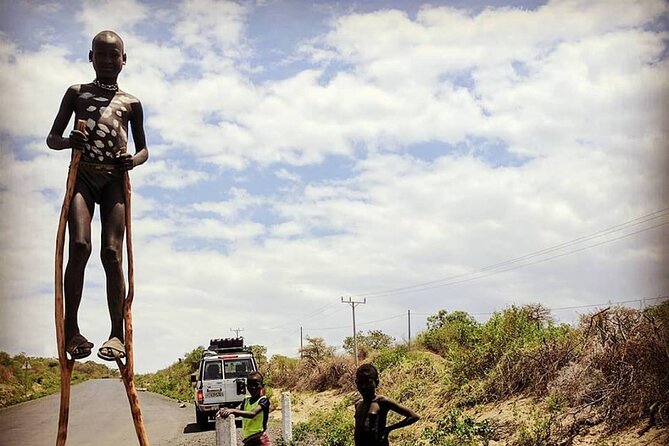
Southern Ethiopia is not a place you visit only for scenery. The reason to come is the people and the visible links between work, dress, food, housing, and belief.
This tour introduces several communities across a wide area. That variety is its strongest feature, but it also means you spend plenty of time in the vehicle. The route is designed for someone who wants to see how traditions are lived, not simply photograph a famous viewpoint.
The operator is Liyu Ethiopia Tours, and the setup is practical: pickup is offered, an air-conditioned vehicle is used, and an English-speaking guide accompanies the group. The small maximum group size is helpful because a village visit works better when the group can listen, ask questions, and move without a large crowd.
The itinerary also allows some flexibility. The operator describes planning remote and less-used routes around a visitor’s interests, and the service has handled last-minute changes and individual requests. That is useful in the Omo Valley, where market days and ceremonies do not always fit a neat calendar.
More Omo Valley Tours in Addis Ababa
- 6 Days Omo Valley Tribes Tours From Addis Ababa
★ 5.0 · 33 reviews - 3 Days Omo Valley Tour
★ 5.0 · 24 reviews - Danakil Depression, Lalibela, Omo Valley and Simien Mountains
★ 5.0 · 23 reviews
Day 1: Dorze homes above Chencha
The first major stop is Dorze Village, reached by an uphill drive of about an hour to Chencha. The Dorze are part of the Omotic language group and were once known as warriors. Today, farming and weaving are central to daily life.
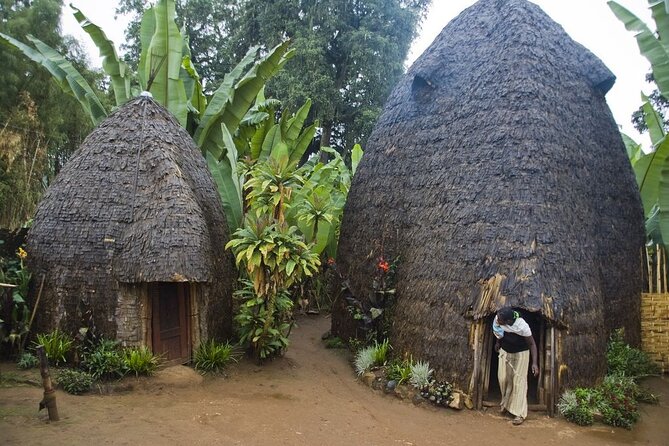
The houses are the visual highlight. Built from bamboo and shaped like tall beehives, they can reach about 12 meters. Each has an unusual forward projection described as an aristocratic nose, forming a reception area for visitors.
Look beyond the house itself. Small gardens hold enset, sometimes called false banana, along with spices, cabbage, and tobacco. These details help explain how the Dorze household uses its limited space. The stop is not just a photo opportunity. It gives you a compact look at food production, craft, architecture, and family life.
Dorze weaving is another reason to pay attention. The community is known for woven cotton cloth, and the tour presents the craft as an important source of income. You may want to leave room in your luggage for textiles, though personal purchases are not included in the price.
The scheduled visit lasts about three hours, with admission included. Since the day starts from Addis Ababa and continues south, ask for the exact overnight plan before departure. The supplied details specify the vehicle, guide, meals, and activities, but they do not spell out every lodging arrangement.
Day 2: Konso terraces and Ari village life
Konso brings a change of pace. It is recognized as one of Ethiopia’s World Heritage sites for its stone-walled villages and communal terrace systems.
The terraces are important because they show organized work carried out over generations. Stone walls help shape steep farmland, while the system reflects cooperation rather than a single household working alone. You are seeing practical engineering tied closely to local farming.
Allow yourself time to look at the walls, paths, and settlement pattern rather than rushing from one viewpoint to the next. The cultural center visit lasts about three hours and includes admission.
Later, the route reaches Jinka and an Ari village. The Ari are the largest group in the middle Omo region described in this tour. Their women are associated with skirts made from enset, and pottery is an important skill.
The Ari visit is a useful counterpoint to Konso. Konso emphasizes stone construction and terrace farming, while the Ari stop focuses more on household routines, food preparation, pottery, and clothing. You are likely to get more from this visit if you watch how tasks are done and ask your guide to explain the meaning of what you see.
The Ari stop lasts about two hours, and no admission fee is listed. After two substantial cultural visits, the day may feel full even though the individual stops are not extremely long.
Day 3: Mursi settlement in Mago National Park

Day three takes you to Mago National Park for a visit to a Mursi settlement. The Mursi are known for distinctive forms of adornment, including expanded lower lips and decorated earlobes among some women.
Their homes are made from straw and leaves and are notably low. That contrast with the tall Dorze houses makes the trip’s cultural variety clear: local materials, climate, household needs, and customs all shape the built environment.
The scheduled Mursi visit lasts about four hours and includes admission. This is one of the places where your conduct matters. Listen to the guide, follow local instructions, and treat photography as something to approach with care. The tour description specifically points to respectful etiquette, so do not assume that every person or activity is automatically available for close-up pictures.
The visit is also likely to be physically tiring. The tour asks for moderate fitness, and the route includes long drives as well as time spent walking around settlements and park areas. Bring sensible shoes, water, sun protection, and patience for uneven travel conditions.
In the afternoon, you drive to Turmi, home of the Hamer people. The Hamer share some customs with nearby Banna and Karo communities, but their hairstyles, necklaces, and ceremonies have their own meanings.
The route may include a market depending on the day. Key Afer market day is Thursday, and Dimeka market day is Saturday. If your dates line up, a market offers a different view of regional life, with buying, selling, conversation, and movement rather than a formal village visit.
More Omo Valley journeys south:
- 5 Days Omo Valley Tours
★ 5.0 · 15 reviews - 6 Days Lalibela, Omo Valley and Harar
★ 5.0 · 15 reviews - Private Omo Valley Tours From Addis Ababa
★ 5.0 · 12 reviews - 9 Days Tours To Danakil Depression, Simen MNP, Lalibela With Omo Valley Tribes
★ 5.0 · 11 reviews
Day 4: Karo body art and Hamer traditions
The fourth day begins with a Karo visit in the Lower Omo region. Karo people use body painting, scarification, beadwork, and elaborate headdresses to express identity and cultural values.
The tour presents the visit as a chance to observe daily practices and speak with community members about customs and beliefs. It may also include local activities such as farming or fishing, a traditional meal, and a sunset view along the Omo River. These elements are described as part of a typical outing, so ask your guide what is planned on your particular date rather than assuming every activity will occur.
The most useful way to approach Karo body art is to see it as communication, not decoration alone. Patterns, paint, jewelry, and headdresses carry social and ceremonial meaning. Your guide can help explain what is happening without reducing the visit to a quick photo stop.
The Karo visit lasts about four hours and includes admission. Afterward, the route returns to Turmi for a Hamer village visit lasting roughly three hours.
Here you learn about housing, music, coffee, and everyday customs. If the timing is right, you may attend a Hamer wedding ceremony that includes the traditional jumping of the bulls. This is one of the tour’s biggest uncertainties. It depends on local events, not simply on the published schedule, so treat it as a possible highlight rather than a guaranteed performance.
That distinction matters. A fixed show is easy to promise. A real ceremony follows the community’s own calendar. The reward is a more genuine encounter, but the trade-off is that you cannot plan your whole trip around seeing it.
Day 5: Karo culture, Dimeka Market, and Jinka museum
Day five returns to Karo country, giving you more time with a community known for body painting, scarification, headdresses, and symbolic clothing.
The schedule allows about six hours for the Karo stop and the drive toward Jinka. That is a long day, but it reflects the distances in the Omo region. If you dislike extended road travel, this is an important point to weigh before booking.
The route includes Dimeka Market when it falls on Saturday. A market visit adds useful context because it shows exchange between communities. You are not only looking at a village from the outside. You are seeing where people come to buy, sell, meet, and handle ordinary business.
The day finishes at the ethnological museum in Jinka, with about two hours set aside. This visit helps place the many communities you have seen within the wider story of southern Ethiopia’s nations and nationalities.
I find the museum especially useful after several village visits. It can give you terms and context that make earlier observations easier to understand. It also helps prevent the trip from becoming a collection of disconnected encounters.
Day 6: Addis Ababa, shopping, and a final Ethiopian meal
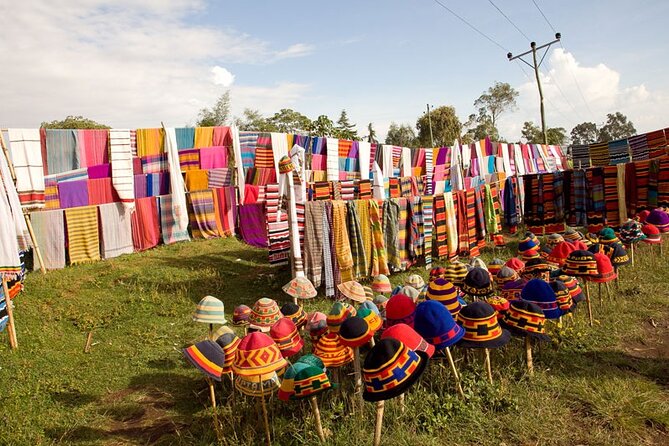
The last day brings you back to Addis Ababa. The plan includes shopping time, followed by a farewell party with cultural dinner, a traditional buffet, and local drinks.
This final meal gives the tour a social finish. You have spent several days seeing food preparation and household life in the south, so a shared dinner in the capital provides one more chance to think about Ethiopia’s food traditions in a different setting.
The schedule allows about six hours in Addis Ababa before transfer to the airport for an international departure. Confirm your flight timing carefully. The plan is built around an evening farewell and airport transfer, so you need enough space between the planned activities and your flight.
Dinner and six breakfasts are listed as included, along with the air-conditioned vehicle, English-speaking guide, entrance fees, and taxes. Personal expenses are not included. Since the exact accommodation details are not provided here, ask what hotels, internal transport, and any extra meals are covered before you pay.
Is $1,250 a fair price?
At $1,250 per person, this is not a bargain-priced weekend. It covers six days across a large region, with a private organized route, a vehicle, guide, admission fees, breakfasts, dinner, and airport transfer at the end.
The value depends on what you would otherwise need to arrange. The Omo Valley involves substantial road time, changing market days, park access, remote settlements, and the possibility of local ceremonies. Having one operator coordinate those moving parts can be worth more than trying to assemble each section separately.
The group limit of eight also supports the price. You are not paying for a huge coach operation. A smaller party can make stops less awkward and gives you better access to the guide when you need cultural context or help with local etiquette.
Still, check the fine print on lodging and personal costs. Purchases, drinks outside the included dinner, and other personal expenses are yours. Group discounts are offered, so ask about them if you are booking with several people.
The cancellation terms are straightforward: cancel at least 24 hours before the start time for a full refund. Changes made inside 24 hours are not accepted, and there is no refund for a late cancellation. Poor weather or failure to reach the minimum group size can lead to a new date, another experience, or a full refund.
Who should book this trip?
I would choose this tour if you want a broad introduction to the Omo Valley and prefer a guided route over independent logistics. It suits you if you are curious about architecture, farming, markets, dress, body art, ceremonies, and food, and if you can handle long days on the road.
It is also a good match for solo visitors who want organized transport and a small group. The operator has accommodated individual preferences and last-minute adjustments, and the driver is described as safe and helpful. That does not remove the need to communicate your needs clearly, but it is a useful sign for anyone traveling alone.
I would hesitate if your priority is comfort, short transfers, or a guaranteed ceremony. The itinerary includes substantial driving, moderate physical activity, and events that depend on local timing. The Omo Valley rewards flexibility more than strict control.
FAQ
How long does the Omo Valley cultural tour last?
The tour lasts approximately six days, beginning in Addis Ababa and ending there with an airport transfer after the farewell dinner.
What time does the tour start?
The listed start time is 7:30 am.
How large is the tour group?
The maximum group size is eight people.
Is pickup available?
Yes, pickup is offered.
What meals are included?
Breakfast is included for six days, and dinner is included. Personal expenses are not covered.
What kind of vehicle is used?
The tour provides an air-conditioned vehicle.
Is admission included at the cultural sites?
All fees and taxes are included. Specific listed admissions are included for Dorze Village, Konso Cultural Centre, Mago National Park, and the Karo visit. Other stops show no admission fee.
Should you book the six-day Omo Valley tour?
Book it if you want a compact but wide-ranging look at southern Ethiopia, with Dorze houses, Konso terraces, Mursi customs, Hamer traditions, Karo art, Ari pottery, regional markets, and a Jinka museum visit all in one route.
The best reason to choose it is the combination of local cultural stops and small-group planning. The main warning is the road time and the uncertainty around ceremonies. Go with an open schedule, moderate fitness, respectful manners, and realistic expectations about comfort. If that sounds like your kind of trip, $1,250 buys a useful, well-organized introduction to one of Ethiopia’s most distinctive regions.
More Six-Day Trips from Addis Ababa
- 6-Day Omo Valley Cultural Private Tour
★ 5.0 · 6 reviews - 6 day Omo ValleyTours
★ 5.0 · 5 reviews - 6 Days Visiting Omo Valley Tribes
★ 4.0 · 4 reviews - 6 days 5 nights Addis Abeba sightseeing & Lalibela Rock-Hewn Churches
★ 5.0 · 3 reviews
More Historic Sites near Addis Ababa
- Day Trip From Addis Ababa See Historical Monastery,Stunning Nature,Animals,Birds
★ 5.0 · 303 reviews - Hidden Treasures of Addis Ababa – Food, Culture and History Tour
★ 5.0 · 57 reviews - Northern Ethiopia Historic Route
★ 5.0 · 12 reviews - DAY TRIP TO THE UNESCO HERITAGE SITE TIYA & Melka Kunture
★ 4.5 · 10 reviews
Just added around Addis Ababa
- 6 days 5 nights Addis Abeba sightseeing & Lalibela Rock-Hewn Churches★ 5.0 · 3 reviews
- 4 Hours Addis Ababa Cultural Discovery Tour★ 5.0 · 3 reviews
- Addis Ababa Essentials: Flexible Full-Day City Sightseeing★ 5.0 · 3 reviews
- Day Trip Around Addis Ababa★ 5.0 · 3 reviews
- Northern Ethiopia (Historic route)★ 5.0 · 3 reviews
- Monastic Marvels Exploring the beauty of Debre Libanos Monastery★ 5.0 · 3 reviews
- Addis Ababa Half Day Shopping Tour★ 5.0 · 3 reviews
- Arba Minch, Dorze Tribe, Konso, and Awasa Private 4 Days Tour from Addis Ababa★ 5.0 · 3 reviews
Omo Valley Tribal Tours, compared.

Lalibela, Axum, Danakil and Omo Valley 8 DAYS
Read our review →
3 days around Arbaminch and Konso Adventure Tours Life Time
Read our review →Danakil Depression, Lalibela, Omo Valley and Simien Mountains
Read our review →



9 Days Tours To Danakil Depression, Simen MNP, Lalibela With Omo Valley Tribes
Read our review →
8 Days Lalibela,Danakil Depression and Omo Vally Tours
Read our review →Browse the lists this tour appears in