
Reviewed · ADDIS ABABA
Northern Ethiopia (Historic route)
Ethiopia packs an astonishing amount of history into a short route. In five days, this private tour links Lake Tana, Gondar, Axum, Lalibela, and Addis Ababa, with ancient churches, royal ruins, island monasteries, markets, and a traditional honey-wine gathering along the way.
I like two things right away: the private format lets your group move at its own pace, and admission tickets are included at the main sights. I also like the route itself, especially the contrast between Lake Tana’s quiet monasteries and Lalibela’s churches cut straight into volcanic rock.
The main caution is the schedule. Five days is a very tight frame for northern Ethiopia, and the published timing details are not fully clear. You should confirm flights, road transfers, hotel arrangements, meals, and the exact start time before paying.
Key points at a glance
- Lake Tana by boat: Cruise Ethiopia’s largest lake to island monasteries including Ura Kidane Mihirte and Azewa Maryam.
- Gondar’s royal past: Walk through Fasil Ghebbi, the walled palace compound of Ethiopia’s 17th-century emperors.
- Axum’s stone monuments: See carved obelisks, a huge fallen pillar, and St. Mary of Zion church.
- A full day in Lalibela: Visit both church clusters, finishing at the cross-shaped Church of Saint George.
- Private touring: Only your group participates, with pickup offered and group discounts available.
- A busy five-day plan: The route covers major sites quickly, so clear transport details matter.
Why this route matters
Northern Ethiopia is not a place you visit for one postcard sight. Its appeal comes from the way several eras sit close together: old religious centers, royal compounds, ancient monuments, living markets, and food traditions that remain part of daily life.
This trip gives you a useful first look at that story. Addis Ababa provides the starting point and finish. Bahir Dar introduces Lake Tana and the Blue Nile. Gondar brings imperial Ethiopia into view. Axum reaches farther back to the ancient Kingdom of Axum. Lalibela then changes the mood entirely, with churches carved downward into solid rock.
I like this sequence because each stop feels different. You are not spending five days looking at the same sort of monument. The tradeoff is distance. The route is ambitious, and some days are likely to feel like a race against the clock.
The tour is private, so your group does not have to share the guide with strangers. That can be especially useful at religious sites, where you may want time to ask questions or pause quietly. It also gives you a better chance to adjust the pace, though the available schedule may limit how much flexibility you actually have.
More historic sites near Addis Ababa:
- Day Trip From Addis Ababa See Historical Monastery,Stunning Nature,Animals,Birds
★ 5.0 · 303 reviews - Hidden Treasures of Addis Ababa – Food, Culture and History Tour
★ 5.0 · 57 reviews - Northern Ethiopia Historic Route
★ 5.0 · 12 reviews
Day 1: Lake Tana, island monasteries, and the Blue Nile
The northern route begins in Bahir Dar, on the southern side of Lake Tana. The lake is Ethiopia’s largest and supplies the Blue Nile, which flows out near the city.
The centerpiece is a boat cruise to the lake’s islands and peninsulas. You are scheduled to visit Ura Kidane Mihirte, Azewa Maryam, and the Zegi Peninsula. These monasteries are not simply old buildings placed on scenic islands. They are religious places, and the art inside is a major reason this stop earns its place on the route.
Expect this to be a day of changing scale. From the boat, the lake gives you open views and a slower pace. At the monasteries, the focus shifts to painted religious scenes and worship spaces. Your guide can help explain what you are seeing, which matters because the meaning of the paintings is not always obvious at first glance.
The afternoon includes a drive to the Blue Nile Falls. The supplied schedule describes this as a long day, and that is worth taking seriously. A boat outing, several monastery visits, lunch, and the drive to the falls make Day 1 full from start to finish.
I would ask how much time is allowed at each monastery and at the falls. The tour description gives the stops, but not a detailed breakdown of transfer times. That information will help you judge how relaxed or rushed the day may feel.
Bahir Dar also has a market stop listed in the overall itinerary. The market is useful for seeing everyday commerce rather than only formal historic sites. Still, the published description gives far more detail about Lake Tana than about the market, so do not assume a long guided market visit unless it is confirmed.
Day 2: Gondar’s castles and painted angels
Gondar is the royal stop on this trip. Its Fasil Ghebbi, a walled compound of palaces and related buildings, served as the seat of Ethiopian emperors during the 17th century.
The compound gives you a sense of Ethiopia’s imperial past through stone walls, towers, and palace remains. It is a very different kind of sight from the churches at Lalibela. Here, the story is about rulers, government, ceremony, and a royal center that once directed a large kingdom.
After Fasil Ghebbi, the itinerary includes Debre Berhan Selassie church. The interior murals are the reason to go. The ceiling, covered with repeated angel faces, is one of the most memorable details on the northern route. This is a place where your guide’s explanation can add real value, especially if you want to understand the religious images instead of simply photographing them.
Gondar also has traditional food and nightlife, but the schedule does not promise an evening program. Treat those as possibilities, not included activities. If you are interested in seeing more of the city beyond the main sights, ask if time remains after the palace and church visits.
The itinerary again describes a very long touring day. That may reflect a broad platform timing rather than a literal 20-hour visit, but the wording is unclear. I would want the operator to explain the actual daily timetable before booking. A private tour is helpful here, yet it cannot remove the travel time between cities or the limits of a five-day plan.
Day 3: Axum and the ancient Kingdom of Axum
Axum takes you farther back in time. The city is presented as a cradle of Ethiopian civilization, and the main attraction is its group of ancient monuments tied to the Kingdom of Axum.
The carved obelisks, often called stelae, are the visual highlight. Their tall stone shafts are decorated with patterns that suggest multi-story buildings. Nearby, you can see a huge fallen pillar, now broken into sections. Together, these monuments show the technical ambition of the ancient kingdom.
The tour also includes St. Mary of Zion church, an important pilgrimage site associated with the Ark of the Covenant. The wording around the Ark reflects religious belief, not something that can be independently verified by a sightseeing ticket. Your guide should explain the tradition with care and give you room to decide how you understand it.
Axum is important because it connects Ethiopia to a much older political and religious story. After the royal remains of Gondar, the city gives the trip a longer view of the past. You are not just moving from one church to another. You are following a chain of power, faith, and artistic work across centuries.
The description mentions transport through the city’s one-way streets. That is a small but useful point. Having local transport arranged can save time when you have several sites to cover in one day. Since this is a private activity, you can also ask for a short pause at a monument that interests you, provided the schedule allows it.
A few more Addis Ababa trips to weigh up
- Full Day Tour of Addis Ababa with Hotel Pickup and Drop-off
★ 5.0 · 430 reviews - Taste of Ethiopia
★ 5.0 · 406 reviews - Addis Ababa: Debre Libanos, Blue Nile Gorge, and Cave Tour
★ 4.5 · 256 reviews - Addis Ababa Guided City Tour With Airport & Hotel Pick Up
★ 5.0 · 237 reviews
Day 4: Lalibela’s churches carved from one rock
Lalibela is the largest day of the tour and the one most likely to define your view of northern Ethiopia. The churches were cut from a single mass of volcanic rock, beginning in the 12th century. Instead of being built upward, they were excavated downward, leaving courtyards, trenches, tunnels, and carved façades.
The morning focuses on the northwestern cluster:
- Bet Medhane Alem
- Bet Maryam
- Bet Meskel
- Bet Danaghel
- Bet Mikael and Bet Golgotha
After lunch, you continue to the southeastern group:
- Bete Gabriel and Rufael
- Bete Merkorios
- Bete Emanuel
- Bet Libanos
- Church of Saint George
Saint George is the famous cross-shaped church, and it is saved for the end of the day. That creates a strong finish, but it also means you will have already covered a great deal of ground. The full complex is not a quick photo stop. You should expect a day built around walking between and around the excavated churches.
Lalibela is often called the Jerusalem of Africa because of its religious importance and the way its churches recall sacred places farther east. The useful thing about this tour is that it does not reduce Lalibela to Saint George alone. You get both major clusters and the smaller churches between them.
The physical demands are not fully described, so ask for practical details before you go. The itinerary involves touring every listed church, and that means walking through an uneven historic site. The tour states that most people can participate, but individual mobility needs should still be discussed directly with the operator.
The day ends with cultural music and tej, a traditional honey wine. This is one of the more personal parts of the route. You are shifting from stone and archaeology to a living social tradition. The description does not specify the venue, length, or whether food is included, so confirm those points if this evening matters to you.
Day 5: Addis Ababa, Mercato, and a final meal
On the final day, you fly from Lalibela to Addis Ababa in the morning and arrive around midday. The rest of the day is listed as free time for shopping or sightseeing.
Mercato is the main suggested stop. It is described as one of Africa’s largest markets of its kind, and it gives you a chance to finish the trip with ordinary city life rather than another monument. You can shop, look around, and use the open time according to your group’s interests.
The loose afternoon schedule is welcome after four packed days. It also creates an important question: is the market visit guided, or simply suggested free time? The wording points to shopping and sightseeing, but does not spell out how long the tour vehicle or guide remains with you.
The farewell dinner takes place at a famous cultural restaurant. The dinner is part of the planned ending, though the restaurant is not named. Ethiopian food is one of the country’s great pleasures, and a cultural restaurant can be a fitting final meal, but ask exactly what is included in the $1,830 price.
What the $1,830 price means
At $1,830 per person, this is not a budget sightseeing package. Its value depends on what is covered beyond the listed admission tickets.
The price makes more sense if it includes the private guide service, internal flights, road transport, pickup, accommodation, and the planned cultural activities. The supplied details confirm pickup is offered, admission tickets are included, and the Lalibela to Addis flight is part of the itinerary. They do not clearly list hotels, meals, all transport, or airfare details as separate inclusions.
That uncertainty is the main value question. You should request a written list of inclusions before booking. Ask about:
- Hotels and room arrangements
- Domestic flights and baggage rules
- Road transfers between the northern cities
- Meals, including the farewell dinner
- Boat fees and any local guide charges
- Airport transfers and pickup location
- Any required entry fees not already included
The private format adds value if you care about personal attention and easier scheduling. Group discounts may help if several people are traveling together. Mobile tickets and confirmation at booking also make the administrative side simple.
Free cancellation is available up to 24 hours before the local start time. Changes made inside that 24-hour window are not accepted, and the payment is not refunded. Because the exact meeting details are unusual, with a listed start time of 7:30 pm, I would confirm the real pickup time and date in writing.
Guide service and what to confirm
Sisay is the guide name connected with the wider Ethiopia touring service, and Hillo is named as a driver on one longer northern trip. Past service feedback places particular emphasis on Sisay’s availability, friendly manner, and ability to keep a long trip organized. That is useful background, but it does not guarantee that Sisay or Hillo will be assigned to this five-day booking.
Ask who will guide your group and who will drive. Also ask whether the same team remains with you from Addis Ababa through the northern route, or whether local guides take over in each city.
The tour is private, and most people can participate. It is near public transportation, though pickup is offered. These details make the arrangement fairly accessible in a general sense, but they do not answer every practical question about walking, church access, or luggage during internal flights.
Who should book this five-day route?
I would recommend it most to someone visiting Ethiopia for the first time who wants the major northern sites in one organized trip. It is especially useful if you have limited time and do not want to arrange several domestic connections, boats, city transfers, and entrance tickets yourself.
It also suits a family group or a small party that values privacy. You can ask questions without holding up a large bus, and group discounts may improve the price for several people.
I would hesitate if you prefer slow travel. The route crosses a lot of ground and gives you only a short time in each destination. Anyone hoping to spend several days in Gondar, Axum, or Lalibela should treat this as an introduction rather than a complete visit.
I would also hesitate until the operator explains the odd timing details and full price inclusions. The itinerary contains very long listed durations, while the tour is described as five days. That may be a formatting issue, but it is worth clearing up.
Should you book Adefa Tours Ethiopia?
Book this tour if you want a private, tightly planned introduction to Ethiopia’s historic north and the price includes the major transport and lodging costs you need. The route covers an impressive range: a lake cruise, island monasteries, an imperial palace compound, Axumite stelae, Lalibela’s underground churches, a market, and a traditional honey-wine gathering.
Before booking, get the daily timetable and inclusion list in writing. Confirm the guide, driver, flights, hotels, meals, and the 7:30 pm start time. If those details are satisfactory, the tour offers strong coverage for a short visit. If you have more than five days, I would add time in at least one destination rather than trying to squeeze in still more sights.
FAQ
How long is the Northern Ethiopia Historic Route tour?
The tour is advertised as approximately five days.
Where does the tour begin?
The tour is based in Addis Ababa, Ethiopia. Pickup is offered, but the exact pickup details should be confirmed when booking.
Is this a private tour?
Yes. Only your group participates in the private tour or activity.
Which places are included?
The route includes Bahir Dar and Lake Tana, Gondar, Axum, Lalibela, and Addis Ababa.
Are admission tickets included?
Yes. Admission tickets are listed as included for the scheduled attractions.
Is transportation included between Lalibela and Addis Ababa?
Yes. The itinerary includes a morning flight from Lalibela to Addis Ababa on Day 5.
What is the cancellation policy?
You can cancel up to 24 hours before the local start time for a full refund. Cancellations or changes made less than 24 hours before the start time are not accepted and are not refunded.
Just added around Addis Ababa
- 6 days 5 nights Addis Abeba sightseeing & Lalibela Rock-Hewn Churches★ 5.0 · 3 reviews
- Addis Ababa Essentials: Flexible Full-Day City Sightseeing★ 5.0 · 3 reviews
- 4 Hours Addis Ababa Cultural Discovery Tour★ 5.0 · 3 reviews
- Day Trip Around Addis Ababa★ 5.0 · 3 reviews
- Addis Ababa Half Day Shopping Tour★ 5.0 · 3 reviews
- Monastic Marvels Exploring the beauty of Debre Libanos Monastery★ 5.0 · 3 reviews
- 6 days Omo valley cultural Tour★ 5.0 · 3 reviews
- Arba Minch, Dorze Tribe, Konso, and Awasa Private 4 Days Tour from Addis Ababa★ 5.0 · 3 reviews
Addis Ababa Tours, compared.

Full Day Tour of Addis Ababa with Hotel Pickup and Drop-off
Read our review →
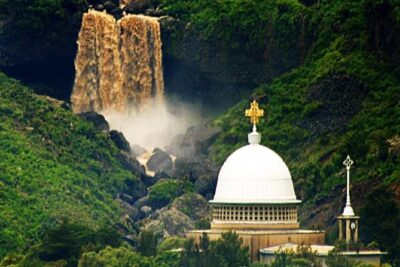
Day Trip From Addis Ababa See Historical Monastery,Stunning Nature,Animals,Birds
Read our review →
Addis Ababa: Debre Libanos, Blue Nile Gorge, and Cave Tour
Read our review →
Addis Ababa Guided City Tour With Airport & Hotel Pick Up
Read our review →
Breathtaking Nature, Wildlife and Cave Church Tour – Free Pickups
Read our review →

Browse the lists this tour appears in