Reviewed · LALIBELA
12 Days SIMIEN MOUNTAIN-LALIBELA-DANAKIL-TIGRAY CHURCHES
Ethiopia packs an astonishing amount into this 12-day route. You move from 17th-century castles and ancient churches to gelada-filled mountain escarpments, then into the furnace-like Danakil Depression and the cliff churches of Tigray. Few tours cover such a wide sweep of the country in less than two weeks.
I like the small maximum group of 10, which matters when you are hiking, climbing to remote churches, or getting in and out of four-wheel-drive vehicles. I also like that domestic Ethiopian Airlines flights, entry fees, accommodation, and many meals are included. The main caution is simple: this is not a gentle sightseeing holiday. Expect early starts, long drives, basic camping in Danakil, steep climbs, and a moderate level of fitness.
Key things to know before booking
- Erta Ale requires a rough six-hour drive and a night hike, followed by basic camping near the volcano.
- Abuna Yemata Guh is a serious climb, with handholds, narrow ledges, and a reported 200-meter drop.
- Simien gives you real hiking time, including viewpoints, the Jinbar waterfall, village life, and gelada baboons.
- Lalibela is packed into one main sightseeing day, covering the northern and western church groups.
- The $1,641.03 price includes major cost items, including three domestic flights, park and monument fees, accommodation, and many meals.
- The tour has a 4.9 rating and 96 percent recommendation rate, though one negative account raises concerns about communication and cost-cutting, so confirm details before departure.
Twelve days across Ethiopia’s northern circuit
This tour is built for you if you want Ethiopia’s headline sights without arranging every flight, driver, permit, hotel, and local guide yourself. It connects Addis Ababa, Gondar, the Simien Mountains, Lalibela, Mekele, Danakil, Gheralta, Axum, and Addis again.
That range is the appeal. It is also the strain. The itinerary sometimes changes from highland walking to all-day driving and then to desert camping. You gain variety, but you give up the slow pace that makes each place easier to absorb.
The operator limits the group to 10 people and uses English-speaking local staff. That setup can be useful in Ethiopia, where the practical details of permits, airport pickups, church access, and changing road conditions are not always simple. Past praise for staff has included guides and organizers such as Aklilu, Meseret, and Simoneh, though you should confirm who will lead your particular departure.
More Danakil Expeditions in Addis Ababa
- 3 Day Danakil Depression Ertale and Dallol Tours
★ 5.0 · 44 reviews - 5 DAYS Lalibela, Axum, Tigray churches and Danakil
★ 5.0 · 34 reviews - 2-Night 3-Day Danakil Depression Tour without Flights
★ 4.8 · 31 reviews
Gondar opens with castles and painted ceilings
Your first day begins with a flight from Addis Ababa to Gondar, followed by an airport pickup and an afternoon city tour. The centerpiece is Fasil Ghebbi, the former royal compound, where stone castles from the 17th century give Gondar its nickname as Ethiopia’s Camelot.
The compound is not a single palace. It is a collection of buildings and royal structures, so your guide adds useful context as you walk between them. Two hours is enough for a strong first look, although the schedule leaves little room for an unplanned wander.
Debre Birhan Selassie Church follows. Its exterior is modest, with stone walls, arched doors, and a two-tiered thatched roof. Inside, the painted ceiling and wall frescoes are the reason to visit. The famous ceiling is filled with angel faces, creating one of the most memorable interiors on the northern route.
This stop also gives you a reminder that Ethiopian religious sites have not always been secure. The church was nearly destroyed during attacks that damaged many of Gondar’s other churches. Treat it as an active place of worship, not simply a monument.
Three days in the Simien Mountains
The road from Gondar to Debark is paved and takes about two hours for roughly 100 kilometers. At park headquarters, the team arranges permits and picks up a scout before continuing into Simien Mountains National Park.
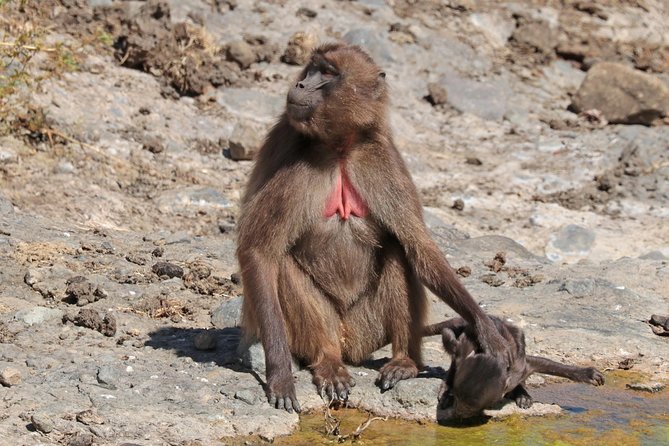
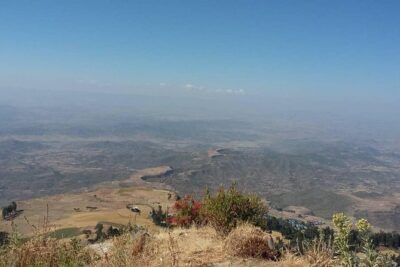
The first walk is described as easy, following the northern edge of the escarpment. You get wide views toward the foothills and plains of northern Ethiopia, plus a chance to spot gelada baboons. These grass-eating primates are one of Simien’s signature sights, and seeing them in the mountains adds much more to the visit than a quick viewpoint stop.
The following hiking day is more substantial. The route follows the northern escarpment, drops toward the Kaba Valley, climbs again, and reaches Gich Abyss. A narrow ridge leads to a cliff with views toward the Simien foothills. The Jinbar River then drops about 500 meters into the abyss, forming a dramatic waterfall.
Lunch is taken near the Jinbar River before the route continues through barley fields to Gich village. A traditional coffee ceremony in a local hut gives the day a human scale. You are not only looking at mountains. You are seeing how farming fits into life at high altitude.
The schedule lists another Simien day with a shorter five-hour walking period, but the description repeats much of the Gich and Jinbar route. That is worth clarifying before you pay. Ask exactly where the second night is spent, how many hours you will walk, and whether the route changes according to weather or park conditions.
Simien is one of the tour’s best sections for active sightseeing. Still, you should bring sturdy walking shoes and prepare for uneven ground, climbs, and exposed viewpoints. The stated requirement is moderate physical fitness, but the whole trip feels more demanding than that label suggests once Danakil and Tigray are added.
Lalibela’s churches demand time and careful footing
After Simien, you fly to Lalibela and drive about 23 kilometers to the town. The sightseeing plan covers the northern and western church groups in one long day.
The northern group includes Bet Medhane Alem, believed to be the largest monolithic church in the world. It is carved from a single block of rock and is linked to Bete Maryam, Bete Golgotha, the Selassie Chapel, and the Tomb of Adam.
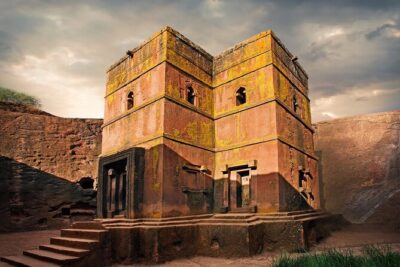
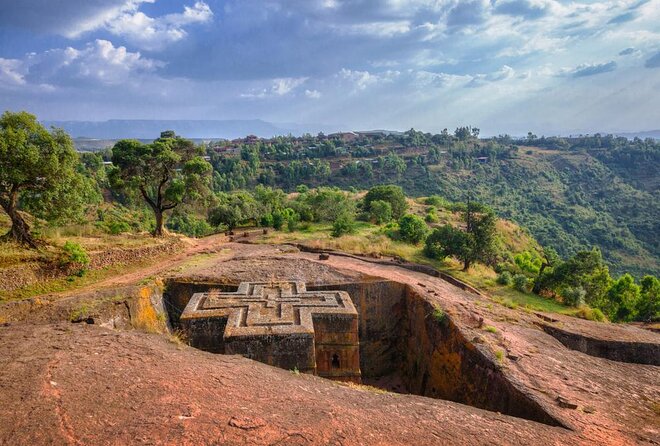
The western group includes Bete Giyorgis, the cross-shaped church cut into a deep trench. It is one of Ethiopia’s most recognizable religious buildings, but photographs do not show the full effect of walking down toward it and seeing the stone walls rise around you.
A six-hour visit gives you substantial coverage, though Lalibela can easily reward a slower pace. You will be moving through passageways, steps, and uneven rock surfaces. Good shoes help, and you should be ready to follow local customs inside working churches.
One practical point: the published schedule is dense. The northern and western groups hold more detail than you can absorb in a quick dash, especially if you want time for prayer, frescoes, carved crosses, and quiet observation. If Lalibela is your main reason for visiting Ethiopia, ask if the program can be adjusted.
More Rock-Hewn Church Tours in Addis Ababa
- Danakil Depression and Lalibela 5 Days Tours
★ 5.0 · 28 reviews - Danakil Depression, Lalibela, Omo Valley and Simien Mountains
★ 5.0 · 23 reviews - 5 DAYS Axum, Lalibela, Tigray churches and Danakil
★ 4.5 · 22 reviews - 6 Days Lalibela, Omo Valley and Harar
★ 5.0 · 15 reviews
Mekele and the long transition to Danakil
Day six is largely a transfer to Mekele, with the drive listed at eight hours. This is a necessary link in the route, not a sightseeing highlight.
Long road days are part of the price of reaching remote northern Ethiopia. You should expect the day to feel tiring, especially after hiking in Simien and before the desert section. The benefit is that the tour handles the transport and connects places that are difficult to combine independently.
The Danakil section is described as full board, while accommodation outside Simien and Danakil includes breakfast. That distinction matters. Meals are covered in several remote areas, but you should not assume that every lunch and dinner across the entire trip is included. The package lists 11 breakfasts, six lunches, and four dinners.
Erta Ale brings volcano country and basic camping
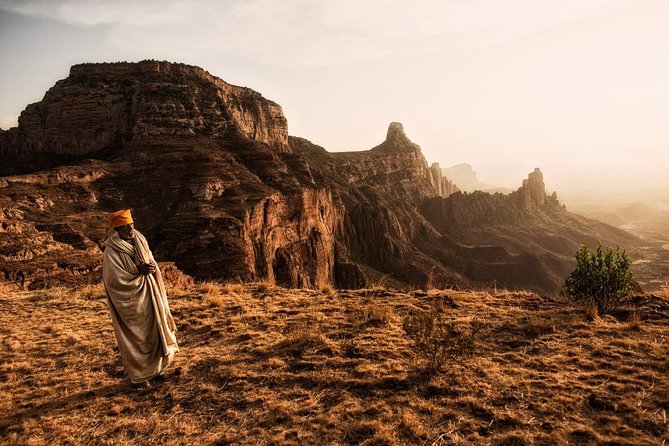
The journey to Erta Ale begins with a drive from Mekele to Dodom. The 80-kilometer route may take about six hours because the road crosses solidified lava, rock, sand, and occasional palm-lined oases. The description openly calls it one of the roughest roads in the world, so this is not the place to expect a smooth transfer.
Dodom lies about 17 kilometers from the volcano. Dinner is planned around 5 p.m., followed by a short break and a roughly 30-minute trek toward Erta Ale. Camels carry camping supplies, food, light mattresses, mats, and water up to the volcano rim.
The schedule appears to continue with a night near the crater, then a sunrise walk around the pits and craters. One main pit crater is described as about 200 meters deep and 350 meters across, with a smaller southern pit about 100 meters deep.
The appeal is clear: you are seeing an active volcanic region under exceptionally stark conditions. The drawbacks are just as clear: heat, dust, rough roads, limited comfort, and a schedule shaped by safety and weather. Bring sun protection, practical clothing, and realistic expectations about washing and sleeping conditions.
Salt, steam, and the Danakil Depression
The morning after Erta Ale begins with a walk around the craters before leaving for breakfast. Later, the route may continue to Lake Afdera, also called Lake Giulietti, a saltwater lake more than 100 meters below sea level.
The lake visit is marked as optional and may not be available during summer. Confirm this before departure if it is important to you. The area’s appeal comes from the contrast between salt water, volcanic ground, and extreme heat.
The next Danakil day focuses on salt mining. You see salt broken from the ground, cut into rectangular pieces, and loaded onto camels. The route continues to Dallol and Lake Assal, both around 130 meters below sea level in the supplied description.
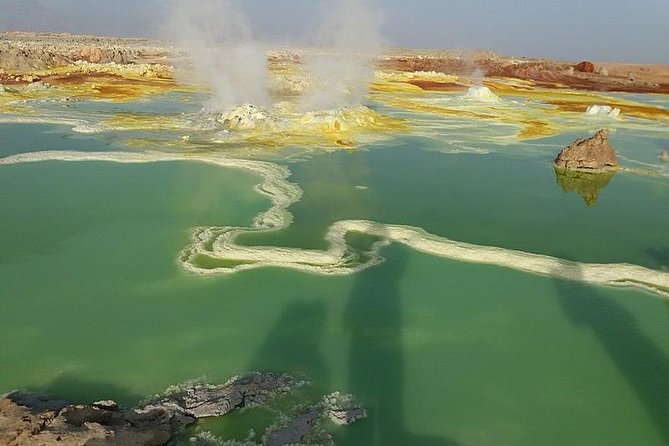
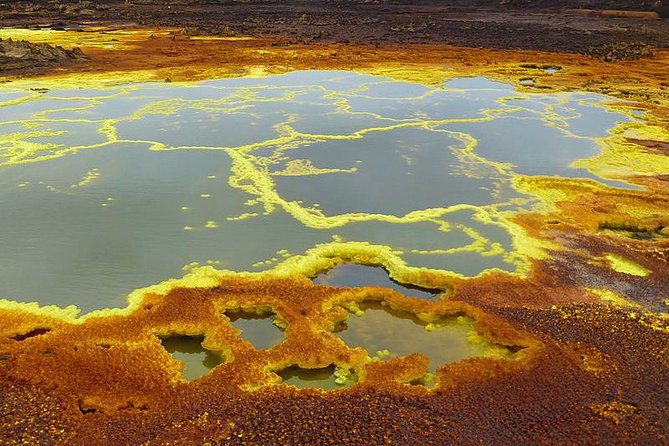
Dallol is known for mineral colors and volcanic formations. The tour also includes contact with Afar communities and, when conditions allow, camel caravans. Camel caravans are not available in July, August, or early September, so the timing of your trip changes what you see.
The Danakil Depression is the tour’s most unusual section, but it is also the one that needs the clearest preparation. Heat and remote roads can affect the schedule. You should ask how water, sleeping equipment, vehicle support, and safety procedures are handled before setting out.
After the salt fields and Dallol, the group drives back to Hamedela and continues to Mekele. This is another long movement day, and the six-hour estimate may feel optimistic on rough roads.
Gheralta’s cliff churches are not easy sightseeing
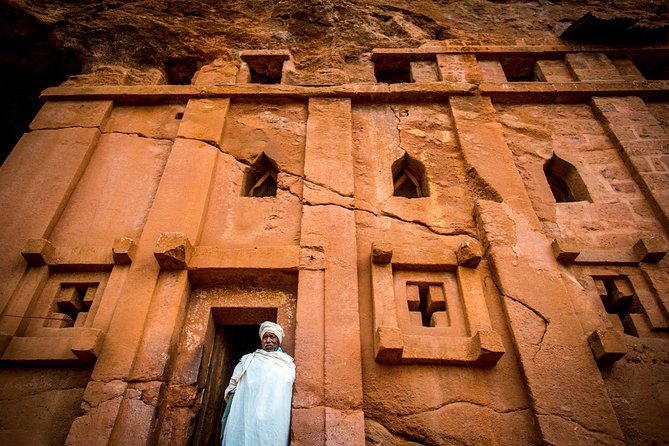
Day 10 takes you to Gheralta Rock and Abuna Yemata Guh. This is the most physically demanding church visit on the route.
The approach begins with about an hour of walking, followed by a steep ascent up sandstone. You use footholds and handholds worn or cut into the rock. The route then follows narrow ledges, including one described as about a meter wide with a 200-meter drop on one side.
At the entrance is a small cave and a wooden door built into the rock. The setting is the point. The church is not simply an old building at the end of a road. Reaching it requires a serious climb in an exposed place.
You should not book this part casually. If heights make you uncomfortable, or if you have trouble with steep uneven rock, ask for a substitute church before confirming. A moderate fitness label does not fully explain the level of exposure at Abuna Yemata Guh.
The program also mentions Maryam Korkor, described as the most impressive architecturally of three churches. The next morning includes more walking around Tigray’s rock churches before the drive to Axum. Confirm which churches are included and the expected walking time, since the route can vary.
Axum adds obelisks, royal tombs, and religious tradition
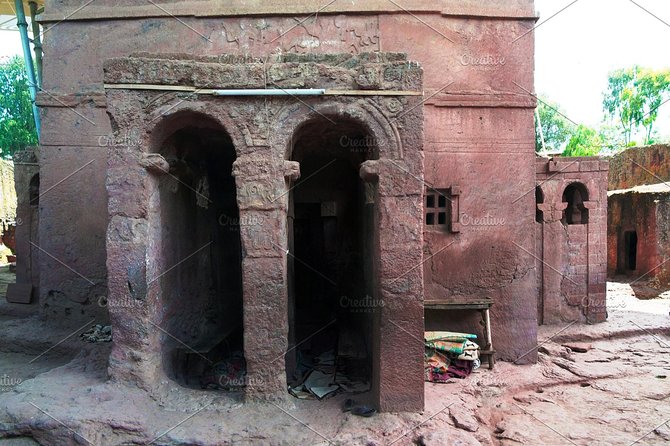
After lunch in Axum, you visit the Northern Stelae Field and its tall 4th-century obelisks. The area also includes ancient burial sites, though many excavated tombs were robbed centuries ago.
The tour then continues to Dungur, commonly linked with the Queen of Sheba’s Palace, along with the tombs of King Kaleb and King Gebre Meskel. These ruins give the Axum visit a wider frame. You are not only viewing one famous monument, but following the remains of a powerful ancient center.
St. Mary of Zion Cathedral comes next. It is associated with the Ark of the Covenant, which Ethiopian tradition holds to be kept there. The site is important to Ethiopian Orthodox Christianity, so your guide can help explain the difference between religious tradition, historical evidence, and what you can actually see.
Six hours is a useful amount of time for Axum’s main sights, but the sequence follows several days of hard travel. If you have been hiking, driving over rough roads, and climbing in Gheralta, energy may be limited by this point.
Addis Ababa closes with views, Lucy, and Merkato
The final day begins with a morning flight from Mekele to Addis Ababa. A guide and driver take you to Mount Entoto, where eucalyptus forests and high views look down over the capital.
The Entoto visit lasts about an hour. It is a good way to see Addis from above before returning to the city through Shiro Meda, known for traditional clothing.
The National Museum is the key stop. Its most important display is the paleontological collection, especially Lucy, the famous partial skeleton discovered in Ethiopia’s Afar region in 1974. The museum’s labels and lighting are uneven, but the basement fossil section is the part to prioritize if time is short.
The schedule lists the National Museum twice, for 90 minutes and then another hour. This appears to be duplicated rather than two separate museum visits, so ask the operator how the final day is actually arranged.
The last stop is Merkato, described as Africa’s largest market. You have about 45 minutes there, enough for a quick look rather than a relaxed market visit. Stay close to your guide and keep the stop focused, since the final day already includes several locations.
What the $1,641.03 price really covers
At $1,641.03 per person, the tour offers strong value if you plan to visit most of these places anyway. Three domestic flights alone can be costly and time-saving, while park permits, church and monument entry fees, local scouts, vehicles, accommodation, and remote-area meals add up quickly.
The included items are:
- Three domestic Ethiopian Airlines flights
- Accommodation with breakfast outside Simien and Danakil
- Full board in Simien and Danakil
- Six lunches and four dinners listed in the package
- Entry fees for sights on the route
- Tourist-standard vehicle transfers
- English-speaking local guide services
- Taxes
The price is less attractive if you want a relaxed schedule, upscale hotels, or private flexibility. The group is small, but it is still a group tour, and some days are tightly timed. Also confirm exactly what is covered on the long Mekele transfers and in hotels outside the full-board sections.
The company is generally praised for arranging transport, local guides, and changes when plans need adjusting. Several detailed accounts describe responsive trip planners, friendly drivers, and local guides at each destination. One sharply negative account alleges outsourcing and cost-cutting, so I would not ignore the need to confirm hotel names, vehicle arrangements, guide assignments, and meal coverage in writing.
Who should book this Ethiopia tour?
You are a good match if you want a broad first look at northern Ethiopia and prefer one coordinated plan. It suits active people who can handle seven-hour hiking days, eight-hour drives, rough desert roads, basic camping, and steep exposed climbs.
You will get the most from it if you value variety over leisure. The reward is an unusually wide set of experiences: royal Gondar, highland wildlife, sacred Lalibela, a volcanic desert, Afar salt fields, Tigray’s cliff churches, ancient Axum, and Addis Ababa’s museums and markets.
I would think twice if you dislike heat, rough roads, heights, early departures, or uncertain timing. I would also ask for a revised schedule if Lalibela or Tigray is your main priority, since both sections are packed into short visits.
The tour is generally recommended, with a 4.9 rating from 45 reviews and a 96 percent recommendation rate. Cancellation is free up to six full days before the start time, with a 50 percent refund for cancellations two to six days ahead. Poor weather may lead to a different date or a full refund.
FAQ
How long is the tour?
The tour lasts approximately 12 days and begins in Addis Ababa.
What is the maximum group size?
The group is limited to a maximum of 10 travelers.
Are domestic flights included?
Yes. Three domestic flights with Ethiopian Airlines are included.
Are entry fees included?
Yes. Entry fees for the sights listed in the itinerary are included.
What meals are included?
The package includes 11 breakfasts, six lunches, and four dinners. Danakil and Simien are listed as full-board sections. Accommodation with breakfast is included outside those areas.
How physically demanding is the tour?
A moderate level of physical fitness is required. The program includes hiking in Simien, rough-road travel in Danakil, a volcano trek, and steep climbing at Abuna Yemata Guh.
Can I cancel for a full refund?
Yes. You must cancel at least six full days before the experience start time for a full refund. Cancellations two to six full days ahead receive a 50 percent refund, while cancellations less than two full days ahead are not refunded.
Should you book it?
Book this tour if you want Ethiopia’s northern highlights in one ambitious package and you are ready for hard travel between major sights. Its strongest features are the small group, included flights and entry fees, local guide support, and access to places that are difficult to organize alone.
Before paying, confirm the duplicated Addis museum entry, the exact second Simien route, hotel standards, meal coverage, and whether you are comfortable with the Abuna Yemata Guh climb. If those details suit you, this is a powerful and good-value introduction to Ethiopia, with far more adventure than a standard sightseeing circuit.
More Lalibela Rock-Hewn Church Visits
- Lalibela 3 Days/ 2 Nights Tour package
★ 5.0 · 13 reviews - Lalibela One Night/two Days
★ 5.0 · 8 reviews - Lalibela One Night/two Days
★ 4.5 · 8 reviews - 2 Day Lalibela Tours
★ 5.0 · 7 reviews
More Danakil Depression Expeditions
- 9 Days Tours To Danakil Depression, Simen MNP, Lalibela With Omo Valley Tribes
★ 5.0 · 11 reviews - 5 Days Lalibela-Danakil Tour
★ 4.5 · 11 reviews - 8 Days Lalibela,Danakil Depression and Omo Vally Tours
★ 5.0 · 10 reviews - 3 Day Danakil Depression Dallol & Ertale Tours
★ 5.0 · 9 reviews
Just added around Addis Ababa
- 6 days 5 nights Addis Abeba sightseeing & Lalibela Rock-Hewn Churches★ 5.0 · 3 reviews
- Addis Ababa Essentials: Flexible Full-Day City Sightseeing★ 5.0 · 3 reviews
- 4 Hours Addis Ababa Cultural Discovery Tour★ 5.0 · 3 reviews
- Day Trip Around Addis Ababa★ 5.0 · 3 reviews
- Northern Ethiopia (Historic route)★ 5.0 · 3 reviews
- Addis Ababa Half Day Shopping Tour★ 5.0 · 3 reviews
- Monastic Marvels Exploring the beauty of Debre Libanos Monastery★ 5.0 · 3 reviews
- 6 days Omo valley cultural Tour★ 5.0 · 3 reviews
Lalibela Rock-Hewn Churches, compared.
Tour 11 monolithic rock churches & museum in Lalibela & cave church with mummies
Read our review →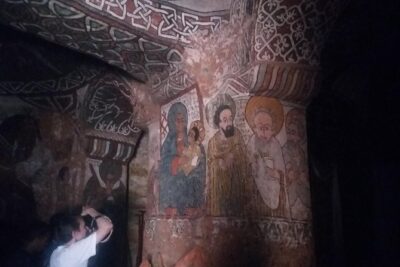
Ethiopia Tigray Tours: Guided tour of Tigray rock hewn churches
Read our review →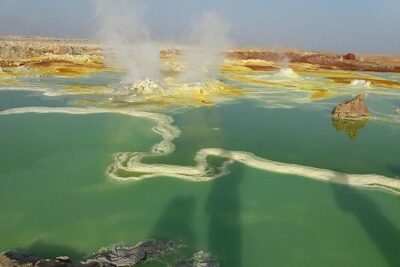
5 DAYS Lalibela, Axum, Tigray churches and Danakil
Read our review →
6 Days tour Package (Simien Mountains, Lalibela, and Danakil Depression)
Read our review →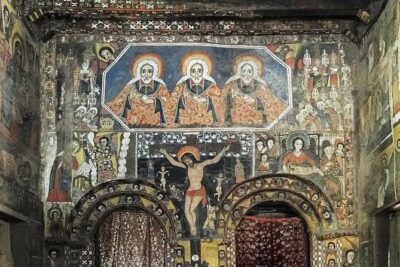
Lalibela, Axum, Danakil and Omo Valley 8 DAYS
Read our review →