
Reviewed · THE DANAKIL
3 Days Danakil Depression Tour from Semera City
The Danakil Depression is one of those places that looks almost unreal: salt flats shine under the sun, sulfur pools glow yellow and green, and Erta Ale may show a living lake of fire after dark. This three-day trip packs the region’s major sights into a demanding circuit from Semera.
I like the mix of geology and living culture, from Afar salt mining to Dallol’s strange mineral formations. I also like that meals, camping equipment, bottled water, drivers, an English-speaking guide, entrance fees, and scout fees are included. The main drawback is the hard desert travel, rough camping, heat, and long drives. This is not a soft sightseeing holiday.
Key things to know before booking
- Dallol’s sulfur pools and salt formations: See bubbling brine, colorful mineral ground, and an oily lake in one of Earth’s strangest volcanic areas.
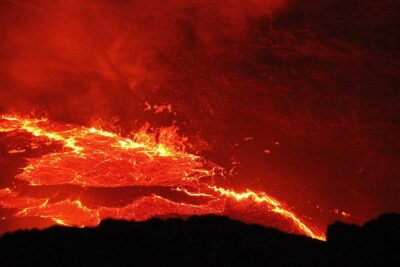
- Erta Ale after dark: Trek to the crater rim and camp near one of the world’s few permanent lava lakes.
- Afar salt culture: Watch salt cut into blocks and loaded onto camel caravans at Ragad, also called Asebo.
- Lake Afdera and Lake Asale: See salt extraction in two different settings, including a natural pool swim and sunset at Asale.
- A $399 package with important exclusions: Transport, meals, water, camping, guides, scouts, and entry fees are covered, but domestic flights, drinks, photography fees, and personal costs are not.
Why the Danakil Depression is worth the hardship
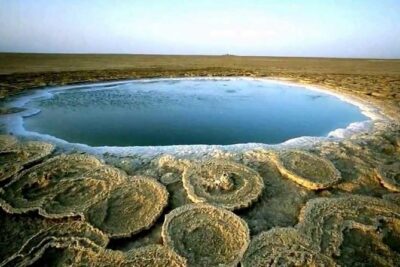
The Danakil Depression rewards curiosity more than comfort. You come here for the odd details: salt crust that stretches toward the horizon, rock hardened from old lava flows, palms around scattered Afar settlements, and mineral pools that look painted onto the ground.
The region is far below sea level in places and known for extreme heat. Dallol sits about 125 meters below sea level, while Erta Ale reaches 613 meters. Those numbers matter less than the conditions on the ground: shade is scarce, walking surfaces can be rough, and the trip asks you to accept basic camping.
I see this tour as a compact introduction to the Afar region rather than a relaxed three-day escape. You get the major sights in a short time, but you also spend long stretches in a vehicle. The payoff is access to places that are difficult to visit independently and require local drivers, guides, scouts, and careful planning.
The current price is $399 per person, with domestic flights excluded. That price can offer good value if you are already arranging your flights separately and want the main ground services handled in one booking. You should budget for the Semera flights, alcoholic drinks, photography or video fees where charged, tips, and other personal expenses.
More Danakil Expeditions in Danakil
- Danakil 3 days tour
★ 5.0 · 10 reviews - From Semera: Danakil Depression 3-Day Tour
★ 4.3 · 10 reviews - 3 days tour Danakil Depression (Dallol & Erta Ale)
★ 4.0 · 5 reviews
Flying into Semera and driving to Ahmed Ella
Your trip begins with a flight from Addis Ababa to Semera. At the airport, the Aman Ethiopia Tours team meets you with a welcome sign before the desert drive begins.
The first drive gives you an early sense of the Afar region. Expect solidified lava, bare rock, sand dunes, and occasional palm-lined oases. The scenery changes slowly, but that is part of the point. You are moving through a vast, exposed part of Ethiopia where small settlements can feel widely separated.
A stop at Ahmed Ella introduces you to an Afar community of more than 500 residents. This is not just a quick photo stop beside a famous natural feature. You have a chance to see a traditional way of life shaped by heat, salt, distance, and limited water.
I value this part of the trip because it gives the geology a human setting. The Danakil is not empty in the simple sense. Afar communities have lived and worked here, and salt extraction remains an important part of local life.
You spend the night camping at Ahmed Ella. Camping equipment and meals are included, with breakfast, lunch, and dinner provided on the first day. Unlimited bottled water is also included throughout the tour, an important detail in this climate.
Later in the day, you continue to Lake Asale, a broad salt flat in the heart of the depression. The surface can shimmer under the sun and reflect the evening light. The program includes time to swim in a natural pool and watch the sunset reflected across the salt-covered ground.
The swim is one of the more unusual moments on the trip, but you should still think practically. The desert setting means heat, glare, dust, and limited facilities. Pack clothing that dries easily, protect your eyes and skin, and keep your water close.
Salt blocks and camel caravans at Ragad
After breakfast on day two, the tour heads to Ragad, also known as Asebo. This is a traditional salt-mining area where you can observe salt being broken from the ground, cut into rectangular blocks, and loaded onto camel caravans.
This stop adds context to the polished photographs of white salt flats. Salt is not simply scenery here. It is worked by hand, shaped into manageable pieces, and moved by a method that has long suited the region’s difficult terrain.
I would pay attention to the work itself rather than treating the camel caravan as a backdrop. Look at the cutting process, the size of the blocks, and the way the salt is prepared for transport. It is a practical human response to a harsh environment.
The tour does not promise a long workshop or hands-on mining session, so expect observation rather than participation. The pace will also depend on local activity and road conditions. Still, this is one of the most distinctive parts of the three days because it connects the natural salt deposits with the people who use them.
Dallol’s sulfur pools and mineral colors
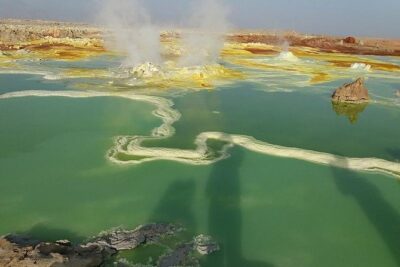
From Ragad, you continue to Dallol, one of the most unusual geological sites in Ethiopia. Dallol is known for colorful salt formations, sulfur springs, bubbling brine pools, and the famous oily lake.
The colors come from volcanic and mineral activity, not from tidy park landscaping. You may see yellow sulfur, pale salt, greenish water, and rust-toned ground close together. The effect is striking, but the setting is also active and extreme.
Dallol is among the lowest and hottest places in the world, sitting approximately 125 meters below sea level. That combination makes this a place where you need to follow the guide’s instructions closely and avoid wandering away from the group.
Your English-speaking guide helps explain what you are seeing, while local scout support is included in the tour. Entrance and scout fees are covered, so you are not left sorting out access arrangements at each major site.
The colors are the main visual draw, but I think the scale and strangeness matter just as much. Dallol does not look like a conventional volcano. Instead, it spreads out in pools, crusts, vents, and mineral shapes. It can feel more like a science-fiction set than a mountain crater.
Return to Ahmed Ella for lunch before setting off toward Erta Ale. This creates a long second day, with sightseeing, driving, and an evening trek still ahead. If you prefer slow travel with generous rest periods, this schedule may feel rushed.
More Danakil and Afar expeditions:
- 3 Days Danakil Depression Tour
★ 4.5 · 135 reviews - 3 Days Danakil Depression Tours Via Semera
★ 5.0 · 47 reviews - 12 Days SIMIEN MOUNTAIN-LALIBELA-DANAKIL-TIGRAY CHURCHES
★ 5.0 · 45 reviews - 3 Day Danakil Depression Ertale and Dallol Tours
★ 5.0 · 44 reviews
Trekking to Erta Ale after sunset
Erta Ale is the trip’s biggest physical and visual challenge. After arriving in the area, you trek to the crater rim in the late afternoon and camp there overnight.
The volcano is a shield volcano with a base about 30 kilometers wide and a summit caldera of roughly 1 square kilometer. It rises to 613 meters and is known for one of the world’s few permanent lava lakes, active since the early 20th century.
The important word here is active. Conditions around a volcanic crater can change, and the sight you get may depend on visibility and volcanic activity at the time. The tour promises access to the crater rim and a night near the active lava lake, but no natural site can guarantee a fixed view.
The late-afternoon timing makes sense. It avoids starting the trek at the hottest part of the day and brings you toward the crater as darkness makes any glow easier to see. You camp at Erta Ale after the trek, with camping materials and dinner included.
This is not a casual walk from a parking area. The information provided does not give a distance, walking time, or trail grade, so you should ask the operator for current conditions before departure. The tour specifically says it is not suitable for people with altitude sickness, and the physical demands of desert walking make honest self-assessment important.
At the rim, the experience is about scale, darkness, heat, and the possibility of seeing molten rock below. You should bring sturdy footwear, sun protection, warm layers for the night, and a headlamp if the operator does not supply one. Only a passport is formally listed as required, but practical desert clothing is clearly necessary.
Lake Afdera and the salt economy
After breakfast on day three, you leave Erta Ale and drive toward Lake Afdera. The lake is a striking saline body of water in the southern Afar Depression and an important part of Ethiopia’s salt industry.
Water is pumped from Lake Afdera into nearby salt pans. The sun then evaporates the water, leaving broad, glistening fields of salt. This is a different view of salt production from the hand-cut blocks at Ragad. At Ragad, you see extraction and transport by traditional methods. At Afdera, you see salt fields linked to a larger production process.
The stop helps tie the three days together. You have already seen salt as a natural surface at Asale, as a hand-worked product at Ragad, and as an evaporated resource at Afdera. The same mineral shapes the scenery and the local economy.
You have time to explore the area and observe the harvesting process before driving back to Semera. Lunch is included on the third day, served en route, before your airport transfer.
The final drive can be tiring. By this point, you have spent two nights camping and completed the Erta Ale trek. Plan your expectations around a useful final transfer, not a leisurely farewell afternoon.
What is included, and where the price can rise
The $399 price covers a surprisingly useful set of basics:
- Camping materials
- Meals from the first day’s breakfast through the third day’s lunch
- Unlimited bottled water
- A vehicle with professional drivers
- An English-speaking professional guide
- Entrance fees
- Scout fees
Those inclusions matter in the Danakil because arranging each piece separately would be awkward. Water alone is not a minor detail in a hot desert. Drivers familiar with the route, local guides, and scouts also provide practical support at remote sites.
Domestic flights are not included. You need to arrange and pay for the Addis Ababa to Semera and return Semera to Addis Ababa flights separately. Alcoholic drinks, video and photography fees, tips, and personal expenses are also extra.
The tour has a reserve-and-pay-later option, which helps if your Ethiopia plans are still shifting. Cancellation is allowed up to 24 hours before departure for a full refund, according to the stated terms.
The 4.7 rating from 34 ratings points to strong satisfaction with the service. The most consistent praise focuses on careful organization, clear communication, transport, guides, and the sense of safety during a complicated trip. One detailed account also describes Aman’s wider Ethiopia operation, including a guide named Fikru in Lalibela. That name belongs to a different part of an Ethiopia journey, so you should not assume Fikru will guide this Danakil departure.
Who should book this three-day trip
I would recommend this tour to you if you want the Danakil’s signature sights but do not want to arrange remote transport, camping, local access, and site fees on your own.
It suits adults who can handle heat, long drives, basic camping, and a trek to Erta Ale. It also suits photographers and geology fans, though photography and video fees are not included and may apply.
The trip is not suitable for children under 10, people with altitude sickness, or people over 95. Those limits are stated directly, but the broader point is simple: you need reasonable physical stamina and patience with rough conditions.
It may not suit you if you want hotels, air conditioning, short transfers, or a flexible daily schedule. There are no hotel nights in the three-day program. Your accommodation is camping at Ahmed Ella and Erta Ale.
Wear proper desert clothing. Bring a passport, sun protection, closed shoes, and layers for the cooler night at the volcano. You must also provide the requested personal details before the trip.
Should you book the Danakil Depression tour?
Book it if you want a concentrated, well-supported introduction to one of Ethiopia’s most unusual regions and you accept that the comfort level is basic. The combination of Dallol, Erta Ale, Afar salt work, Lake Asale, and Lake Afdera gives you a strong three-day sample of the area.
The $399 price is attractive once you account for the vehicle, professional driver, English-speaking guide, meals, water, camping equipment, entry fees, and scouts. Just add domestic flights and personal costs before comparing the total with other options.
I would ask one question before paying: how long is the current Erta Ale trek, and what are the latest volcanic and road conditions? If the answer suits your fitness level, this tour offers an efficient route into a difficult place. If you need comfort and extra time, choose a longer or softer Ethiopia itinerary instead.
FAQ
Where does the tour begin?
The tour begins after your flight arrives at Semera Airport. The Aman Ethiopia Tours team meets you there with a welcome paper.
How long is the Danakil Depression tour?
The experience lasts three days, beginning with the flight from Addis Ababa to Semera and ending with the return flight from Semera to Addis Ababa.
Are domestic flights included?
No. Domestic flights are excluded from the $399 price and must be paid for separately.
What meals are included?
The first day includes breakfast, lunch, and dinner. The second day includes breakfast, lunch, and dinner. The third day includes breakfast and lunch.
Is bottled water provided?
Yes. Unlimited bottled water is included for all three days.
Where do you sleep?
You camp at Ahmed Ella on the first night and at Erta Ale on the second night. Camping materials are included.
Is the tour suitable for children?
The tour is not suitable for children under 10 years old.
What language does the guide speak?
The professional guide speaks English.
More Three-Day Trips from Ethiopia
- 3 Days Dankile Depression group Tours
★ 5.0 · 40 reviews - 2-Night 3-Day Danakil Depression Tour without Flights
★ 4.8 · 31 reviews - Trekking at Bale Mountains 3 Days
★ 5.0 · 28 reviews - 3 Days Omo Valley Tour
★ 5.0 · 24 reviews
Just added around Ethiopia
- 6 days 5 nights Addis Abeba sightseeing & Lalibela Rock-Hewn Churches★ 5.0 · 3 reviews
- Addis Ababa Essentials: Flexible Full-Day City Sightseeing★ 5.0 · 3 reviews
- 4 Hours Addis Ababa Cultural Discovery Tour★ 5.0 · 3 reviews
- Private Guided Tours To Bahir Dar Lake Tana Monastery & Blue Nile Waterfalls★ 5.0 · 3 reviews
- Lalibela 2-Day Eco Trekking Tour★ 5.0 · 3 reviews
- 2 days Tigray Church★ 5.0 · 3 reviews
- Day Trip Around Addis Ababa★ 5.0 · 3 reviews
- Northern Ethiopia (Historic route)★ 5.0 · 3 reviews
Danakil Depression Expeditions, compared.
12 Days SIMIEN MOUNTAIN-LALIBELA-DANAKIL-TIGRAY CHURCHES
Read our review →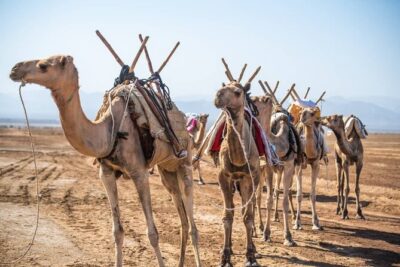
3 Day Danakil Depression Ertale and Dallol Tours
Read our review →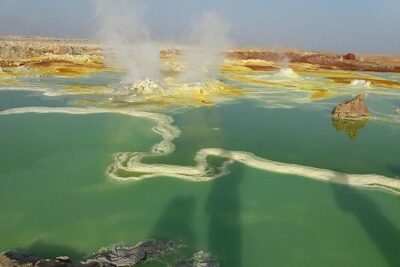
5 DAYS Lalibela, Axum, Tigray churches and Danakil
Read our review →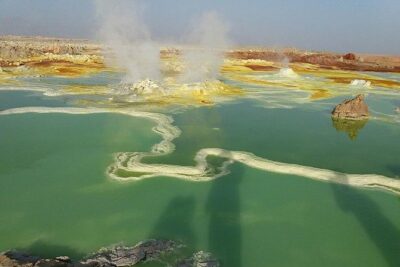
6 Days tour Package (Simien Mountains, Lalibela, and Danakil Depression)
Read our review →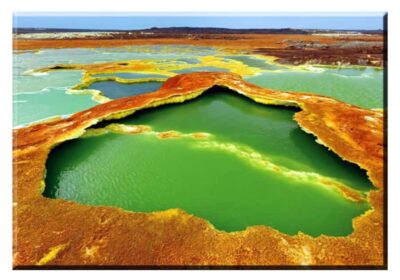
2-Night 3-Day Danakil Depression Tour without Flights
Read our review →
Lalibela, Axum, Danakil and Omo Valley 8 DAYS
Read our review →Browse the lists this tour appears in