
Reviewed · THE HISTORIC NORTH
Gondar city Tour With Airport & Hotel Pick Up
Gondar’s story comes alive inside Fasil Ghebbi, where palaces, churches, and stone walls recall the city’s time as Ethiopia’s royal capital. This tour then moves from imperial power to living faith at Debre Birhan Selassie and to the former Ethiopian Jewish community of Wolleka.
I like the small maximum of 10 people, which should make it easier to hear the guide and ask questions. I also like the practical setup: airport or hotel pickup is offered, transport is air-conditioned, admission fees are covered, and the day includes the city’s four main sights.
The main consideration is pace. Seven and a half hours is enough to see a great deal, but Fasil Ghebbi and Debre Birhan Selassie each deserve time, while Wolleka can feel more commercial than historic. You will get a strong overview, not a leisurely study of every site.
Key points to know before booking
- Fasil Ghebbi is the centerpiece: Spend about two and a half hours among royal buildings, churches, and the old fortress walls.
- The tour connects different sides of Gondar: You will see imperial architecture, Ethiopian Orthodox art, a Timkat site, and the former Wolleka Jewish settlement.
- Debre Birhan Selassie is a major highlight: Its ceiling paintings and twelve outer towers make it one of Gondar’s most memorable churches.
- Pickup removes a major hassle: The tour starts at 9:00 am from Central Hotel, with pickup offered and airport collection available.
- The group is limited to 10: That is a useful size for a guided heritage visit, especially inside churches and historic compounds.
- Wolleka requires realistic expectations: The former village has important history, but much of the present-day stop centers on craft stalls and sales activity.
Why Gondar makes such a strong full-day city tour
Gondar was founded by Emperor Fasilides in the 1630s and served as the capital of Ethiopian emperors for roughly 250 years. It was a period when royal building, painting, education, music, literature, and commerce gained new force after centuries of decline following the fall of ancient Aksum.
That background matters because Gondar is not simply a city with one castle and one famous church. Its identity grew from the meeting of Ethiopian traditions with outside influences, including Hindu, Arab, and European Baroque elements. You can see that mixture in the stonework and layout of the royal compound.
This tour works because it gives you four different lenses on the city. Fasil Ghebbi explains royal Gondar. Fasilides Bath links the monarchy to Ethiopian Orthodox celebration. Debre Birhan Selassie presents the city’s religious art. Wolleka introduces a community that once played an important part in Gondar’s social and craft life.
The schedule begins at 9:00 am and lasts about seven and a half hours. That is a useful length if your time in Gondar is limited or you want a single organized day rather than arranging several separate visits. The vehicle is air-conditioned, a welcome detail in a city tour with several stops.
More of the northern historic route:
- Addis Ababa: Debre Libanos, Blue Nile Gorge, and Cave Tour
★ 4.5 · 256 reviews - 5 DAYS Lalibela, Axum, Tigray churches and Danakil
★ 5.0 · 34 reviews - Lalibela, Axum, Danakil and Omo Valley 8 DAYS
★ 5.0 · 29 reviews
Entering the royal compound at Fasil Ghebbi
Allow around two and a half hours for Fasil Ghebbi, the longest stop of the day. The fortress-city covers about 70,000 square meters and is enclosed by roughly 900 meters of wall. Inside are palaces, churches, monasteries, and public buildings connected with the emperors who ruled from Gondar.
The scale is what makes this visit worthwhile. You are not walking up to one isolated castle, taking a photograph, and leaving. You are moving through an entire royal center, where government, worship, ceremony, and private life once occupied the same fortified space.
The compound is associated first with Emperor Fasilides and his successors. Dawit’s Hall is in the northern part of the enclosure, and the grounds include several structures that reveal how the royal city developed over time. The buildings combine local Ethiopian design with Hindu and Arab influences, followed by Baroque touches introduced by Jesuit missionaries.
That mixture gives your guide plenty to explain. Pay attention to changes in shape, decoration, and building style rather than treating every stone structure as part of one uniform castle. The point is not only that Gondar has old buildings. It is that the royal capital absorbed different ideas while keeping a distinctly Ethiopian character.
South of the fortress is Adababay, once Gondar’s marketplace and ceremonial ground. Imperial proclamations were made there, troops were presented, and executions took place. Today it is a city park, a reminder that places used for power and punishment can acquire a very different role with time.
Two and a half hours is sensible here, though the stop may feel short if you want to examine every building closely. The compound is the tour’s main historical anchor, so listen carefully to the guide’s explanation of who built what and why. Without that context, the complex can become a blur of walls and towers.
Seeing Fasilides Bath beyond the castle walls
The next stop lasts about one hour and focuses on Fasilides Bath. The structure is generally linked to Emperor Fasilides or his son Iyasu I, though the exact patron is not known.
The compound includes the bath, a central tower, and a bridge used when the pool is full. Ancient banyan tree roots have grown into the old brickwork, creating a striking sight as nature presses into the remains. It is a smaller and quieter place than Fasil Ghebbi, but it gives you a different sense of how royal spaces were used.
The bath has an important religious role today. Each year on January 19, it is filled for Timkat, the Ethiopian Orthodox celebration of Epiphany. The ceremony recalls the baptism of Christ in the River Jordan, turning this old imperial pool into a place of active religious memory.
That connection is worth keeping in mind as you look at the site. Fasilides Bath is not merely a ruined swimming pool. It links Gondar’s monarchy, architecture, and Orthodox tradition in one compact setting.
The stop is listed as admission-free, while entrance fees for the included paid sites are covered as part of the tour. Even so, keep your attention on the guide here. The physical remains are easier to understand when you know why the bath is filled once a year and what Timkat means in Ethiopian religious life.
Reading the ceiling at Debre Birhan Selassie Church
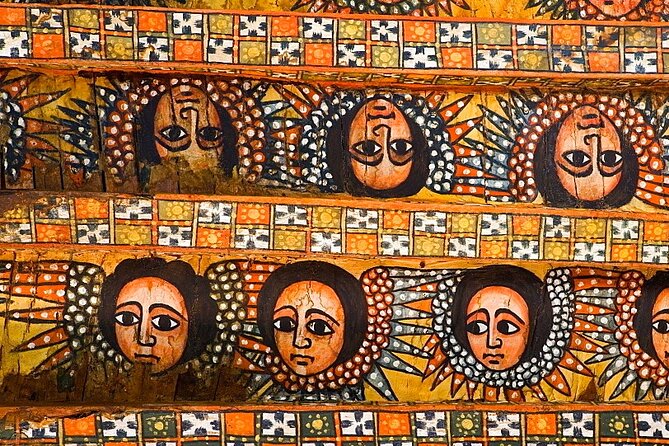
Debre Birhan Selassie Church receives about two hours, and it may be the most visually memorable stop. The name means Trinity and Mountain of Light. The church is known for its paintings and for the twelve rounded stone towers around it, which represent the twelve apostles.
A thirteenth, taller tower represents the Lion of Judah. You can look for the lion imprint near the upper part of the tower. These details are easy to miss if you hurry from the entrance to the interior, so take a moment to study the outside first.
The original church was built in the 17th century by Emperor Iyasu II. The present structure was rebuilt in the 1880s after a raid by Sudanese Dervishes and a lightning strike destroyed the earlier building. That history gives the church added weight: what you see is both a continuation of an older place of worship and a reconstruction shaped by later damage.
Inside, the painted decoration is the main event. The church is especially famous for its ceiling, where rows of angel faces look down over the worship space. The paintings are not just decoration. They show how Ethiopian churches teach and preserve religious ideas through images, particularly in settings where visual storytelling has long been central to worship.
Two hours gives you enough time to look carefully, hear the explanation, and appreciate the church as an active religious place rather than a museum room. Dress and behave respectfully, since this is a place of worship. The tour description does not set out a clothing policy, so it is sensible to choose modest clothing and follow the guide’s instructions inside.
This stop also provides a useful contrast with Fasil Ghebbi. The fortress tells you how emperors ruled. Debre Birhan Selassie shows how faith shaped the city and how artistic skill was used in a church setting.
A few more Ethiopia trips to weigh up
- 6 Days tour Package (Simien Mountains, Lalibela, and Danakil Depression)
★ 5.0 · 32 reviews - Simien Mountains – 4 Days
★ 4.0 · 7 reviews - 4 Days Trekking to Simien Mountain National Park
★ 5.0 · 7 reviews - 2 Days Simien Mountains Trekking
★ 5.0 · 6 reviews
Understanding Wolleka and the former Falasha community
The final stop is Wolleka, also called the Falasha Village, with about two hours allocated. The name refers to the former Ethiopian Jewish community that once lived here. Most residents were airlifted to Israel in the 1980s, and the village no longer has that same population.
You can still find a few original houses with artwork on their fronts and a small synagogue. Craft stalls now use signs referring to Stars of David and the Falasha Village. A small payment of 10 birr may allow you to look inside the synagogue, though the main tour includes entrance fees according to the program.
This is the stop where your expectations matter most. Wolleka is historically important, but it is not presented as an untouched village preserved exactly as it was. The craft stalls and sales activity are part of the current experience. Children selling goods can be persistent, so decide in advance how much time and money you want to spend browsing.
The community’s story is tied to religious pressure and economic survival. After Christianity became the state religion, Ethiopian Jews who refused to convert had their land confiscated. Many became skilled craftspeople, and research suggests that Falasha workers may have helped with the construction and decoration of Gondar’s churches.
That connection gives Wolleka a place in the wider story of the city. You are not simply adding a shopping stop after the major monuments. You are looking at how a minority community adapted, worked, and left its mark on Gondar.
Still, the two-hour allocation may feel long if you are mainly interested in architecture and do not plan to shop. If you want a more rounded understanding of Gondar, it is worth taking the time. If your priority is castles and church painting, this is the part of the day you may find less rewarding.
What the guide and transport add
The tour includes a Blue Badge guide, an air-conditioned vehicle, government taxes, airport or departure tax, and entrance fees as set out in the program. Those inclusions simplify the day. You do not need to arrange separate transport between four sights or work out which admission charges apply at each location.
The maximum group size is 10 people. That is not a private tour, but it is small enough for a guide to keep the group together and answer questions without shouting across a large crowd. It should also help inside the church, where quiet attention matters.
The operator is Simien Mountain Trekking and Tours. Mickey is named as the person who coordinated one well-organized visit and connected the customer with local guides. An airport meeting was also arranged in that case, which is useful if you are arriving in Gondar and want to start with a clear plan rather than negotiate transport immediately.
The stated meeting point is Central Hotel in Gondar, and the tour begins at 9:00 am. Pickup is offered, so confirm the exact collection point when booking, especially if you are arriving at the airport or staying somewhere other than Central Hotel.
The day ends back at the meeting point. That return arrangement is helpful if you want to continue exploring on foot, return to your hotel, or make evening plans without arranging a second ride.
Is $90 a fair price for seven and a half hours?
At $90 per person, the value depends on how much you would otherwise spend arranging a vehicle, guide, admissions, and airport or hotel transport separately. Since the tour combines all four major stops in one day and includes entrance fees and an air-conditioned vehicle, the price is reasonable for someone who values convenience and structure.
The strongest value comes from the guide. Fasil Ghebbi is large and layered, and Debre Birhan Selassie’s symbolism is easy to miss without explanation. You are paying not only to reach the sites, but to understand the emperors, religious traditions, building styles, and community history behind them.
The price may feel less attractive if you already have transport, speak with a local guide independently, or prefer to set your own pace. Wolleka’s commercial side may also make the final portion feel less valuable if you are not interested in crafts or the community’s past.
For a first visit, I would judge the package on time saved rather than on the number of stops alone. You get a coordinated day, a small group, admission fees, and a guide who can connect places that might otherwise feel unrelated.
Who should book this Gondar tour?
I would recommend it to a first-time visitor who wants the main cultural sights in one day. It suits you especially well if you are arriving by air, have limited time, or prefer not to handle local transport and site fees yourself.
It is also a good fit for anyone interested in architecture and religious art. The contrast between the royal compound and Debre Birhan Selassie is strong, while Fasilides Bath and Wolleka add useful context.
You may want something else if you prefer very slow sightseeing, independent wandering, or long photography sessions. The schedule is full, and Wolleka may not match your interests. Ask about the exact pickup arrangement and whether a lunch stop is planned, since the supplied schedule does not list lunch as an inclusion.
Free cancellation is available if you cancel at least 24 hours before the 9:00 am start time. Changes or cancellations inside that window are not refunded, and the tour requires a minimum number of people to operate.
Should you book it?
Book this tour if you want a well-organized introduction to Gondar’s castles, church art, royal traditions, and community history, especially with airport or hotel pickup. The praised strengths are practical ones: Mickey’s coordination, airport assistance, strong guide matching, and a clear focus on the city’s main sights.
I would book it for a short stay, a first day in Gondar, or a visit when reliable transport matters. I would look for a more flexible private arrangement if you want to linger at Fasil Ghebbi, skip Wolleka, or shape the day around photography. For most first-time visitors, the covered admissions, air-conditioned vehicle, small group, and seven-and-a-half-hour route make $90 a sensible buy.
FAQ
Where does the tour start?
The stated meeting point is Central Hotel, ሴንትራል ሆቴል, in Gondar. The tour starts at 9:00 am.
Is pickup available from the airport or hotel?
Pickup is offered, and airport collection was arranged for a previous booking. Confirm your exact pickup location when booking.
How long does the tour last?
The tour lasts approximately 7 hours and 30 minutes and ends back at the meeting point.
What sites are included?
The route includes Fasil Ghebbi, Fasilides Bath, Debre Birhan Selassie Church, and Wolleka, also known as Falasha Village.
Are admission fees included?
Entrance fees listed in the program are included. Fasilides Bath is listed with free admission.
How many people can join the tour?
The activity has a maximum of 10 participants.
Can I cancel for a full refund?
Yes. You can cancel at least 24 hours before the experience start time for a full refund. Cancellations or changes made less than 24 hours before the start are not refunded or accepted.
Just added around Ethiopia
- 6 days 5 nights Addis Abeba sightseeing & Lalibela Rock-Hewn Churches★ 5.0 · 3 reviews
- 4 Hours Addis Ababa Cultural Discovery Tour★ 5.0 · 3 reviews
- Addis Ababa Essentials: Flexible Full-Day City Sightseeing★ 5.0 · 3 reviews
- Private Guided Tours To Bahir Dar Lake Tana Monastery & Blue Nile Waterfalls★ 5.0 · 3 reviews
- Lalibela 2-Day Eco Trekking Tour★ 5.0 · 3 reviews
- 2 days Tigray Church★ 5.0 · 3 reviews
- Day Trip Around Addis Ababa★ 5.0 · 3 reviews
- Northern Ethiopia (Historic route)★ 5.0 · 3 reviews
Historic North Circuit, compared.
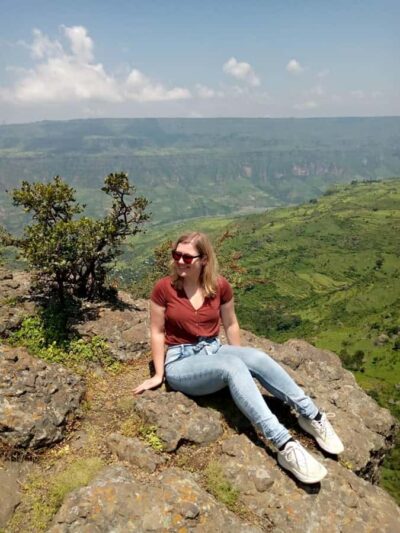
Addis Ababa: Debre Libanos, Blue Nile Gorge, and Cave Tour
Read our review →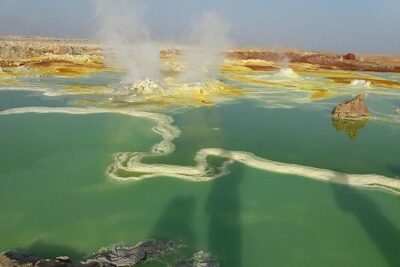
5 DAYS Lalibela, Axum, Tigray churches and Danakil
Read our review →
Lalibela, Axum, Danakil and Omo Valley 8 DAYS
Read our review →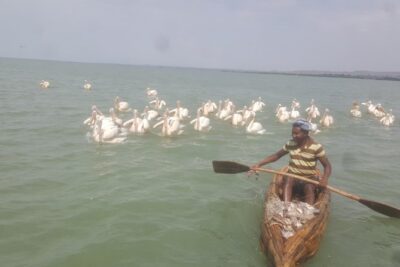
Day trip on Bahir dar. To visit lake tana monasteries and Blue Nile Falls.
Read our review →
Historical tours – in five days, Addis Ababa, Axum, Laliebla and Gonder
Read our review →
5-Day Northern Ethiopia Tour : 3D Simien Mountains Trek & Axum.
Read our review →
Day Trip From Addis Ababa To Debre Libanos & Blue Nile Gorge
Read our review →Browse the lists this tour appears in