
Reviewed · ADDIS ABABA
Full-Day Private City Tour of Addis Ababa
Addis Ababa is a city best understood in layers: imperial churches, high mountain air, busy markets, ancient fossils, and a family coffee ceremony can all fit into one long day. This private tour connects those pieces without asking you to follow a fixed group schedule.
I like the flexible route, which lets you spend more time at museums, churches, markets, or Entoto. I also like the local family visit, coffee ceremony, and home-cooked lunch, which give the day a human touch beyond sightseeing. The main drawback is that the schedule is ambitious, and entrance fees are extra. Traffic and long museum visits may force you to trim a stop.
Key things to know before you book
- Mount Entoto reaches about 3,200 meters, bringing cool air, eucalyptus forest, city views, and optional walks.
- The private format is the real advantage, with transportation, hotel or airport pickup, and an itinerary shaped around your interests.
- A coffee ceremony and home-cooked Ethiopian lunch add a genuine cultural exchange to the usual city tour.
- Mercato is a guided walk, not a quick drive-by. Your guide helps you handle bargaining and navigate its different sections.
- The day covers a lot, including churches, two major museums, markets, monuments, and Meskel Square.
- Budget extra for three entries, roughly $12 for Holy Trinity Cathedral, $3 for St. George’s Cathedral, and $2 for the Ethnological Museum.
Why this private Addis Ababa tour works well
This is a useful first-day introduction to Addis Ababa, especially if you have only a layover or a short stay. The tour lasts about seven to nine hours and costs $160 per group of up to six people. For a full vehicle, that is a reasonable price for private transport, a guide, airport or hotel transfers, bottled water, snacks, lunch, and coffee.
The value is strongest for couples, families, and small groups who want to split the cost. A solo visitor pays the same group price, so the economics are less attractive unless avoiding public transport and organizing several sites yourself matters more than keeping the price low.
The tour’s flexibility is more than a sales point. Addis Ababa traffic can make a tightly timed schedule frustrating, and different visitors have different priorities. You might want Lucy and human evolution, while someone else cares more about Ethiopian Orthodox art or shopping. A private guide can adjust the day instead of treating every stop as equally important.
Guides who have led this experience include Biruk, Henok, Abenezer, Wondiye, Muluken, and Spanish-speaking guide Solomon. The strongest praise centers on guides who explain culture and history clearly, answer complicated questions, help with bargaining, and make schedule changes without fuss. Your assigned guide may differ, but the experience depends heavily on that person’s language skills and ability to shape the day.
A few more Addis Ababa trips to weigh up
- Full Day Tour of Addis Ababa with Hotel Pickup and Drop-off
★ 5.0 · 430 reviews - Addis Ababa City Tours Full Day With Hotel Pickup And Drop Off.
★ 5.0 · 51 reviews - Best of Addis Ababa- (full day)
★ 5.0 · 37 reviews
St. George’s Cathedral and Ethiopia’s painted past
St. George’s Cathedral is a good opening stop because it introduces Ethiopia through religion, art, and national memory. Its octagonal form makes it easy to recognize, but the interior is the reason to linger.
Inside, you can see mosaics showing biblical scenes, including the visit of the Queen of Sheba to King Solomon. Hand-painted scenes also connect the church to Emperor Haile Selassie and the Ethio-Italian War. The works are associated with Afework Tekle, one of Ethiopia’s best-known artists.
The small cathedral museum adds religious and historical objects. Plan on about 45 minutes, though the actual pace depends on how much explanation you want from your guide.
The entry fee is not included and is listed at about $3. This is a modest extra, but you should carry a little cash for several stops. Dress respectfully for the cathedral, and expect the visit to feel more like a working religious site than a polished European museum.
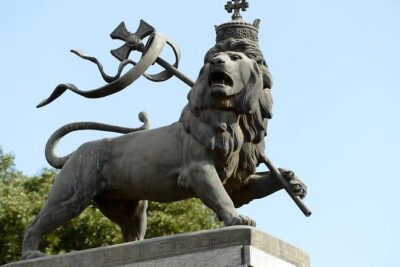
Afterward, the vehicle passes along Addis Ababa’s main streets and points out monuments such as the Lion of Judah. This part is brief, but it helps connect the city’s ceremonial center with its imperial past.
Mount Entoto: eucalyptus, altitude, and a coffee table
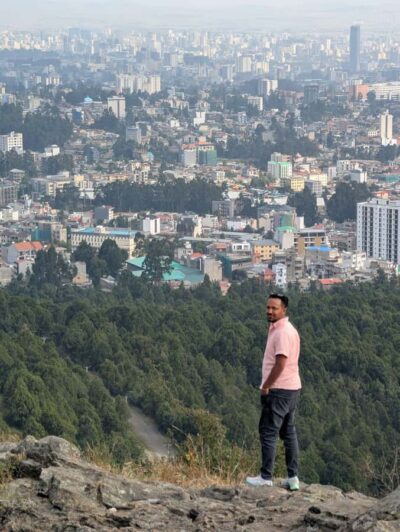
Mount Entoto changes the feel of the day. The road climbs through eucalyptus forest to roughly 3,200 meters above sea level, where the air can be cooler than in central Addis Ababa. From the heights, you get broad views across the capital.
Your two-hour stop can be shaped in several ways. You might take a relaxed walk in Entoto Park, visit Entoto Maryam Church, or see the palace of Emperor Menelik II, described as the oldest in Addis Ababa. If walking is important to you, say so early. If your priority is history, ask to give the church and palace more time.
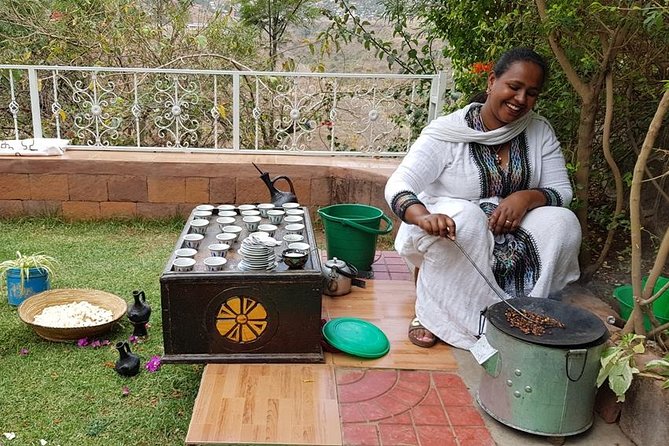
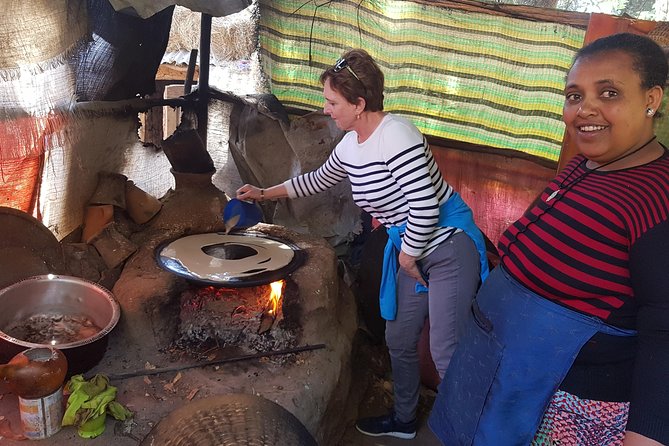
The mountain is also where the tour’s most personal experience takes place. You visit a local family, attend a traditional Ethiopian coffee ceremony, and eat a home-cooked lunch. Coffee preparation is often the part people remember most: it is a social ritual, not simply a beverage break. One past experience included learning how to roast coffee, and local honey wine was also served on some visits, though you should not assume every group receives exactly the same menu or activity.
This stop can feel informal, almost like being welcomed into someone’s home rather than attending a staged cultural show. That is a major strength, but it also means you should arrive with patience and respect. The ceremony takes time, and the meal is part of the visit rather than a rushed restaurant stop.
At altitude, a gentle pace makes sense. The tour information does not promise a demanding hike, only the option of a leisurely walk. Tell your guide what feels comfortable, especially if you have just arrived in Ethiopia.
Shiro Meda Market and the art of choosing souvenirs

Near Entoto, Shiro Meda Market offers a more manageable shopping stop than Mercato. Stalls carry textiles, spices, pottery, woven baskets, jewelry, and handmade souvenirs.
I would use this market for browsing and gifts, not for ticking off a famous name. The range of Ethiopian craft goods makes it a good place to compare colors, patterns, and prices while your guide explains how local buying works. If you are not comfortable bargaining, your guide can help you do it in a friendly and respectful way.
The market adds variety after the churches and mountain sights. Still, shopping time can easily expand. If your main goal is museums, tell your guide before you begin. If you want woven clothing or baskets, this may be the place to slow down.
Same starting point, a completely different route:
- Taste of Ethiopia
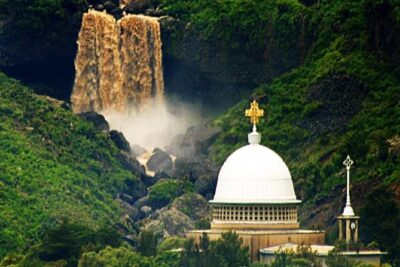
★ 5.0 · 406 reviews - Day Trip From Addis Ababa See Historical Monastery,Stunning Nature,Animals,Birds
★ 5.0 · 303 reviews - Addis Ababa: Debre Libanos, Blue Nile Gorge, and Cave Tour
★ 4.5 · 256 reviews - Addis Ababa Guided City Tour With Airport & Hotel Pick Up
★ 5.0 · 237 reviews
Mercato, where a guide earns the fare
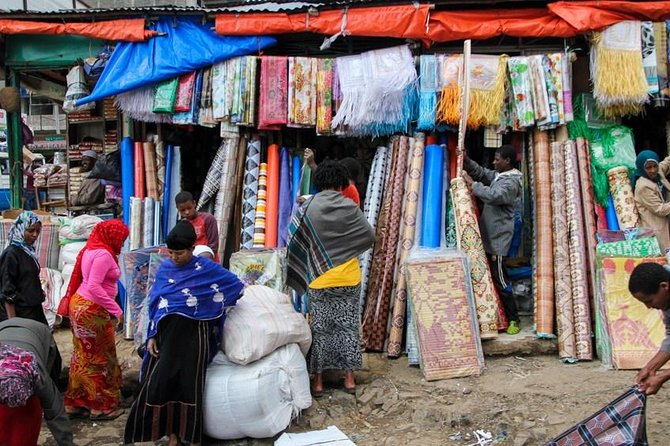
Mercato is billed as the biggest market in Africa, but the useful point is simpler: it is a huge, active trading area with many distinct sections. A first visit without local help can be confusing. This tour has your guide walk with you through some of the more scenic and culturally interesting areas.
Expect a strong mix of sights, smells, sounds, and movement. You may see ingredients for traditional Ethiopian cooking, spices, false banana tree bread, woven dresses, grass baskets, and other household or craft goods. The experience is less about one monument and more about seeing how commerce works in Addis Ababa.
Bargaining is part of the process. Your guide can help you practice without turning every purchase into a contest. I would decide in advance what you actually want, compare a few prices, and keep the shopping light if you still have museums ahead.
Mercato is closed on Sundays, an important planning detail. If your tour falls on Sunday, the itinerary needs to be adjusted, and the private format helps with that. The market stop is listed at about one hour, but traffic and shopping decisions can affect the timing of the rest of the day.
The Ethnological Museum inside a former palace compound
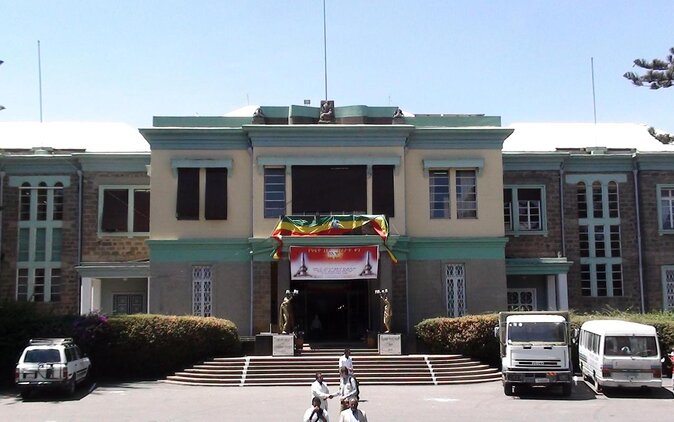
The Ethnological Museum sits within the Addis Ababa University compound and is one of the day’s best stops for understanding Ethiopia’s many cultures. A guided visit takes about an hour.
The ground floor includes a room about Ethiopia’s victory over Italy at the Battle of Adwa in 1896. Another room honors Ethiopian poets, writers, and translators. These exhibits provide a useful bridge between political history, national identity, and literature.
The first floor presents material connected with different ethnic groups across Ethiopia. You can see objects and displays that explain everyday life, traditions, and social customs. This is where a guide adds real value, since labels alone cannot always explain how the pieces fit into the lives of the people who used them.
Admission is extra, listed at about $2. The museum is a stronger choice for you if you want cultural context rather than only grand buildings. It may feel less immediately dramatic than a cathedral or market, but it gives meaning to what you see elsewhere during the day.
National Museum and the story of Lucy
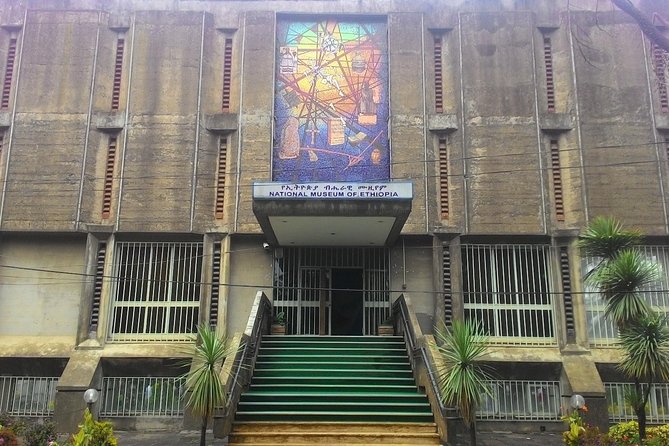
The National Museum of Ethiopia gives the tour its most famous object: Lucy, the 3.2-million-year-old Australopithecus afarensis fossil. Her importance is not just age. Lucy helps show why Ethiopia is central to the study of human evolution.
The museum also covers the Aksumite Empire, the role of the Ethiopian Orthodox Church, and later periods of Ethiopian history. An art section includes ancient paintings and sculptures as well as more modern works.
This is a worthwhile stop for nearly anyone, but particularly for you if archaeology and human origins are high on your list. The planned visit lasts about an hour, which is enough for a guided overview but not enough for a slow reading of every display.
The National Museum is listed as temporarily closed from December 19, 2024. Check its current status before booking or confirm the replacement plan with the operator. Since the tour is private, you can use that time for another site if needed, but do not assume the museum will be available.
Holy Trinity Cathedral and imperial memory
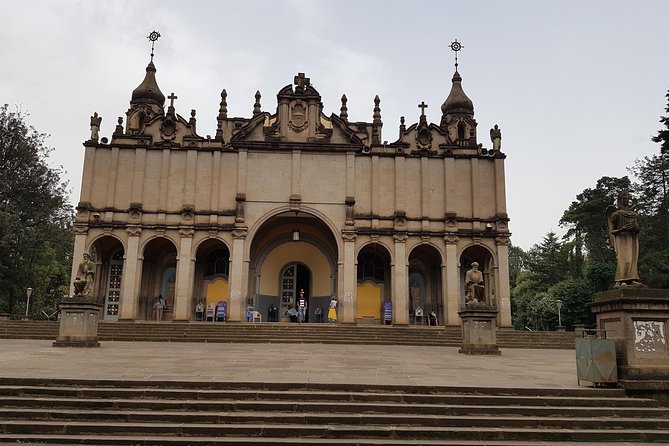
Holy Trinity Cathedral is Addis Ababa’s highest-ranking religious site and was built in 1944 by Emperor Haile Selassie. It is also the burial place of Haile Selassie and other notable Ethiopians.
The cathedral’s stained-glass windows show biblical stories. One especially striking painting presents Haile Selassie addressing the League of Nations in 1936, during his appeal for help against the Italian invasion. That scene gives political weight to what might otherwise seem like a short church visit.
The museum contains religious garments, royal objects, and other historical items. A guided visit lasts about an hour, and the guide can explain the links between Ethiopian Orthodoxy, monarchy, and national history.
Entry is not included and costs about $12, making this the largest extra charge of the day. Add it to your budget before you decide. For many people, the cathedral is worth the fee because it combines architecture, worship, royal burial, and twentieth-century politics in one place. If you are mainly interested in markets or modern city life, you might prefer to spend that money and time elsewhere.
Meskel Square and the city’s public center
The final stop is Meskel Square, the central Addis Ababa gathering place named for the Meskel celebration, which commemorates the finding of the True Cross. The visit is brief, about ten minutes, but the square helps you see the city as a public and ceremonial space.
Do not expect a long guided tour here. It is more of a pause for orientation, photos, and a final explanation of one of Addis Ababa’s best-known landmarks.
Transport, meals, and the pace of the day
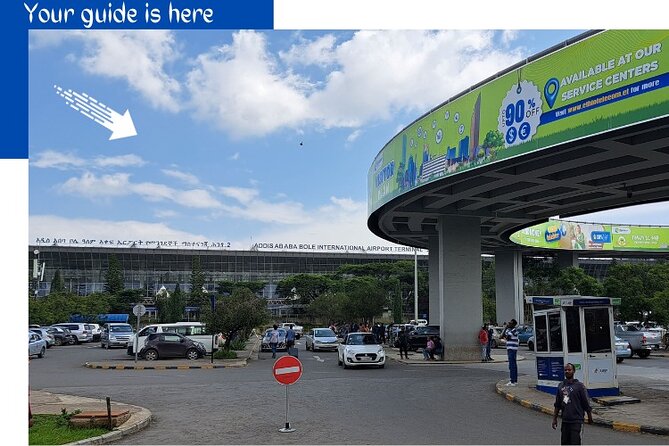
An air-conditioned private vehicle, driver, and English-speaking guide are included. Hotel and airport pickup and drop-off are also provided, which is especially useful if you are arriving on a morning flight or using Addis Ababa as a layover stop.
The tour runs seven to nine hours. That is a full day, and the route has many moving parts. Churches, museums, markets, mountain roads, and city traffic do not always fit neatly into a clock. The private setup gives you room to adjust, but it cannot remove traffic or museum closures.
Bottled water, local snacks, coffee and tea, a coffee ceremony, and a home-cooked Ethiopian lunch are included. Several strong experiences connected the meal and coffee ceremony with a warm, family-style welcome. That is more memorable than simply being handed lunch at a standard restaurant.
One practical point deserves attention: the vehicle is advertised as air-conditioned, but one booking reported that the air conditioning was not working. Ask the operator to confirm the vehicle condition before departure. This was an isolated complaint among otherwise very positive experiences, but it is a fair question in a city where a long drive can be tiring.
Who should book this Addis Ababa tour?
I would choose this tour for a first visit, a short stop between flights, or a small group that wants a broad introduction without arranging separate taxis and admissions. Families may appreciate the private vehicle and flexible pacing. Couples and friends can spread the $160 group cost across as many as six people.
It suits you especially well if you want a mix of history, religion, markets, food, and local contact. The coffee ceremony and family visit give the day a warmer character than a standard monument circuit.
It is less suitable if you prefer slow travel. Seven major stops, plus driving and lunch, make this an active day. You may need to choose between a long museum visit, extended shopping, and a relaxed mountain walk. Tell the guide your top two or three priorities at the start.
The tour has a 4.9 rating from 147 reviews and a 98 percent recommendation rate. The strongest pattern is clear: guides such as Biruk, Abenezer, Henok, and Wondiye are praised for warmth, flexibility, cultural explanation, and help with local shopping. One Spanish-speaking guide, Solomon, is also specifically noted. The experience is guide-led, so clear communication before the day matters.
Free cancellation is available if you cancel at least 24 hours before the local start time. Changes or cancellations inside that window are not accepted for a refund.
Should you book it?
Book this private Addis Ababa tour if you want to cover the city’s major sights in one day and care about meeting people as much as seeing buildings. The best parts are the flexible route, the mountain visit, the family coffee ceremony, and the guide’s help in making sense of Mercato and Ethiopian history.
Before paying, confirm the National Museum’s opening status, ask which sites you want to prioritize, check the vehicle’s air conditioning, and budget about $17 in listed entrance fees. If those details work for you, this is a strong, practical way to get your bearings in Addis Ababa without spending your limited time sorting out transport.
FAQ
How long does the Addis Ababa private city tour last?
The tour lasts approximately seven to nine hours.
How much does the tour cost?
The price is $160 per group of up to six people.
Is hotel or airport pickup included?
Yes. Hotel and airport pickup and drop-off are included in a private air-conditioned vehicle.
Is the tour private?
Yes. Only your group participates in the activity.
What type of guide is included?
A professional, experienced English-speaking guide is included. Past guide assignments have included Biruk, Henok, Abenezer, Wondiye, Muluken, and Spanish-speaking guide Solomon.
Is lunch included?
Yes. A home-cooked Ethiopian meal is included, along with bottled water, local snacks, coffee, and tea.
Are entrance fees included?
No. Entry fees are extra. The listed approximate costs are $12 for Holy Trinity Cathedral, $3 for St. George’s Cathedral, and $2 for the Ethnological Museum.
Can I visit Mercato on a Sunday?
No. Mercato Market is closed on Sundays, so the itinerary must be adjusted if your tour is scheduled that day.
Is the National Museum open?
The National Museum is listed as temporarily closed from December 19, 2024. Confirm its current status before your tour and ask what replacement stop is available if it remains closed.
Just added around Addis Ababa
- 6 days 5 nights Addis Abeba sightseeing & Lalibela Rock-Hewn Churches★ 5.0 · 3 reviews
- Addis Ababa Essentials: Flexible Full-Day City Sightseeing★ 5.0 · 3 reviews
- 4 Hours Addis Ababa Cultural Discovery Tour★ 5.0 · 3 reviews
- Day Trip Around Addis Ababa★ 5.0 · 3 reviews
- Northern Ethiopia (Historic route)★ 5.0 · 3 reviews
- Addis Ababa Half Day Shopping Tour★ 5.0 · 3 reviews
- Monastic Marvels Exploring the beauty of Debre Libanos Monastery★ 5.0 · 3 reviews
- 6 days Omo valley cultural Tour★ 5.0 · 3 reviews
Addis Ababa Tours, compared.
Full Day Tour of Addis Ababa with Hotel Pickup and Drop-off
Read our review →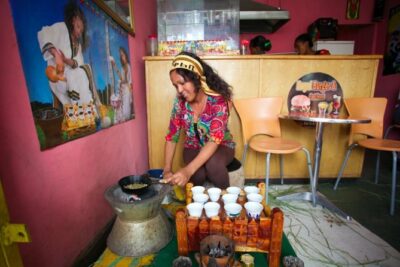
Day Trip From Addis Ababa See Historical Monastery,Stunning Nature,Animals,Birds
Read our review →
Addis Ababa: Debre Libanos, Blue Nile Gorge, and Cave Tour
Read our review →
Addis Ababa Guided City Tour With Airport & Hotel Pick Up
Read our review →
Breathtaking Nature, Wildlife and Cave Church Tour – Free Pickups
Read our review →
Authentic Addis Ababa City Tour with a Local Guide
Read our review →Browse the lists this tour appears in