
Reviewed · LALIBELA
Lalibela churches Guided Tour
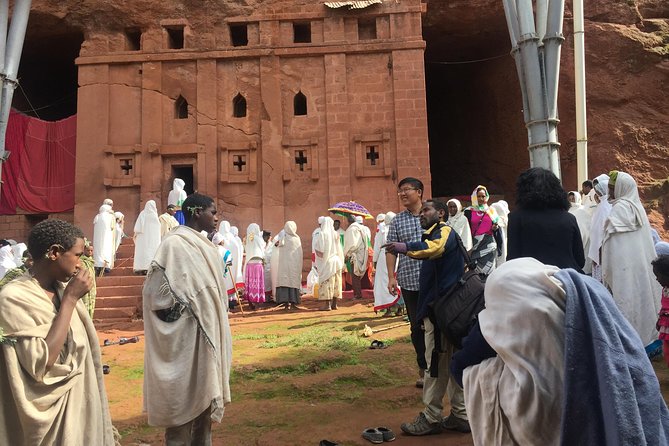
Lalibela’s churches are not simply old buildings. They are vast stone churches cut down into the rock, with courtyards, tunnels, steps, and sacred spaces hidden below ground. This private day tour takes you through the main church groups, including Bet Medhane Alem, the largest of the churches, and Bet Giyorgis, carved in the shape of a cross.
I like the way the day covers both church clusters instead of leaving you to pick only a few. I also like the private format, since your guide can explain local customs and answer questions without a large group pulling the pace along. Guides connected with this experience include Sisay, Sissay, and Mastewal, also called Mas. The main thing to consider is the long, full schedule: the church visits alone take about seven hours, and lunch, dinner, alcohol, tips, and shopping are extra.
Key points at a glance
- Two church clusters in one day: See the northwestern churches in the morning and the southeastern group in the afternoon.
- Bet Giyorgis saved for later: Finish the church visits at Lalibela’s famous cross-shaped monolith.
- Private touring: Only your group takes part, which gives you more room for questions and a less fixed pace.
- Guides with local insight: Sisay and Sissay are praised for cultural knowledge, kindness, French, and photography. Mastewal, or Mas, is described as friendly, honest, and fluent in English.
- Coffee, water, and entry fees included: The $176 price covers the church admission, taxes, bottled water, and coffee or tea.
- A cultural evening is possible: The plan includes sunset, dinner, and a traditional Ethiopian tij bar with music, but dinner itself is not included.
Why Lalibela’s churches deserve a full day
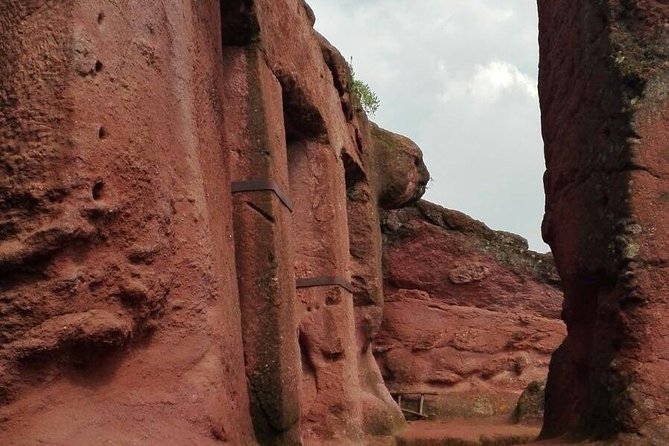
Lalibela is Ethiopia’s best-known historical site, and the reason becomes clear once you see the churches from above and below. These are not ordinary stone structures assembled block by block. They are monoliths cut from the living rock, with the surrounding stone removed to form walls, trenches, courtyards, and passageways.
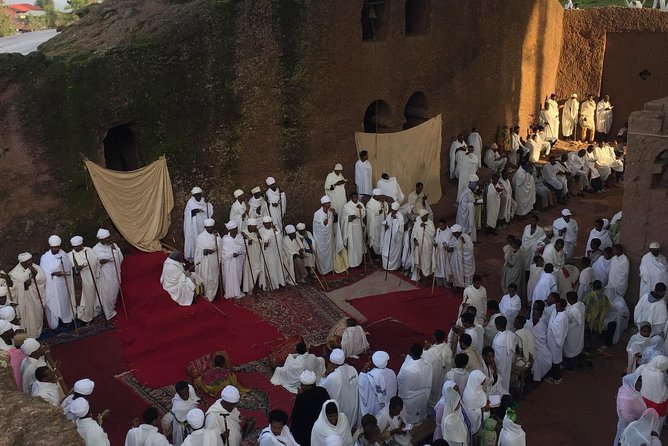
That design makes the visit feel almost like moving through a stone maze. You may walk along an open court, descend into a narrow passage, then arrive at a church that was hidden from view only moments earlier. A good guide matters here because the meaning of the spaces is not always obvious from the outside.
The tour is built around all 11 of Lalibela’s principal rock-hewn churches. You will see the churches in two main groups, then visit Bet Giyorgis separately. The pace is active, and you should be prepared for several hours of walking around uneven historic ground.
More Rock-Hewn Church Tours in Lalibela
- Visiting Lalibela churches
★ 5.0 · 40 reviews - Visit the rock hewn churches
★ 5.0 · 39 reviews - Tour 11 monolithic rock churches & museum in Lalibela & cave church with mummies
★ 5.0 · 37 reviews
Morning among Bet Medhane Alem and the northwestern churches
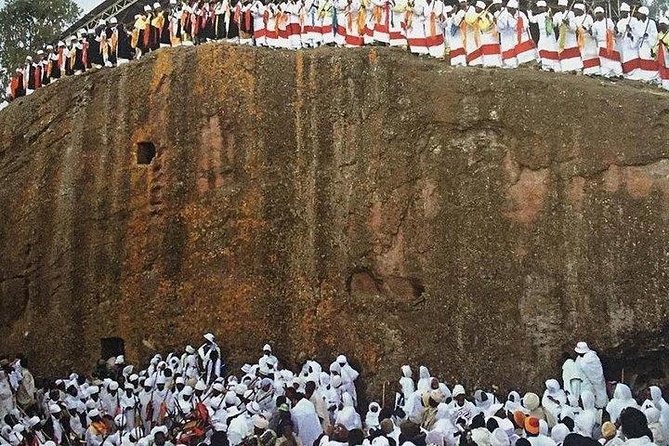
The first three-hour visit covers the northwestern cluster. It begins with Bet Medhane Alem, usually the grandest sight in this group. Its name means House of the Saviour, and its size gives you an immediate sense of the scale of Lalibela’s project.
Bet Medhane Alem is a huge monolithic church, surrounded by carved stone rather than freestanding in a modern plaza. Take a moment to look beyond the main facade. The trenches and outer spaces are part of the achievement, showing how much rock had to be cut away to reveal the church.
Next comes Bet Maryam, or the Church of Mary. It is followed by the smaller Bet Meskel and Bet Danaghel. These churches are close enough to visit as a group, but each has its own setting and religious role. Bet Danaghel is associated with the memory of the nuns who were killed by the Roman ruler Julian the Apostate, according to the tradition connected with the church.
The cluster also includes Bet Mikael and Bet Golgotha. Their names and religious associations make this section especially important for understanding Lalibela as a living place of worship, not only as an archaeological site. The tour description lists Bet Mikael and Bet Golgotha together, and the guide can help you follow the connections between them.
This is where local explanation adds real value. The churches can look like a series of remarkable stone forms if you only walk through them quickly. A guide such as Sisay or Sissay can add stories about the town, local faith, and his own memories of growing up in Lalibela. Mastewal, also called Mas, is another guide associated with the tour and is described as friendly, honest, and strong in English.
The morning session lasts about three hours. That sounds manageable, but the site is not a flat museum. You may be stepping up and down, moving through narrow areas, and pausing often to take in the carvings. Comfortable shoes are a sensible choice, and modest clothing is appropriate for religious sites.
The southeastern cluster, including Bet Amanuel
After the morning group, the itinerary turns to the southeastern cluster for about four hours. This section includes Bet Gabriel-Rufael, Bet Merkorios, Bet Amanuel, and Bet Abba Libanos.
Bet Gabriel-Rufael is linked to the archangels Gabriel and Raphael. Its position and approach help show how Lalibela’s churches were designed as a connected sacred zone, rather than as isolated buildings. The route between churches is part of the experience, since you pass through carved paths and spaces that are themselves part of the site.
Bet Merkorios has a different feel from the large, more open churches. It is associated with Saint Mercurius and is reached through the network of trenches and passages. The exact route may depend on local conditions and how your guide arranges the visit, so it is best to treat the schedule as a practical plan rather than a minute-by-minute promise.
The tour also includes Bet Amanuel, sometimes written as Bet Emanuele or Bet Amanual. The spelling varies, but the church is the same stop. It is often admired for its carefully cut exterior and strong, upright form. Bet Abba Libanos completes this part of the cluster, adding another example of Lalibela’s unusual combination of religious design and rock-cut engineering.
Four hours gives you more time here than in the morning, which is useful. The southeastern group has several churches, and rushing from one to the next would reduce the visit to a checklist. I would use this portion of the day to ask your guide to explain how the churches relate to one another, how they are used today, and what local traditions surround them.
Ending at the cross-shaped Bet Giyorgis
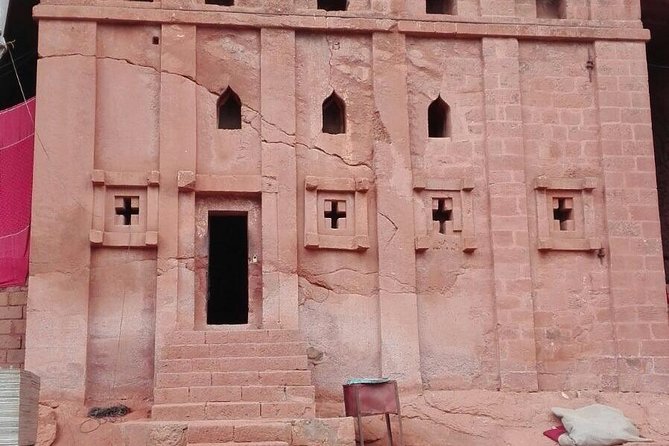
The final church is Bet Giyorgis, dedicated to Saint George, Ethiopia’s patron saint. It is the image most people associate with Lalibela, and for good reason. The church is cut down into the earth in the shape of a Greek cross, with the roof visible from above and the main church body below ground level.
Bet Giyorgis works best as the last major stop because it brings the day’s ideas together. After seeing churches with large courtyards, tunnels, and carved walls, you can appreciate how much planning went into this simpler, sharper form. Its cross shape is easy to recognize, but the full effect comes from seeing the church set inside its deep stone trench.
This is also a good place for photographs, and one of the guides associated with the tour, Sissay, is praised for being a good photographer. That does not mean you should expect a formal photography session, but you can ask for help with a group picture or a better angle.
Keep in mind that Bet Giyorgis is still a working religious site. Dress respectfully and follow your guide’s instructions about where to walk and when photography is suitable. The churches are important to local worshippers, so the visit should feel like a cultural encounter rather than a race for the best image.
More Lalibela rock-hewn church visits:
- Lalibela, Axum, Danakil and Omo Valley 8 DAYS
★ 5.0 · 29 reviews - Rock Churches of Lalibela Guided Tour
★ 5.0 · 27 reviews - Lalibela churches , church museum & Yemrehan kirstose ( cave church)
★ 5.0 · 19 reviews - Day Trip to Rock Hewn Churches of Lalibela
★ 5.0 · 16 reviews
Sunset, dinner, and a traditional tij bar
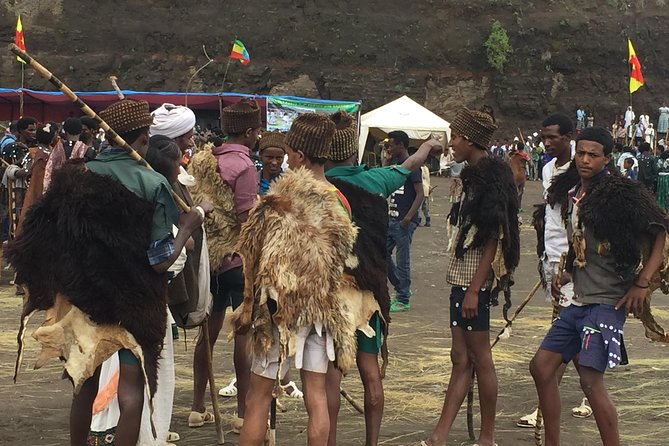
The day is scheduled to continue with sunset, dinner, and a visit to an Ethiopian tij bar with music. Tij is a traditional Ethiopian honey wine, and the bar setting offers a chance to experience a social custom beyond the church complex.
There is an important cost detail here. Coffee or tea and bottled water are included, but alcoholic drinks are not. Dinner is also listed as an extra, so you should budget separately if you want to follow the full evening plan. The description says to sit down for dinner, but it does not give a restaurant name or a fixed meal price.
The evening portion may be the most relaxed part of the day after the church visits. It gives you a chance to talk with your guide about Ethiopia, Lalibela, and the religious traditions you have seen. Several guides connected with this experience are praised for being kind and attentive, and one is noted for speaking fluent French. If you prefer French, it is worth requesting that in advance, since the guide assignment is not specified at booking.
What the $176 price buys you
At $176 per person, this is not the cheapest way to see Lalibela. The value depends on what you want from the visit. You are paying for a private, guided day that covers both main church clusters, includes the entrance fees, and provides local interpretation across a large and complex site.
The private format matters more here than it would at a simple monument. Lalibela has 11 churches, several groups, and routes that are not always obvious at first glance. With only your group taking part, you can ask for more explanation at a church that interests you, or spend less time at a stop that does not hold your attention.
The price includes:
- All fees and taxes
- Admission to the churches
- Coffee or tea
- Bottled water
It does not include lunch, dinner, alcoholic drinks, tips, shopping, or other related costs. That list is worth reading carefully because the day lasts long enough that you will likely want food beyond the included drinks.
For a solo visitor or small group, the cost may feel reasonable because it covers a full day and a private guide. For a larger party, ask about the available group discount before booking. The stated price is per person, and the exact saving from a discount is not provided.
The guides and the value of local storytelling
The strongest praise connected with this experience focuses on the guides. Sisay, also spelled Sissay, is described as attentive, kind, reliable, and strong in cultural knowledge. He is also praised for speaking fluent French and for helping make a wider four-day northern Ethiopia trip memorable.
Mastewal, known as Mas, is described as friendly, honest, and very good at explaining his country and culture. His English is noted as good, and contact details for him are provided in the supplied information. If you have a particular language need or want to request a specific guide, contact the provider before the tour rather than assuming that person will be assigned.
I especially value the personal side of these descriptions. A guide who can connect the churches with childhood memories, religious practice, and daily life can help you see Lalibela as a living town. You are not only looking at stonework from the past. You are visiting a place where the churches still matter.
The guide also helps with the practical side of the day. The churches are spread across clusters, and the route includes enclosed passages and open rock-cut areas. A private guide can keep your group oriented and make the long schedule easier to manage.
Who will enjoy this tour most
This experience suits you if Lalibela is a main reason for visiting Ethiopia and you want to see the major churches in one day. It is also a good choice if you prefer a private guide who can explain religious and cultural details instead of simply leading you from one entrance to the next.
It works particularly well for:
- Couples or families who want a private pace
- Small groups interested in architecture and religion
- First-time visitors to Lalibela
- French-speaking visitors who can request a French-speaking guide
- People who want help arranging a wider northern Ethiopia trip
- Anyone who prefers entry fees and basic refreshments included in the price
The day may be less suitable if you want a slow, unstructured visit. Seven hours of church touring is a lot, especially when followed by sunset and an evening tij bar. You should also plan for extra spending on meals and drinks.
The information says most people can participate, but it does not give detailed accessibility notes. If you have concerns about uneven paths, steps, or the length of the walking day, ask Adefa Tours Ethiopia before booking.
Practical details before you reserve
Pickup is offered, although the tour information also refers to pickup from a meeting point. Confirm the exact pickup arrangement, time, and location after booking. Confirmation is received at the time of booking, and a mobile ticket is available.
The tour is private, so only your group participates. That is useful for setting the pace, but it does not turn the day into a short visit. The listed times are about three hours for the northwestern cluster and four hours for the southeastern cluster and Bet Giyorgis.
Bring water even though bottled water is included, especially if you expect to stay through the evening. Coffee or tea is included, but food is not. Plan your lunch and dinner costs in advance, and ask how the tij bar visit will be arranged if you do not want alcoholic drinks.
Free cancellation is available up to 24 hours before the local start time. Changes or cancellations made inside that 24-hour window are not accepted for a refund.
Should you book the Lalibela churches tour?
Book it if you want a serious, full-day look at Lalibela with a private guide and the main entrance fees handled. The combination of both church clusters, Bet Giyorgis, local cultural explanation, and a possible tij bar evening gives you more than a quick photo stop.
I would be most likely to choose this tour when visiting Lalibela for only a short time, or when I wanted a guide who could add personal knowledge of the town. Before paying, confirm the pickup point, available guide language, meal arrangements, and the final timing of the sunset and tij bar visit.
Skip it if you want a budget visit or a short, self-directed walk. At $176 per person, with lunch and dinner extra, the tour makes sense chiefly for its private format, local guiding, and broad coverage of Lalibela’s churches.
FAQ
How long does the Lalibela churches tour last?
The tour lasts approximately one day. The first church cluster takes about three hours, and the afternoon cluster plus Bet Giyorgis takes about four hours. The plan also includes sunset and an evening tij bar visit.
Which churches are visited in the morning?
The morning visit covers Bet Medhane Alem, Bet Maryam, Bet Meskel, Bet Danaghel, Bet Mikael, and Bet Golgotha in the northwestern cluster.
Which churches are visited in the afternoon?
The afternoon visit includes Bet Gabriel-Rufael, Bet Merkorios, Bet Amanuel, and Bet Abba Libanos in the southeastern cluster, followed by Bet Giyorgis.
Is Bet Giyorgis included?
Yes. Bet Giyorgis is the final major church visit. It is a monolith carved in the shape of a cross and dedicated to Saint George, Ethiopia’s patron saint.
Is this a private tour?
Yes. Only your group takes part in the activity.
What is included in the $176 price?
The price includes all fees and taxes, church entrance fees, coffee or tea, and bottled water.
Are meals and drinks included?
Lunch, dinner, and alcoholic beverages are not included. Coffee or tea and bottled water are included.
Can I cancel for a full refund?
Yes, if you cancel at least 24 hours before the experience start time. Cancellations or changes made less than 24 hours before the local start time are not accepted for a refund.
Just added around Lalibela
- Lalibela 2-Day Eco Trekking Tour★ 5.0 · 3 reviews
- Full Day Tour in Lalibela★ 5.0 · 3 reviews
- Lasta Mountains: Highland Eco Trekking Tour in Lalibela★ 5.0 · 4 reviews
- Full Day Tour To The 11 Rock Hewn Churches Of Lalibela★ 5.0 · 5 reviews
- Day Hike Around Lalibela★ 5.0 · 5 reviews
- Lalibela: Churches Full-Day Private Tour w/Coffee Ceremony★ 4.7 · 5 reviews
- Fully guided city tours of Addis Ababa with hotel pickup★ 5.0 · 5 reviews
- The Rock-Hewn Churches of Lalibela: 3 Days / 2 Nights★ 5.0 · 6 reviews
Lalibela Rock-Hewn Churches, compared.

12 Days SIMIEN MOUNTAIN-LALIBELA-DANAKIL-TIGRAY CHURCHES
Read our review →
Tour 11 monolithic rock churches & museum in Lalibela & cave church with mummies
Read our review →
Ethiopia Tigray Tours: Guided tour of Tigray rock hewn churches
Read our review →
5 DAYS Lalibela, Axum, Tigray churches and Danakil
Read our review →
6 Days tour Package (Simien Mountains, Lalibela, and Danakil Depression)
Read our review →
Lalibela, Axum, Danakil and Omo Valley 8 DAYS
Read our review →Browse the lists this tour appears in