
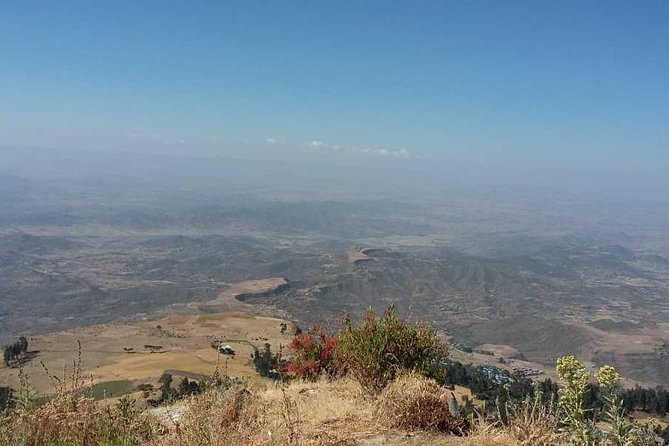
Reviewed · LALIBELA
Tour 11 monolithic rock churches & museum in Lalibela & cave church with mummies
Lalibela’s churches are not simply old buildings. They are churches cut downward into living rock, with courtyards, passageways, windows, and crosses shaped from the same stone. This two-day tour adds the unusual cave church of Yemrehana Krestos, where about 5,500 mummified pilgrims remain in the rear of the cave.
I like the private format, which lets you set a sensible pace, and I like having airport pickup and drop-off built into the plan. Guide Chris, also known as Lidetu Shambel, is praised for clear English, local knowledge, patience, and a willingness to adjust the day for families, older people, and individual interests.
The main drawback is physical: steep, narrow steps and uneven walking surfaces are part of the churches. The $355 price also excludes meals, lodging, and gratuities, although it includes the major entrance fees and an air-conditioned vehicle.
Key points at a glance
- Yemrehana Krestos is older than Lalibela’s famous churches: The cave church was built about 80 years earlier than the main rock-hewn complex.
- The tour includes about 11 monolithic churches: You see the northern and southeastern clusters, then finish at the cross-shaped Church of St. George.
- The rear of the cave holds about 5,500 mummified bodies: This is a striking and solemn part of the second day, not a casual museum display.
- Chris offers strong local guidance: He grew up in Lalibela and is praised for English, French, patience, punctuality, and thoughtful communication.
- Transfers are part of the plan: Pickup from the airport, transport between sites, and return to your hotel or airport are provided.
- You need moderate fitness: Narrow steps, rocky paths, and long periods on your feet make good shoes and steady footing important.
Why Lalibela’s rock churches deserve two days
I would not try to squeeze Lalibela into a rushed half-day. The churches reward time because the setting is part of the experience. You move through rock-cut trenches, narrow walkways, and open courtyards before a church suddenly appears below you.
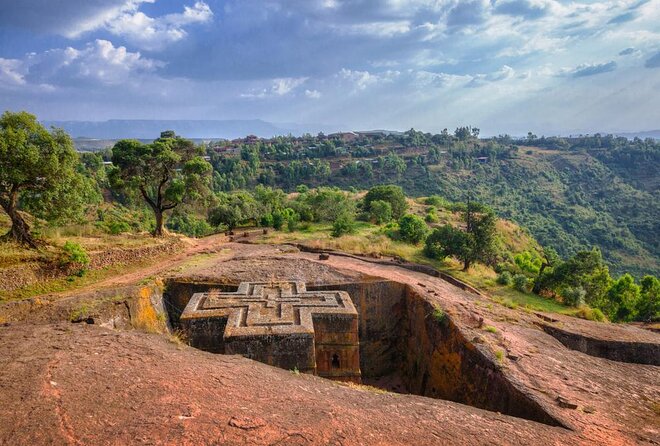
The buildings were carved from solid volcanic rock in the 12th century. Rather than assembling walls block by block, the builders cut down into the ground and shaped the church from the remaining stone. That approach explains the unusual feeling of the site: you are not walking among freestanding monuments but through a connected world of stone.
A guide matters here. Without context, you may see a remarkable collection of churches and miss the way the passages, bridges, courtyards, and religious traditions fit together. Chris is a local guide who grew up in Lalibela, and his work is especially useful if you arrive with little knowledge of Ethiopian Orthodox Christianity.
His strongest practical qualities are communication and flexibility. He has been praised for replying quickly, arriving on time, answering difficult questions, and changing the pace for a group that includes a baby or older family members. He also speaks French, according to the tour information, which may help if French is more comfortable for you than English.
More Rock-Hewn Church Tours in Lalibela
- Visiting Lalibela churches
★ 5.0 · 40 reviews - Visit the rock hewn churches
★ 5.0 · 39 reviews - Lalibela, Axum, Danakil and Omo Valley 8 DAYS
★ 5.0 · 29 reviews
Day one: airport pickup and the northern church group
The first day begins with airport pickup. You are driven up the mountain to your hotel, where you can leave your luggage before lunch. That simple transfer is useful because arriving in Lalibela involves more than reaching a town center. Your accommodation and the churches are set in an elevated area, so having a driver meet you removes an early layer of hassle.
After lunch, the main sightseeing begins with the northern group of rock-hewn churches. The scheduled church visit lasts about three hours, while the full first-day program is listed at roughly seven hours, including transport, hotel drop-off, the museum, and time around the site.
Expect a walking tour rather than a drive-up photo stop. Chris accompanies you through the church group, explaining the background of the buildings and the religious art. He can also help you manage the physical parts of the route, which include steep and narrow steps. One useful detail from past visits is that he pays close attention to footing, an important service when you are looking down at stone steps instead of scenery.
The northern group gives you your first sustained look at Lalibela’s unusual construction. You will see churches cut into the rock, with the surrounding stone forming walls and floors. The appeal is not only visual. The setting helps you understand the labor and planning required to carve places of worship at this scale.
The museum may follow the church visit. It provides a change of pace after several hours among the rock-cut buildings and can help put the churches into a wider historical and artistic setting. The museum fee is included in the stated admission arrangement.
You then return to your hotel. The schedule leaves room to recover, which is welcome in a town where even a short route can involve stairs and uneven surfaces. I would keep the evening quiet rather than plan another demanding activity.
What the museum adds to the church visit
The museum is not the main reason to book this tour, but it gives the first day a useful second layer. The churches are powerful in person, yet their meaning can be hard to place if you are seeing Ethiopian religious art and traditions for the first time.
A museum visit lets you shift from architecture to objects and interpretation. It also gives your feet a break. Since the museum is part of the first-day plan, you do not need to arrange a separate visit or decide how to fill the time after the northern churches.
The exact museum contents and presentation are not detailed here, so I would treat it as a supporting stop rather than expect a large, modern museum complex. Its value is in adding context to the churches and the religious culture that shaped them.
Day two: the 42-kilometer trip to Yemrehana Krestos
The second day begins after breakfast with a drive of about 42 kilometers to Yemrehana Krestos, also spelled Yemrehana Kirstos in some descriptions. The church predates Lalibela’s main rock-hewn churches by about 80 years, making it an important part of the story rather than an optional side trip with little connection to the town.
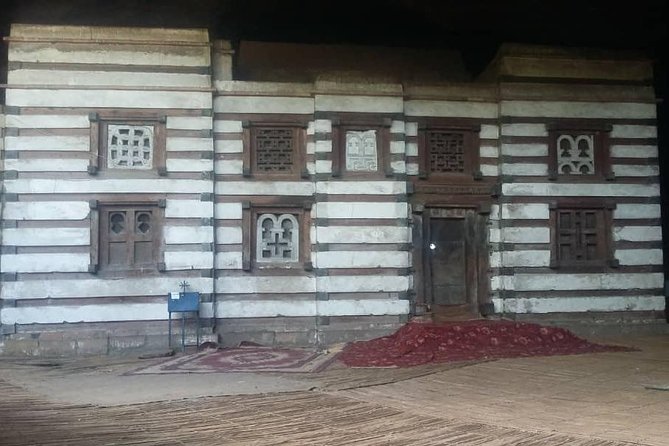
The setting is different from the northern and southeastern church groups. Yemrehana Krestos is built inside a cave, not carved as a freestanding church below ground in the same manner as Lalibela’s best-known monuments. That difference alone makes the trip worthwhile for anyone interested in sacred architecture.
The cave also contains the most unusual and difficult part of the tour. About 5,500 mummified bodies of pilgrims from past centuries are kept at the rear. This is not a polished display arranged for easy viewing. You should expect a solemn religious site with human remains, and you may find the scene confronting.
I would approach this stop respectfully and allow yourself time to process it. The mummies are historically striking, but they are also the remains of people connected to a sacred place. If you prefer attractions that feel light or purely scenic, this part of the tour may be uncomfortable.
The return journey brings you back to Lalibela for lunch at your hotel. Since the round trip covers 84 kilometers before any local sightseeing, the road time is a real part of the day. The advantage is access to an older and markedly different church. The tradeoff is less time spent resting or exploring Lalibela on foot.
More Lalibela rock-hewn church visits:
- Rock Churches of Lalibela Guided Tour
★ 5.0 · 27 reviews - Lalibela churches , church museum & Yemrehan kirstose ( cave church)
★ 5.0 · 19 reviews - Day Trip to Rock Hewn Churches of Lalibela
★ 5.0 · 16 reviews - Lalibela Rock Churches Guided Tour
★ 5.0 · 15 reviews
The southeastern cluster and St. George
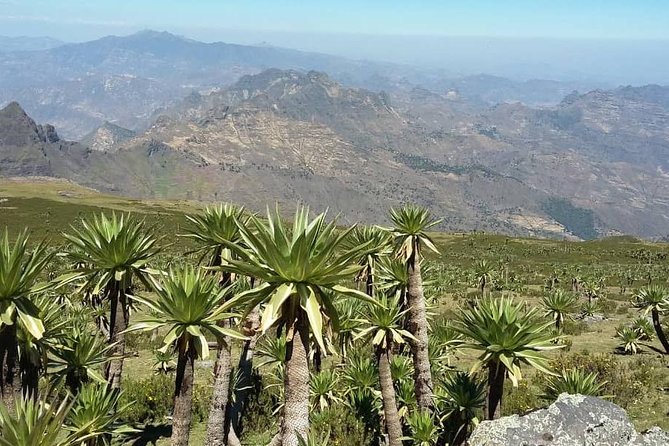
After lunch, the tour continues with the southeastern cluster of Lalibela’s churches. This gives you a second architectural group instead of repeating the same route from day one.
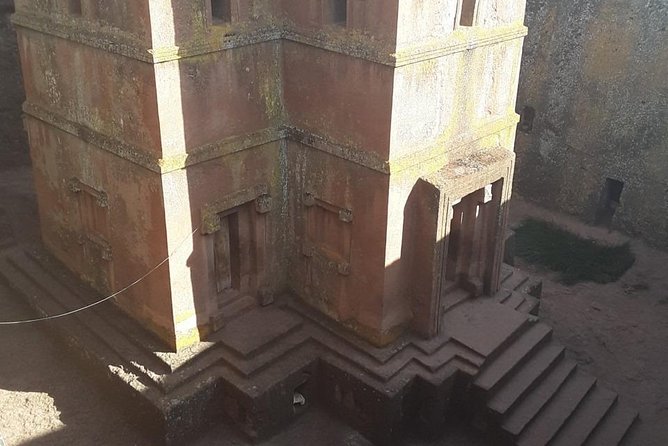
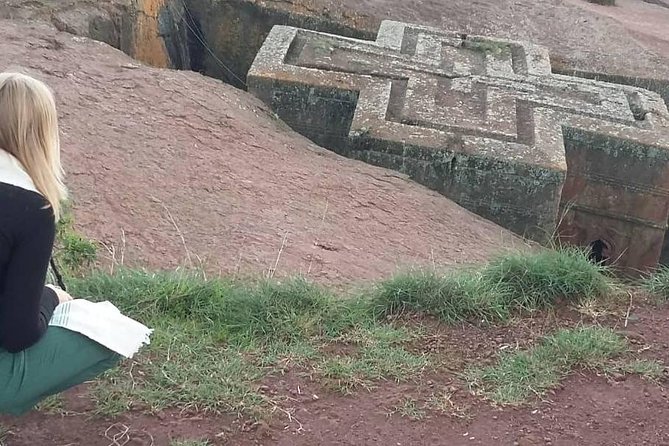
The southeast visit is followed by the Church of St. George, the famous cross-shaped monolithic church built in honor of St. George, the patron saint of Ethiopia. Its shape is one of the clearest examples of how Lalibela’s builders made the rock itself part of the church’s identity.
St. George is often the image people carry away from Lalibela, but it works better after you have seen the other churches. By the time you reach it, you have already learned how the site is arranged and how much stone had to be removed to create these spaces. The final church then feels like part of a larger achievement rather than an isolated monument.
The second day is listed with about three hours at the Lalibela church sites, in addition to the drive to Yemrehana Krestos and the return for lunch. The overall pace is active, but the private format gives you a better chance to pause for questions or adjust the order when practical.
How the private format changes the experience
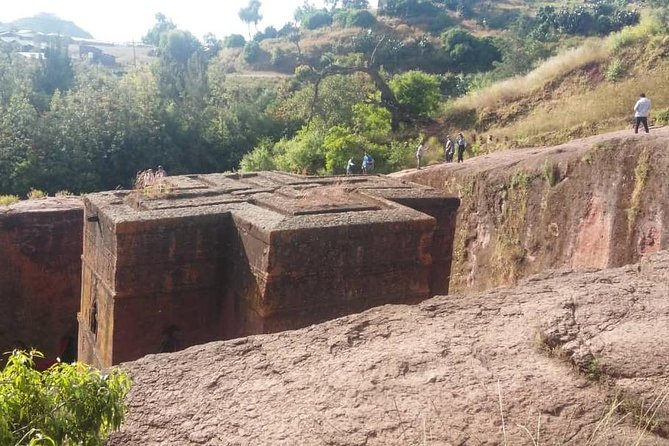
This is a private tour, so only your own group participates. That matters in Lalibela because the churches are not designed like broad, open galleries. Some paths are narrow, and explanations are easier to follow when you are not standing at the edge of a large group.
A private guide can also make the tour more suitable for mixed ages. Chris has worked with families that included a baby and older adults, and the tour can be adjusted around comfort and interests. If one person wants more detail about church art while another needs a slower pace, private guiding gives you a better chance of making both work.
Do not read private as completely solitary. Lalibela is an active religious place, and you may encounter worshippers or other people at the churches. The benefit is control over your own group, not guaranteed empty paths.
There is also a practical communication advantage. Chris has been described as easy to reach, punctual, patient, and willing to arrange airport pickup or help with hotel choices. Those services may be particularly useful if you are making Lalibela one stop in a larger Ethiopia trip.
One caution is worth noting. Chris may not personally be available on every date, and another guide can be arranged. If having Chris specifically is important to you, ask before booking. The quality of guiding can depend on the individual, and one past experience with a substitute guide felt less detailed on the second day.
Fitness, footwear, and the pace of the site
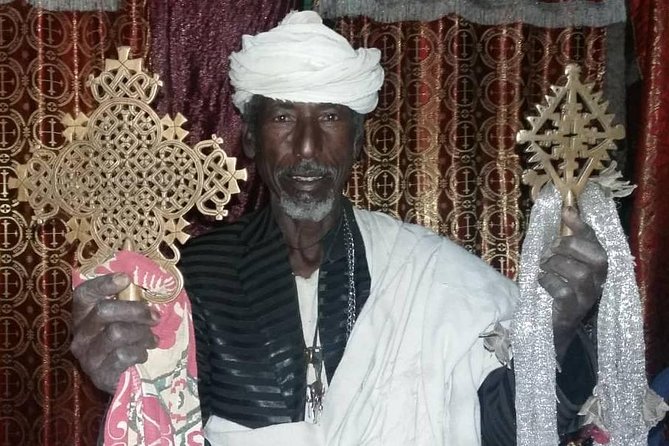
The tour calls for a moderate level of physical fitness. That is a fair description. You do not need to be an athlete, but you should be comfortable walking for several hours and managing steep, narrow steps.
Wear shoes with a firm grip. The route includes uneven stone and passages where you will want stable footing. Chris has been praised for helping people avoid slips, but good footwear remains your responsibility.
I would also avoid treating the two days as a race to count churches. The value comes from seeing how each church is set into the rock, noticing the art and religious details, and asking questions while the setting is in front of you.
The altitude and mountain setting can make a walking day feel more tiring, though no specific altitude or medical guidance is provided for this experience. Plan for breaks, carry only what you need, and tell the guide early if stairs or long walks are becoming difficult.
What the $355 price covers
The listed price is $355 per person. That is a substantial amount, so the value depends on how much assistance you want. You are paying for a private two-day program, a guide, an air-conditioned vehicle, airport and hotel transfers, and access to several major sites.
The included fees are listed as $100 for the Lalibela rock-hewn churches and museum, plus $60 for Yemrehana Krestos Church. Those admission costs account for $160 of the stated package price, leaving the guide service, driver, vehicle, transfers, and tour planning to make up the rest.
Meals, accommodation, and gratuities are not included. You need to budget separately for your hotel and food, even though the schedule returns you to the hotel for lunch on the second day. The tour is therefore easiest to compare with a private guiding and transport package, not with a simple entrance ticket.
Group discounts are offered, though no exact discount schedule is provided. For two or more people, ask for the current group price. The private format may offer better value for a family or small group than booking several separate services.
Who should book this two-day Lalibela tour?
I would choose this tour if you want historical explanation rather than just transport between churches. It suits first-time visitors, people interested in Ethiopian Orthodox traditions, families that need some flexibility, and anyone who wants to add a less familiar site beyond Lalibela’s central church groups.
It is also a good match for solo visitors who want a private guide and driver. Past guests have described Chris as patient and careful, with strong English and a personal understanding of Lalibela. French speakers may also appreciate his ability to guide in French.
I would think twice if you want a very relaxed holiday with little walking. The church routes involve steps, and the 42-kilometer journey to Yemrehana Krestos makes the second day active. I would also reconsider if the sight of thousands of mummified bodies would be distressing.
The tour requires good weather, and the operator may cancel if conditions are poor or if the minimum number of participants is not met. In either case, you are offered another date or a full refund. Standard cancellation allows a full refund when you cancel at least 24 hours before the start time. Changes or cancellations inside that window are not accepted for a refund.
Should you book it?
Book this tour if you want Lalibela explained by a local guide and prefer a private vehicle, airport assistance, and a two-day route that includes both the main churches and Yemrehana Krestos. The combination is especially strong for history-focused visitors who want to understand how the churches were made and why they remain active religious places.
The $355 cost is harder to justify if you already have transport, lodging, and a guide arranged. Before booking, confirm which guide will lead your dates, ask about any group discount, and make sure the physical pace suits everyone in your party. If those details fit, this is a well-planned way to see Lalibela’s major churches and one of Ethiopia’s most unusual cave churches without trying to rush everything into one day.
FAQ
How long does the tour last?
The experience lasts approximately two days.
Is airport pickup included?
Yes. You are picked up at the airport at the beginning, taken to your hotel, and can be dropped at your accommodation or the airport according to your group’s needs.
Is this a private tour?
Yes. Only your own group participates in the activity.
What entrance fees are included?
The package includes the stated $100 fee for the Lalibela rock-hewn churches and museum, along with the $60 fee for Yemrehana Krestos Church.
Are meals and accommodation included?
No. Meals, accommodation, and gratuities are not included.
How far is Yemrehana Krestos from Lalibela?
The church is about 42 kilometers from Lalibela. The tour includes transport there and back.
How physically demanding is the tour?
You should have a moderate level of physical fitness. The church visits include steep, narrow steps and uneven walking surfaces.
Can I cancel for a refund?
You can cancel at least 24 hours before the experience start time for a full refund. Cancellations or changes made less than 24 hours before the start time are not refunded. If poor weather or insufficient participation causes the operator to cancel, you are offered another date or a full refund.
More Museums in Lalibela
- Addis Ababa +Mount Entoto View Point,Museums Palace Market Tours
★ 5.0 · 42 reviews - Museum Highlights Guided Day Tour in Addis Ababa
★ 5.0 · 9 reviews - Airport Layover Tour | Half Day Addis City Tour : sightseeing, museum , markets
★ 5.0 · 4 reviews
Just added around Lalibela
- Lalibela 2-Day Eco Trekking Tour★ 5.0 · 3 reviews
- Full Day Tour in Lalibela★ 5.0 · 3 reviews
- Lasta Mountains: Highland Eco Trekking Tour in Lalibela★ 5.0 · 4 reviews
- Full Day Tour To The 11 Rock Hewn Churches Of Lalibela★ 5.0 · 5 reviews
- Day Hike Around Lalibela★ 5.0 · 5 reviews
- Lalibela: Churches Full-Day Private Tour w/Coffee Ceremony★ 4.7 · 5 reviews
- Fully guided city tours of Addis Ababa with hotel pickup★ 5.0 · 5 reviews
- Lalibela churches Guided Tour★ 5.0 · 6 reviews
Lalibela Rock-Hewn Churches, compared.

12 Days SIMIEN MOUNTAIN-LALIBELA-DANAKIL-TIGRAY CHURCHES
Read our review →
Ethiopia Tigray Tours: Guided tour of Tigray rock hewn churches
Read our review →
5 DAYS Lalibela, Axum, Tigray churches and Danakil
Read our review →
6 Days tour Package (Simien Mountains, Lalibela, and Danakil Depression)
Read our review →
Lalibela, Axum, Danakil and Omo Valley 8 DAYS
Read our review →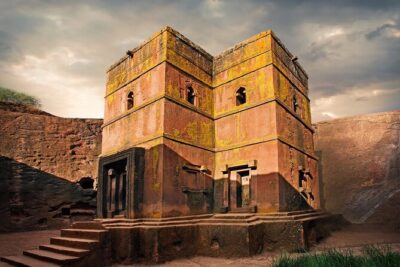
Browse the lists this tour appears in