
Reviewed · ADDIS ABABA
10 Days in Northern Ethiopia Tours
Northern Ethiopia packs an astonishing amount into ten days: Lake Tana monasteries, Simien Mountain trails, Axumite ruins, and Lalibela’s churches. You move by plane and private road transport, with Mass Ethiopia Tours handling the route from Addis Ababa north and back again.
I like the strong mix of culture and scenery, especially the boat trip to Lake Tana and the chance to sit near gelada monkeys in Simien. I also like the local guide focus. Mass is praised for clear communication and a careful approach, while Mastewal brings strong knowledge of Bahir Dar and the north. The main drawback is the pace: several road days are long, and the $4,300 price requires careful checking of what is included, particularly domestic flights and lunch.
Key points to know before booking

- Lake Tana by boat: Spend about four hours visiting Orthodox monasteries, painted churches, and the source area of the Blue Nile.
- Gondar’s royal monuments: See the Royal Enclosure, Fasilidas’s Pool, and Debre Birhan Selassie church in one focused day.
- Simien wildlife and hiking: Allow three to four hours for a mountain walk with possible gelada monkey and Walia ibex sightings.
- Axum and ancient Tigray: Visit obelisks, royal sites, Yeha, Debre Damo, and Wukro Chirkos.
- Lalibela’s eleven churches: Reserve a full day for the two church clusters and Bet Giyorgis.
- Private touring: Only your group participates, so you have more room to ask questions and adjust the pace within a tightly planned route.
Why this northern Ethiopia route works
This journey follows Ethiopia’s main northern arc. You begin in Addis Ababa, then fly to Bahir Dar before continuing overland through Gondar and Simien to Axum, Mekelle, and Lalibela. The route links major religious and royal sites instead of treating them as isolated day trips.
That matters because the places tell different parts of Ethiopia’s story. Addis gives you a modern capital and national context. Bahir Dar introduces the Orthodox Christian tradition around Lake Tana. Gondar shows imperial architecture. Axum reaches back to the ancient kingdom, while Lalibela presents a remarkable group of churches cut directly into rock.
You should also understand the physical demands. This is not ten easy days of short sightseeing stops. Day 5 takes you from Simien to Axum, and Day 8 is a full driving day to Lalibela. The reward is access to places that would be difficult to connect efficiently without a planned private trip.
The tour is listed at $4,300 per person. That is a serious price, so value depends on what your booking actually covers. Breakfast, dinner, bottled water, entrance fees, and taxes are listed as included. The information also lists lunch as included and excluded, which is a contradiction you should settle before paying. Domestic flights are specifically excluded, despite the itinerary using flights to Bahir Dar and Addis Ababa. Ask for a written cost breakdown.
A few more Addis Ababa trips to weigh up
- Full Day Tour of Addis Ababa with Hotel Pickup and Drop-off
★ 5.0 · 430 reviews - Taste of Ethiopia
★ 5.0 · 406 reviews - Day Trip From Addis Ababa See Historical Monastery,Stunning Nature,Animals,Birds
★ 5.0 · 303 reviews
Addis Ababa: a useful first look at the capital
Your first day covers three very different sides of Addis Ababa. The Ethiopian National Museum provides a grounding in the country’s past, while Merkato gives you a look at daily commerce. Entoto offers a high viewpoint over the capital.
This is a sensible opening because it gives you context before the historical sites farther north. The museum is especially useful if you want a basic framework for Ethiopia’s long human and political story. Merkato is an open-air market, so expect a busy public setting rather than a polished shopping center.
Entoto adds a change of pace and a broad view. Since this is an introductory city day, it should help you adjust before the early flights and long road journeys that follow. You spend the night in Addis Ababa.
The meeting information gives a start time of 12:00 am. That may simply reflect a default booking time rather than the real pickup hour, so confirm the exact first-day schedule with Mass Ethiopia Tours.
Lake Tana and the Blue Nile near Bahir Dar
On Day 2, you fly to Bahir Dar and head onto Lake Tana by boat. The boat trip lasts about four hours and includes several Ethiopian Orthodox churches and monasteries, including Ura Kidane Mehret, Azewa Mariyam, and Betre Mariyam.
The appeal here is not only the buildings. The churches are known for colorful wall paintings, and the journey across the lake gives you a sense of how water, faith, and local life connect in this part of Ethiopia. You also visit the outlet where the Blue Nile leaves Lake Tana.
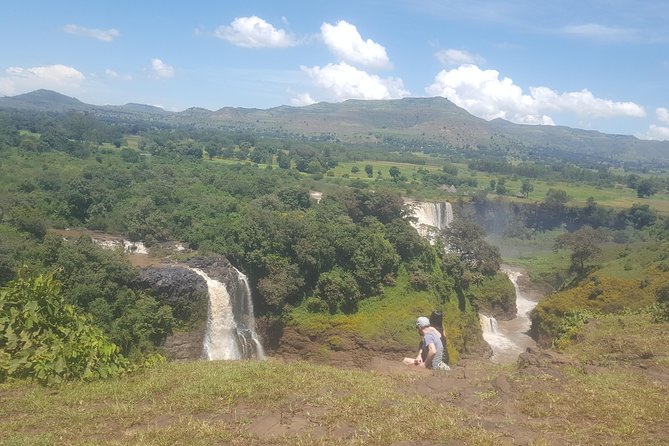
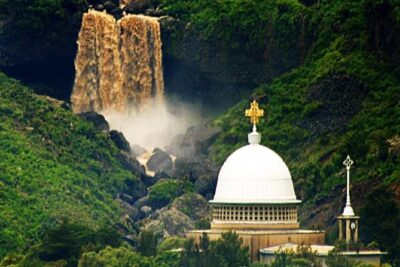
After lunch, you drive to the Blue Nile Falls for a short hike. The schedule makes this a full day, but the two experiences are quite different: the morning is water travel and religious art, while the afternoon offers a walk in a natural setting.
I would treat this as one of the most rewarding days of the trip, but not a leisurely one. Boat conditions, driving time, and the short hike all shape the day. Wear practical shoes and keep your camera ready, but also allow space for the pace of local visits.
Mastewal is specifically praised for his knowledge of Bahir Dar and northern Ethiopia, making this a part of the route where a local guide can add real value. The next night is in Bahir Dar.
Gondar’s castles and painted church ceiling
After breakfast, the drive to Gondar takes about three hours. The road passes rural villages and gives you a look at Amhara life before the afternoon sightseeing begins.
Gondar’s Royal Enclosure is the main event. It contains six castles and several other buildings, giving the visit more substance than a single palace stop. The site helps explain Gondar’s role as a royal center and gives you a change from the open spaces of Lake Tana.
You also visit Fasilidas’s Pool, which is still used during Timket celebrations. That detail gives the place a living purpose. It is not simply an old structure preserved for display.
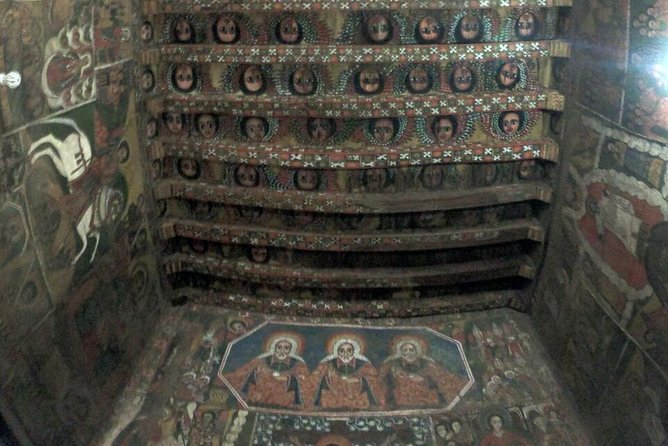
Debre Birhan Selassie church is another highlight. Its ceiling is described as the most famous in Ethiopia, so this is a stop where looking upward matters. The day combines political history, religious art, and local tradition without requiring a long hike.
Gondar is a comfortable middle point in the route, but the schedule remains compact. If you want extended time at each castle or church, tell your guide early. Mass is described as conscientious and well informed, and that careful guiding style suits a day with many historic details packed into a small area.
Same starting point, a completely different route:
- Addis Ababa: Debre Libanos, Blue Nile Gorge, and Cave Tour
★ 4.5 · 256 reviews - Addis Ababa Guided City Tour With Airport & Hotel Pick Up
★ 5.0 · 237 reviews - Breathtaking Nature, Wildlife and Cave Church Tour – Free Pickups
★ 5.0 · 225 reviews - Full-Day Private City Tour of Addis Ababa
★ 5.0 · 147 reviews
Simien Mountains: three to four hours on foot
Day 4 takes you to Simien Mountains National Park, about two hours from Gondar. The route leads into a dramatic highland setting of plateaus, gullies, and sharp rock formations.
The planned walk lasts three to four hours. This is not a token viewpoint stop. The route follows mountain edges and offers the possibility of looking across steep drops toward the plains far below. Your exact walking experience will depend on the conditions and the selected trail.
The wildlife is a major reason to include Simien. You may sit near gelada monkeys, and you might see Walia ibex on rocky ledges. These are specific highlights rather than guaranteed sightings, so approach the day for both scenery and wildlife rather than expecting a fixed animal encounter.
You spend the night in Simien or Debark. That overnight location matters because it places you close to the park, but the facilities and comfort level may differ from what you find in larger towns. The tour suits you best if you enjoy walking and do not mind a more basic mountain stop.
The long road to Axum through the Tekeze Valley
Day 5 begins early with a drive to Axum. You stop for lunch in Adi Arkay, then continue through the Tekeze Valley. The route is one of the visual highlights of the journey, with spectacular views from the Simien area and dramatic scenery along the valley.
This is also one of the trip’s demanding days. You are traveling from the mountain region to Axum by road, so much of the day is spent in the vehicle. The advantage is that you see the countryside between major sites rather than flying over it. Small towns, rural villages, and changing terrain become part of the experience.
Axum is associated with the ancient Axumite Empire, the Queen of Sheba, and the Ark of the Covenant. Those subjects can easily fill a full history book, but your guide helps connect the remains you see with the stories attached to the city.
You spend the night in Axum, ready for a full day of sightseeing.
Axum’s stelae, royal sites, and sacred traditions
The sixth day is devoted to Axum. At the Northern Stelae Field, you see the famous obelisks, including one returned from Italy and re-erected in Axum. These monuments are among the most recognizable sights in northern Ethiopia.
The day also includes the Queen of Sheba’s Bath, which supplies Axum with water year-round, King Bazen’s Tomb, and the Queen of Sheba’s Palace. These sites vary in condition and character, so do not expect each one to look like a complete monument. Their value comes from the wider picture they create together.
St. Mary of Zion brings an important religious dimension. The Ark of the Covenant is said to be kept at the church, but access is restricted. Only one specially chosen guardian monk may enter the chapel holding it. Men alone may enter the old church, and women are not permitted inside that building.
Your guide should explain the religious rules clearly before you arrive. This is a place to show respect, listen carefully, and accept that some of the most important traditions cannot be viewed directly. You stay another night in Axum.
Yeha, Debre Damo, and Wukro Chirkos
The drive toward Mekelle on Day 7 adds several distinctive stops. First comes Yeha, with ruins dated from the eighth to fifth centuries BC. It is thought to have been the capital of Ethiopian civilization before Axum, giving you an earlier point of reference for the region.
Next is Debre Damo monastery. Men must climb a 15-meter rope to enter, while women are not allowed to visit the monastery. This is an important practical and cultural limitation, not a minor footnote. If you cannot or do not want to make the climb, your guide can explain the site from outside, but the tour information does not specify an alternative activity.
You then continue through Tigray and stop at Wukro Chirkos, a rock-hewn church in Wukro. This visit prepares you for Lalibela, but the churches in Tigray have their own setting and character. The combination of ancient ruins, a difficult monastery entrance, and a church cut from rock makes this one of the most varied days.
The night is in Mekelle. Since this is another road-based day with several stops, keep your expectations realistic. The schedule favors breadth over long, quiet visits.
The long approach to Lalibela
Day 8 is mainly a driving day from Mekelle to Lalibela. You pass small villages and see typical sandstone homes associated with the Tigray people.
There is no major sightseeing stop listed for this day, so its value lies in the transition. You cross rural areas and approach Ethiopia’s most famous church complex from the north. The setting changes gradually, and the arrival feels more earned than it would after a short flight.
Still, this is a demanding use of a day. If you prefer fast connections, the road can feel slow. If you want to see the countryside and understand the distances between these historic centers, it is worthwhile.
You stay overnight in Lalibela, which sets up the main visit for the following morning.
Lalibela’s eleven churches in one full day
The ninth day covers Lalibela’s rock-hewn churches. The churches are divided into clusters, and the route begins with the northwestern group: Bet Medhane Alem, Bet Maryam, Bet Meskel, Bet Danaghel, Bet Mikael, and Bet Golgotha.
After lunch, you visit the southeastern cluster: Bet Gabriel-Rufael, Bet Merkorios, Bet Amanuel, and Bet Abba Libanos. The final stop is Bet Giyorgis, the church dedicated to Saint George and the most famous building in the complex.
This is a substantial walking and sightseeing day. The churches are not just viewed from a bus window. You move between them and spend time taking in their sunken courtyards, stone passages, and religious details. The itinerary groups many sites together, so comfortable footwear and patience will help.
There are also access restrictions. Entry to Bet Golgotha is not permitted for women. As with the rules in Axum and Debre Damo, your guide should prepare you for what you can and cannot enter.
Bet Giyorgis is a strong final stop because its form is so distinctive. Built in honor of Saint George, it gives the day a clear visual finish. You spend the night in Lalibela.
Returning to Addis Ababa
Day 10 ends with a flight to Addis Ababa. The flight saves you from another long road journey and gives the trip a practical finish.
The tour ends back at the meeting point in Addis Ababa. Since the domestic flight is listed as an extra cost, confirm whether the Bahir Dar and Lalibela flights are included in your quoted $4,300 price or billed separately.
Price, inclusions, and the private-tour advantage
At $4,300 per person, this is not a budget tour. Its value comes from the number of major regions covered in ten days, the private format, entrance fees, meals listed in the package, bottled water, and the planning needed to connect distant sites.
The private setup means only your group participates. That is useful in churches and archaeological areas, where questions often matter as much as photographs. It may also let you discuss the walking pace and time at individual stops, though the long route limits how much the schedule can change.
Read the inclusions carefully. Breakfast is listed six times, along with dinner, bottled water, taxes, and entry fees. Lunch appears both included and not included, while alcoholic drinks are excluded. Domestic flights are also excluded. Ask Mass Ethiopia Tours to confirm every meal, flight, hotel night, and transfer in writing.
Free cancellation is available if you cancel at least 24 hours before the local start time. Cancellations within 24 hours are not refunded, and poor weather may lead to a different date or a full refund.
Who should book this journey
I would recommend this route if you want Ethiopia’s major northern sights in one organized trip and you are comfortable with early starts, long drives, religious rules, and a full day of walking at Lalibela.
It suits history-minded visitors, photographers, hikers, and anyone who prefers a private guide over a large group. The combination of Mass’s careful approach and Mastewal’s northern Ethiopia experience is another reason to consider it.
I would hesitate if you want slow mornings, luxury transport, or extensive free time in each town. The schedule is ambitious, and some days prioritize reaching the next destination over relaxing. You should also be comfortable with the access limits at St. Mary of Zion, Debre Damo, and Bet Golgotha.
FAQ
Where does the tour start and end?
The tour starts in Addis Ababa, Ethiopia, and ends back at the meeting point in Addis Ababa after the flight from Lalibela.
How long is the experience?
The tour lasts approximately 10 days.
Is hotel pickup offered?
Pickup is offered. The meeting point is in Addis Ababa.
Is this a private tour?
Yes. Only your group participates in the activity.
Are domestic flights included?
Domestic flights are listed as not included. Confirm the exact flight costs before booking because flights are used between Addis Ababa, Bahir Dar, and Addis Ababa from Lalibela.
Are meals included?
Breakfast and dinner are listed as included. Lunch is described as both included and not included, so ask the provider to clarify this before you pay.
Are entrance fees and taxes included?
Yes. All fees and taxes are listed as included.
Can women enter all the religious sites?
No. Women are not permitted to enter the old church at St. Mary of Zion, the Debre Damo monastery, or Bet Golgotha at Lalibela.
What is the cancellation policy?
You can receive a full refund if you cancel at least 24 hours before the local start time. Cancellations or changes made within 24 hours are not refunded or accepted. Poor weather may result in a different date or a full refund.
Just added around Addis Ababa
- 6 days 5 nights Addis Abeba sightseeing & Lalibela Rock-Hewn Churches★ 5.0 · 3 reviews
- Addis Ababa Essentials: Flexible Full-Day City Sightseeing★ 5.0 · 3 reviews
- 4 Hours Addis Ababa Cultural Discovery Tour★ 5.0 · 3 reviews
- Northern Ethiopia (Historic route)★ 5.0 · 3 reviews
- Day Trip Around Addis Ababa★ 5.0 · 3 reviews
- Addis Ababa Half Day Shopping Tour★ 5.0 · 3 reviews
- Monastic Marvels Exploring the beauty of Debre Libanos Monastery★ 5.0 · 3 reviews
- 6 days Omo valley cultural Tour★ 5.0 · 3 reviews
Addis Ababa Tours, compared.
Full Day Tour of Addis Ababa with Hotel Pickup and Drop-off
Read our review →
Day Trip From Addis Ababa See Historical Monastery,Stunning Nature,Animals,Birds
Read our review →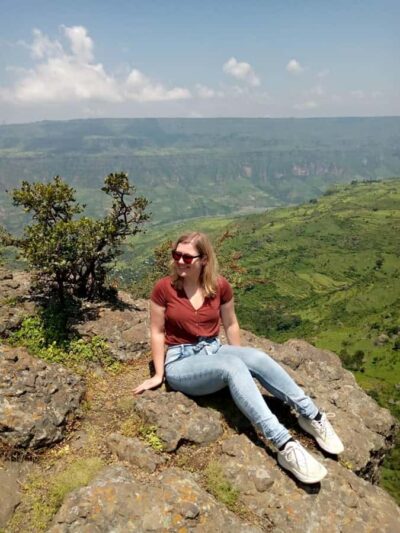
Addis Ababa: Debre Libanos, Blue Nile Gorge, and Cave Tour
Read our review →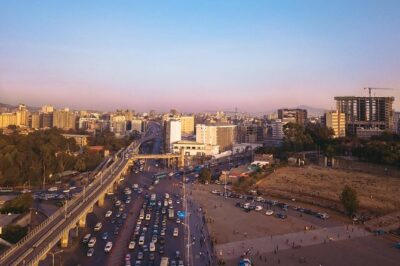
Addis Ababa Guided City Tour With Airport & Hotel Pick Up
Read our review →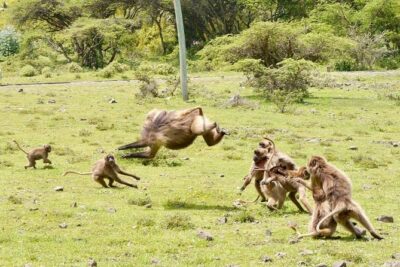
Breathtaking Nature, Wildlife and Cave Church Tour – Free Pickups
Read our review →
Browse the lists this tour appears in