
Reviewed · ADDIS ABABA
10 Days North Historical Tour
Lalibela’s churches are the headline, but the real appeal of this 10-day northern Ethiopia circuit is the variety packed into one route. You move from Addis Ababa’s museums to Lake Tana’s island monasteries, Gondar’s castles, Axum’s giant stone stelae, the Simien Mountains, and finally the hand-cut churches of Lalibela.
I like the private format, since your group travels with its own guide rather than following a large coach. I also like the cultural range: this is not just a succession of ruins, but a mix of living Orthodox traditions, old capitals, mountain wildlife, and long-distance scenery. The main drawback is the pace. Several driving days last seven to nine hours, so you need patience, a reasonable level of fitness, and a taste for road travel.
Key points at a glance
- Lake Tana by boat: Reach the forested Zege Peninsula and its round, grass-roofed churches, including Ura Kidane Mihret and Azoa Mariam.
- Gondar’s royal compound: See the castles of the 17th-century emperors and the painted ceiling of Debre Birhan Selassie Church.
- Gelada baboons in the Simien Mountains: A gentle walk near Sankaber brings mountain views, steep gorges, and a chance to see this Ethiopian endemic up close.
- Two days around Axum: Visit the famous stelae, royal tombs, ancient inscriptions, and sites linked with Ethiopia’s early Christian era.
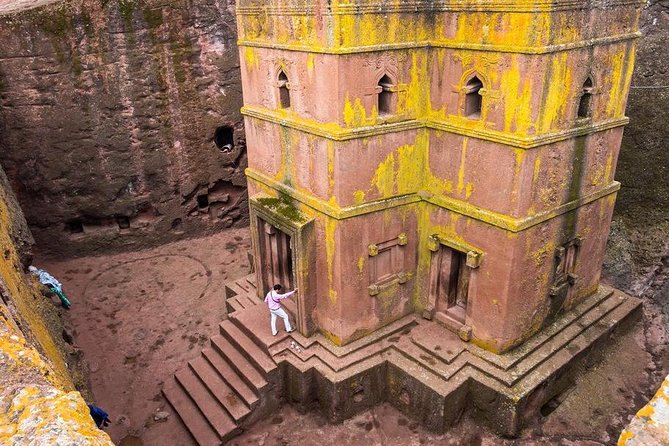
- Lalibela’s 11 churches: Walk through churches carved directly into volcanic rock, linked in places by tunnels and narrow passageways.
- A private, guide-led journey: Abebe is named in the available tour feedback as a key contact and guide associated with excellent communication and careful arrangements.
Why this northern Ethiopia route works
At $2,432 per person, the tour sits in the higher-priced range for a 10-day Ethiopia trip, but the price covers nine nights of accommodation, breakfasts, entrance fees, a private tour structure, and ground arrangements across a large part of the country. International and domestic flights, visas, excess luggage, and personal expenses are extra, so you need to calculate the final cost carefully.
The value comes from the route itself. Ethiopia’s northern sights are spread across a wide area, and arranging transport, hotels, guides, and entry tickets independently can take time. Here, you have one organized plan connecting the principal historic centers. The tradeoff is that the schedule leaves little room for missed connections, long unscheduled stops, or extra rest days.
The tour also suits someone who wants direct help before arrival. The available comments give particular credit to Abebe for communication, arranging confirmations, and helping with airline tickets on another trip. He is not explicitly guaranteed as your guide for every departure, so ask who will lead your group before booking. Still, the operator’s personal approach is one of the more appealing features here.
More historic sites near Addis Ababa:
- Day Trip From Addis Ababa See Historical Monastery,Stunning Nature,Animals,Birds
★ 5.0 · 303 reviews - Hidden Treasures of Addis Ababa – Food, Culture and History Tour
★ 5.0 · 57 reviews - Northern Ethiopia Historic Route
★ 5.0 · 12 reviews
Addis Ababa begins with Lucy and mountain views
Your arrival starts at Bole International Airport, where a representative from Ethiopian Wanderer Tours and Travel meets you and takes you to your reserved hotel. If your arrival time allows, the city tour lasts about five to six hours.
Mount Entoto is a useful first stop because it gives you broad views over Addis Ababa. The altitude and cooler air can also make it a gentler introduction than beginning with a packed city schedule, though your comfort will depend on how tired you are after your flight.
At the Institute of Ethiopian Studies, you see objects from different parts of the country, with a focus on culture and local traditions. The National Museum adds one of Ethiopia’s most famous names, Lucy, whose 3.5-million-year-old bones are among the country’s most important archaeological displays.
St. George Cathedral brings the visit into Ethiopia’s Orthodox Christian world. Paintings by Afework Tekele and ecclesiastical objects give you a first look at the religious art that appears again in Gondar, Lake Tana, and Lalibela.
The first day is flexible in principle, but a late arrival may shorten the sightseeing. I would treat Addis Ababa as an introduction rather than expect to see every major attraction in depth.
Lake Tana monasteries reward an early start
The next day takes you to Bahir Dar, with the schedule describing a flight with your guide before the Lake Tana excursion. The text also refers to a long drive from Addis Ababa, so confirm the exact transport plan before departure. That distinction matters, since flying and driving create very different days.
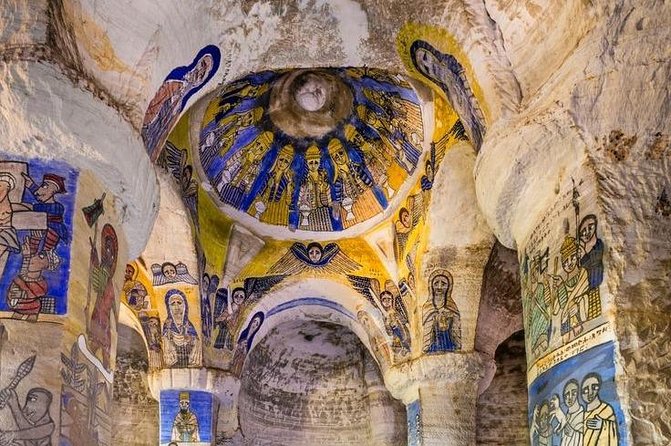
The boat trip is one of the gentler parts of the route. Lake Tana is Ethiopia’s largest lake, and the ride leads to the Zege Peninsula, where forest surrounds old Orthodox monasteries. Ura Kidane Mihret and Azoa Mariam are known for round walls, conical grass roofs, and painted interiors.
Ura Kidane Mihret dates from the 14th century. Its murals are the main reason to visit, but the setting matters just as much. The monastery is reached through a wooded area rather than a city street, and the traditional round church design helps explain how local building forms developed over time.
You should allow about eight hours for the day. Boat conditions, walking, and time at the churches can make it feel full, even without adding extra stops. Modest clothing is appropriate at religious sites, and you should expect the guide to explain local customs as you go.
Gondar links castles with living church art
After breakfast, the route continues to Gondar, once the seat of Ethiopia’s emperors in the 17th century. The principal visit is the royal enclosure of Fasil Ghebbi, a walled compound containing the castles of several Gonderian rulers.
This is a different kind of historic sight from Lalibela. Instead of churches carved from stone, you see masonry buildings influenced by several architectural traditions. The castles help you picture Gondar as a functioning royal center, not simply an archaeological site.
Debre Birhan Selassie Church is the other major stop. Its walls are covered with religious paintings, while the wooden ceiling carries rows of angel faces. The ceiling has become one of the best-known examples of Ethiopian church art, and it is easy to understand why once you are inside.
The day runs about eight hours, including the drive and visits. Your guide is especially useful here because the royal compound can feel like a series of separate buildings unless someone explains the rulers, purposes, and changes behind them. Take time to look closely at the church paintings rather than rushing through for a quick photograph.
A few more Addis Ababa trips to weigh up
- Full Day Tour of Addis Ababa with Hotel Pickup and Drop-off
★ 5.0 · 430 reviews - Taste of Ethiopia
★ 5.0 · 406 reviews - Addis Ababa: Debre Libanos, Blue Nile Gorge, and Cave Tour
★ 4.5 · 256 reviews - Addis Ababa Guided City Tour With Airport & Hotel Pick Up
★ 5.0 · 237 reviews
Simien Mountains bring the biggest scenery

The early start for the Simien Mountains is worthwhile. You drive toward Simien Lodge, described as the highest lodge in Africa, and reach it around midday before continuing into Simien Mountains National Park.
The park was declared a UNESCO World Heritage natural site in 1996. Its appeal is physical: sharp escarpments, deep valleys, high plateaus, and wide views that make this one of the most striking days of the trip.
The program goes to Sankaber at about 3,220 meters. A gentle walk lasts roughly two hours and includes views of deep gorges and Ethiopia’s highest waterfall. The route is not presented as a demanding trek, but the altitude can make even an easy walk feel harder than expected.
The park’s wildlife gives the day a special edge. You may see gelada baboons, an Ethiopian species known for living in large groups on the highlands. The itinerary specifically highlights close encounters with these friendly animals, along with the chance of seeing other endemic mammals and birds.
This is one of the tour’s strongest sections, but also one where weather and fitness matter most. Good walking shoes, sun protection, water, and warm layers make sense. The cancellation terms note that poor weather can lead to a different date or a full refund, so conditions are not a minor detail.
Axum explains Ethiopia’s ancient roots
The drive from the Simien area to Axum takes about seven hours. The scenery remains a major part of the day, but this is still a long transfer, and you should not expect a full sightseeing program after arrival.
Axum is considered a holy city and is linked with the beginning of Ethiopian Christianity. It also served as the center of the Axumite kingdom, which shaped the early development of Ethiopian civilization. Those connections give the city more weight than a simple stop among ruins.
The following day is devoted to Axum’s main sites. The famous stelae, or obelisks, are the most visible attraction. One is described as the largest single piece of stone erected by human beings anywhere in the world. Even if you have seen photographs, the scale is easier to understand when you are standing beside it.
The tour also visits the Mariam Tsion Church site, built where Ethiopia’s first church is said to have stood, along with the inscriptions of King Ezana. Former royal castles, the Palace of Queen Sheba, and the tombs of Kings Kaleb and Gebre Meskel add more layers to the city.
Axum receives seven hours on the schedule, which gives you time to approach the sites in a sensible order. The religious importance of Mariam Tsion means this is not only an archaeological visit. Your guide can help separate established history, religious tradition, and legend, three strands that often overlap in Ethiopia.
Yeha and Adwa add older history to the route

From Axum, you visit Yeha, about 50 kilometers away, passing through Adwa. The area is remembered for the 1896 Battle of Adwa, when Ethiopian forces defeated Italy. That event remains central to the country’s modern national story.
Yeha predates Axum and was an important settlement before the Axumite period. Its stone temple has walls about 12 meters high and is estimated to be around 2,500 years old. For many people, this is a quieter stop than Axum, but it helps place Axum’s achievements within a much longer timeline.
The day is listed at about seven hours and ends in Mekele. As with the other transfer days, the strength of the route is its breadth, while the cost is time in the vehicle. If you prefer slow travel with repeated village stops, this plan may feel too tightly packed.
Lalibela saves its grandest sight for day nine

The drive to Lalibela takes about eight hours through changing scenery. You reach the town in the late afternoon, so the main church visit comes the next day rather than being squeezed into an already long transfer.
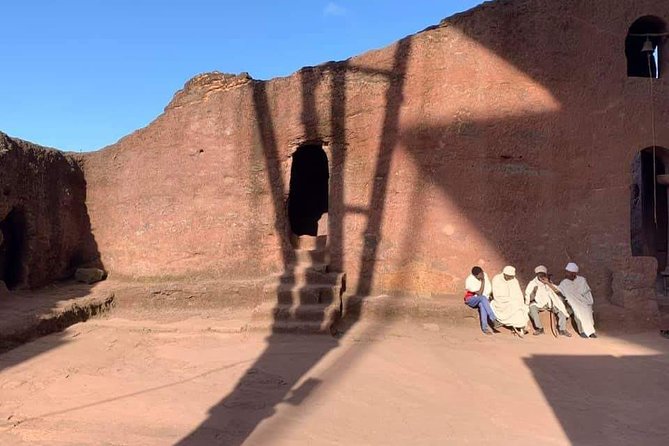
Lalibela’s 11 rock-hewn churches are the emotional high point of the tour. They were carved directly from volcanic rock, with some formed from solid stone, others expanded from caves, and several connected by underground passages and narrow routes.
The first group includes Bet Golgotha, Bet Mikael, Bet Mariam, Bet Maskel, Bet Dangal, and Bet Medhanealem. Bet Medhanealem is the largest of the churches and is shaped in a form that recalls a Greek temple.
What makes Lalibela so memorable is the method of construction. These are not buildings assembled from blocks and later decorated. The churches were cut into and out of the rock, leaving courtyards, walls, columns, and passageways as part of one immense undertaking.
The six-hour visit is enough to see the principal group, but it will be active. Uneven surfaces, steps, and enclosed passages are part of the setting. The tour information says most people can participate, but anyone with mobility concerns should ask for a detailed description of the walking route before booking.
Lalibela remains a living religious center, not a silent ruin. That makes the visit more meaningful, but it also calls for quiet behavior, suitable clothing, and respect when services or prayers are taking place.
The return to Addis is a serious travel day
The final day involves a drive of about nine hours back to Addis Ababa. That is the longest transfer in the program, so plan for a tiring day rather than a relaxed final morning.
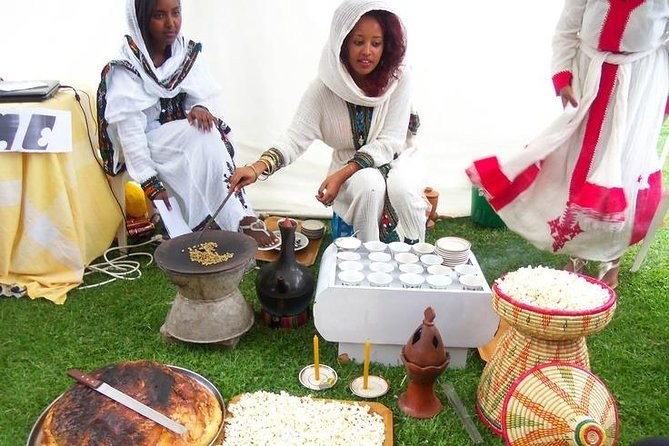
The reward comes in the evening, when you are invited to a farewell dinner at a traditional Addis Ababa restaurant. The meal includes traditional food and drinks, with cultural songs and dances. It gives the route a social ending after many days focused on ruins, churches, mountains, and roads.
You are then transferred to Bole International Airport. Since the tour ends back at the Addis meeting point, confirm how the final transfer fits with your flight departure time. The schedule says the airport transfer follows dinner, but your exact timing depends on your flight.
What the $2,432 price really covers
The listed price is $2,432 per person. Included are nine nights of accommodation, breakfasts, and all entrance fees. The package is private, so only your own group participates, which can make a big difference on long driving days and at religious sites.
Not included are international and domestic air tickets, visa fees, excess luggage charges, and personal expenses. Breakfast is listed as 10 meals even though the tour includes nine nights, so ask the operator to clarify exactly what is covered.
The price makes the most sense if you value one company coordinating a difficult northbound route. It is less attractive if you are comfortable arranging hotels, transport, and local guides independently and want to add rest days.
The available comments place particular emphasis on Abebe’s communication, commitment, and ability to arrange airline tickets and confirmations on other trips. That is useful evidence about the operator’s service style, but you should confirm your named guide and exact inclusions in writing.
Who should book this tour
I would recommend it to you if you want to see Ethiopia’s major northern sights in one trip and prefer a private guide to a large group. It is especially well suited to first-time visitors who want help with the logistics and context around churches, monasteries, royal sites, and ancient ruins.
You should be comfortable with long drives. Seven-hour, eight-hour, and nine-hour days are part of the structure, and there are only limited opportunities to slow down. The Simien walk is described as gentle, but altitude and uneven ground still require reasonable mobility.
The tour is also a good fit if you care about cultural sites as much as scenery. Lake Tana’s monasteries, Gondar’s church paintings, and Lalibela’s religious setting give the route more depth than a standard sightseeing loop.
You may want another plan if you need frequent rest days, dislike road travel, or want a trip built around serious hiking. This itinerary offers a taste of the Simien Mountains, not a multi-day trek.
Free cancellation is available up to 24 hours before the start time for a full refund. Last-minute changes are not accepted, and poor weather may lead to a new date or a refund.
FAQ
How long is the North Historical Tour?
The tour lasts approximately 10 days, beginning and ending in Addis Ababa.
What is the price per person?
The listed price is $2,432 per person.
Is this a private tour?
Yes. Only your own group participates in the activity.
Are flights included?
No. International and domestic air tickets are not included in the listed price.
What accommodation is included?
The tour includes nine nights of accommodation.
Are entrance fees included?
Yes. All entrance fees are included.
Are breakfasts included?
Yes. Breakfast is included, with the inclusions listing stating 10 breakfasts.
Which places does the route visit?
The route includes Addis Ababa, Bahir Dar and Lake Tana, Gondar, the Simien Mountains National Park, Axum, Yeha, Mekele, and Lalibela.
Where does the tour begin and end?
It begins in Addis Ababa, Ethiopia, and ends back at the Addis Ababa meeting point, followed by transfer to Bole International Airport.
Should you book it?
Book this tour if you want the major sights of northern Ethiopia connected in one private itinerary, with entrance fees, hotels, breakfasts, and guide support handled for you. The strongest moments are likely to be the Lake Tana monasteries, gelada baboons in the Simien Mountains, Axum’s ancient monuments, and Lalibela’s extraordinary churches.
Before paying, confirm the transport from Addis Ababa to Bahir Dar, the guide’s name, the breakfast count, the hotel list, and the domestic flight arrangements. If you accept the long road days and plan carefully around the final nine-hour return, this is a powerful first visit to Ethiopia’s historic north.
Just added around Addis Ababa
- 6 days 5 nights Addis Abeba sightseeing & Lalibela Rock-Hewn Churches★ 5.0 · 3 reviews
- Addis Ababa Essentials: Flexible Full-Day City Sightseeing★ 5.0 · 3 reviews
- 4 Hours Addis Ababa Cultural Discovery Tour★ 5.0 · 3 reviews
- Northern Ethiopia (Historic route)★ 5.0 · 3 reviews
- Day Trip Around Addis Ababa★ 5.0 · 3 reviews
- Addis Ababa Half Day Shopping Tour★ 5.0 · 3 reviews
- Monastic Marvels Exploring the beauty of Debre Libanos Monastery★ 5.0 · 3 reviews
- 6 days Omo valley cultural Tour★ 5.0 · 3 reviews
Addis Ababa Tours, compared.

Full Day Tour of Addis Ababa with Hotel Pickup and Drop-off
Read our review →
Day Trip From Addis Ababa See Historical Monastery,Stunning Nature,Animals,Birds
Read our review →
Addis Ababa: Debre Libanos, Blue Nile Gorge, and Cave Tour
Read our review →
Addis Ababa Guided City Tour With Airport & Hotel Pick Up
Read our review →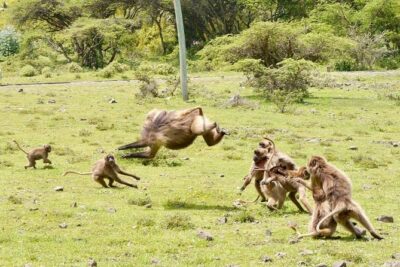
Breathtaking Nature, Wildlife and Cave Church Tour – Free Pickups
Read our review →

Browse the lists this tour appears in