

Reviewed · THE OMO VALLEY
3-Day Cultural Tour in South Omo Valley
South Omo is one of Ethiopia’s most striking cultural regions, where Hamer, Bana, Dassanech, and Mursi communities maintain distinct languages, clothing, customs, and livelihoods. This three-day trip gives you a fast-moving introduction, with a flight from Addis Ababa, long drives, village visits, and a canoe crossing on the Omo River.
I like the small maximum of six people, which should make the long drives easier and allow more direct help from your guide. I also like the chance to see both daily life and major cultural events, including a possible Hamer bull-jumping ceremony. The main drawback is the pace: three days covers a lot of ground, and lunch, dinner, and possibly the domestic flight need clarification before you pay.
Key points to know before booking

- Four cultural groups in three days: Visit Hamer, Bana, Dassanech, and Mursi communities across South Omo.
- A dugout canoe crossing: The Omorate excursion includes a crossing of the Omo River by traditional canoe.
- A small group limit: The tour accepts no more than six participants.
- A possible Hamer ceremony: A marriage event and bull-jumping ceremony may replace the afternoon visit if one takes place.
- Guide and driver care: Guides Tariku and driver Sitotaw received especially warm praise, though assigned staff may change.
- A demanding route: Expect roughly 18 hours of listed touring time over three days, plus flights and transfers.
Why South Omo is worth the effort
South Omo is not a quick sightseeing stop. The Lower Omo region is home to eight ethnic groups with a combined population of about 200,000, and each community has its own customs, food, clothing, language, and work traditions. You are not simply moving from one museum display to another. You are visiting living communities in a remote part of southwest Ethiopia.
That distinction matters. The value here comes from seeing how people maintain ancestral skills and social customs in their own setting. The tour focuses on farmers, artisans, and craftspeople, along with ceremonial life. You should arrive with patience and respect, ready to observe rather than treat a village visit as a staged performance.
The route also gives you different kinds of scenery. You pass through Mago National Park, travel toward the Omo River, and reach settlements around Turmi, Omorate, and Jinka. The experience mixes rough-road travel, river views, wildlife-area access, and cultural encounters.
The pace will not suit everyone. The first day includes a flight and a drive to Turmi. The second day sends you 70 kilometers each way to Omorate, followed by a late drive to Jinka. The third day returns through Mago National Park to a Mursi village before your journey back to Addis Ababa. You will spend more time in a vehicle than on foot.
More Omo Valley Tours in Addis Ababa
- 6 Days Omo Valley Tribes Tours From Addis Ababa
★ 5.0 · 33 reviews - 3 Days Omo Valley Tour
★ 5.0 · 24 reviews - Danakil Depression, Lalibela, Omo Valley and Simien Mountains
★ 5.0 · 23 reviews
Day 1: Flight to Jinka and the Hamer country around Turmi
Your trip begins with pickup at Bole Addis Ababa International Airport, with a stated start time of 9:00 a.m. The plan is to fly to Jinka in the morning, meet your English-speaking guide, and continue by air-conditioned vehicle toward Turmi.
The first cultural stop is a Bana village. The Bana are one of South Omo’s distinct communities, and this visit gives you an early sense of how quickly customs and appearance can change from one area to the next. The information provided does not specify the exact village or the length of the stop, so ask your operator what kind of visit is planned and how much time you will have there.
Turmi is associated with the Hamer people, an Omotic community living east of the Omo River. Their population was recorded at 46,532 in Ethiopia’s 2007 census, with fewer than 1,000 urban residents. The Hamer are especially known for colorful beads, body adornment, and heavy polished iron necklaces worn by women.
You may also hear about the difficult custom of ritual flogging connected with marriage and devotion. The scars are displayed proudly by some Hamer women, but this is a serious cultural practice, not entertainment. A thoughtful guide should help you understand its meaning without reducing it to a photograph or a dramatic anecdote.
The listed time for Day 1 is six hours, though the flight, road transfer, and village visits can make the day feel longer. Accommodation with breakfast is included. Lunch and dinner are not included in the tour details, so plan to pay separately unless the operator confirms otherwise.
Day 2: Dassanech life and the Omo River at Omorate
Day 2 is the longest listed section, at about eight hours. You drive 70 kilometers each way to Omorate, a remote settlement associated with the Dassanech people. That distance is one reason the small group matters. A full vehicle can feel tiring on a long road day, while a group of six or fewer allows more room and simpler coordination.
The Dassanech are known for a nomadic way of life, along with distinctive body decoration and scarification. The visit offers a different cultural setting from Turmi and the Hamer communities. This contrast is one of the strongest reasons to choose the tour: you are not repeating the same village encounter twice.
The river crossing is another clear highlight. You cross the Omo in a dugout canoe, with views of the river from the water. The crossing is brief compared with the drive, but it gives the day a memorable physical setting and shows how the river functions as more than a line on a map.
You should ask your guide how the canoe crossing is organized, especially if you have concerns about balance, belongings, or water conditions. The supplied information confirms the canoe crossing but does not give safety equipment details, boat capacity, or seasonal conditions.
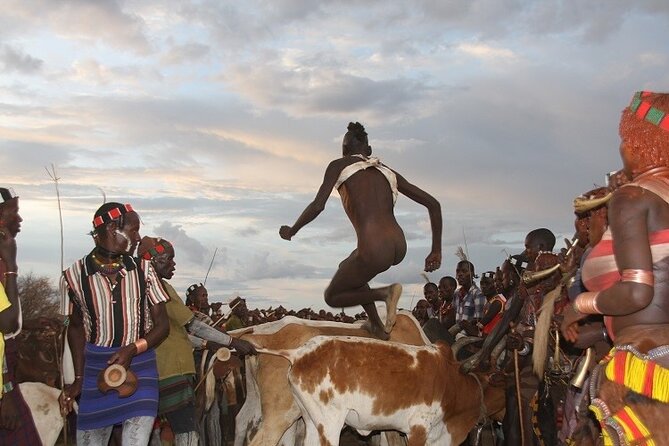
Turmi is also known for traditional events. If a Hamer marriage ceremony is taking place, you might see a bull-jumping ceremony and related customs. The schedule is intentionally flexible here. The afternoon excursion to the Dassanech may be canceled if a bull-jumping event occurs, because the ceremony takes priority.
That uncertainty is both a strength and a limitation. You may witness something that cannot be arranged on a fixed sightseeing timetable, but you cannot book this tour expecting a guaranteed ceremony. Treat the event as a possibility, not a promise, and remember that it is a community ritual rather than a show created for visitors.
Late in the day, you drive to Jinka for the night. This makes Day 2 quite demanding. You get a broad look at the region, but little downtime. If you prefer slow mornings and long stays in one village, this itinerary may feel rushed.
Day 3: Mago National Park and the Mursi village
The final morning takes you by road through Mago National Park toward a Mursi village. The listed touring time is four hours, but the actual day also depends on the return transfer and flight arrangements.
Mago National Park provides the setting for the road journey, while the Mursi visit supplies the cultural focus. The Mursi are widely associated with lower-lip and earlobe plates, a form of body adornment that has become one of the most recognized images from South Omo.
That fame creates a responsibility for you and the guide. The plates are part of Mursi identity and tradition, not a costume put on for a passing audience. Go with an open mind, listen to explanations, and avoid assuming that one striking feature represents an entire community.
The tour description does not state how long you remain in the village, what activities are arranged, or whether there is time for a meal. Ask for those details before booking if the Mursi visit is your main reason for coming.
After the Mursi stop, the itinerary returns you to Bole Addis Ababa International Airport. The endpoint is listed as the same airport used for pickup. Confirm the exact return time if you are connecting to another flight, since the schedule includes long road transfers and regional air travel.
More Omo Valley journeys south:
- 5 Days Omo Valley Tours
★ 5.0 · 15 reviews - 6 Days Lalibela, Omo Valley and Harar
★ 5.0 · 15 reviews - Private Omo Valley Tours From Addis Ababa
★ 5.0 · 12 reviews - 9 Days Tours To Danakil Depression, Simen MNP, Lalibela With Omo Valley Tribes
★ 5.0 · 11 reviews
What the small group and transport setup mean
An air-conditioned vehicle is included, which matters in a region where road travel takes up much of the tour. The maximum group size is six, a useful limit for a route with long transfers and several community visits.
The tour begins and ends at Addis Ababa Bole Airport, and pickup is offered. The itinerary says you fly to Jinka on the first morning, but the included-features section lists the vehicle, taxes, accommodation, breakfast, and guide without clearly naming the domestic airfare. Confirm whether the flight is part of the $700 price or needs to be purchased separately.
The English-speaking guide is central to the quality of this experience. The information provided names Tariku as a guide and Sitotaw as a driver in especially positive feedback, with direct praise for their care and responsibility. Those names may not be guaranteed for every departure, so ask who will lead your date.
A good guide does more than translate. You need someone who can explain customs with care, manage timing around ceremonies, and help you understand the difference between an ordinary village visit and a major event. The company says it can design remote and less-traveled routes around specific needs, but this three-day plan has a defined structure. Ask what can realistically be changed within the short schedule.
Is $700 a fair price?
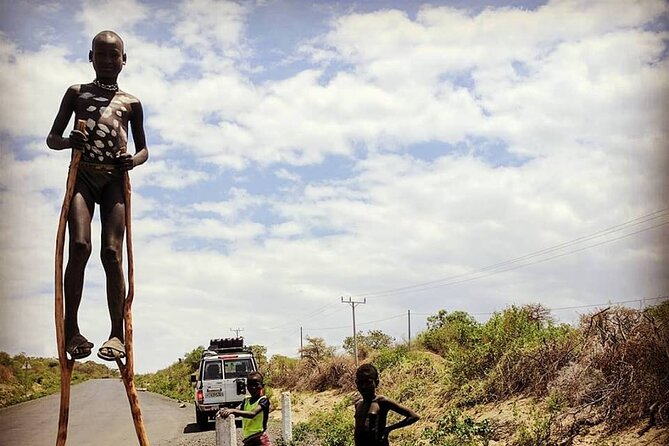
At $700 per person, this is not a budget bus trip. The price covers an air-conditioned vehicle, taxes and fees, accommodation with breakfast, and an English-speaking guide. It also provides a private operator to organize a complicated route involving a domestic flight, remote roads, national park access, village visits, and a river crossing.
That can be fair value if the transport and flight arrangements are included. The logistics alone are difficult to coordinate independently in three days, and a small group gives you a more manageable format than a large coach.
The value is less clear if the domestic airfare is extra. The tour details also exclude lunch and dinner, although one account describes meals as arranged. Treat the formal inclusion list as the safer guide and confirm every meal and flight cost in writing.
You should also budget for tips. Gratuities are excluded, and the tour does not state a suggested amount. If Tariku, Sitotaw, or another guide and driver take good care of you, you can decide what feels appropriate at the end.
What the feedback tells me about the service
The strongest pattern is personal care. The named guide Tariku and driver Sitotaw were praised for treating the participant like family, handling details, and taking responsibility throughout the trip. Another account describes the arrangements, vehicle, accommodation, and meals as well organized, though that mention of meals conflicts with the stated exclusions.
The overall rating is listed as five stars from four reviews, but the individual entries do not show numerical scores. That is a small sample, so I would use it as a positive service signal rather than proof that every departure will be perfect.
The praise focuses on the team, not on luxury. That fits the nature of the route. You are paying for coordination, local access, transport, and support in a difficult region, not for an elaborate hotel or a relaxed resort schedule.
Who should book this three-day route?

I would recommend it to you if you have limited time in Ethiopia and want a concentrated introduction to South Omo. It suits people who value cultural contact, accept long drives, and want to see several communities rather than spend three days in one place.
It is also a good match if you prefer a small group and want an English-speaking guide to manage the practical details. The combination of Hamer, Bana, Dassanech, and Mursi visits gives you useful comparison across the region.
You may want a longer or slower trip if you need plenty of rest, dislike uncertain schedules, or want extended time with one community. The possible bull-jumping ceremony is a bonus, not a guaranteed feature, and the Mursi village visit has limited detail about duration.
Before booking, confirm these four points:
- Is the flight from Addis Ababa to Jinka included in the $700 price?
- Are lunch and dinner available for purchase, arranged by the operator, or entirely your responsibility?
- Who will be your guide and driver?
- What time will you return to Bole Airport on Day 3?
Free cancellation is available if you cancel at least 24 hours before the local start time. Cancellations within 24 hours are not refunded. Poor weather or failure to meet the minimum number of participants may lead to a different date, another experience, or a full refund.
Should you book it?
Book this tour if you want a tightly planned first look at South Omo and value human guidance more than free time. The Hamer customs around Turmi, the Dassanech visit and Omo River crossing, and the Mursi stop through Mago National Park make a powerful three-day route.
I would book only after confirming the domestic flight, meals, and final schedule. With those costs clear, the $700 price can make sense for a six-person maximum and difficult regional logistics. If you want a relaxed cultural stay, choose a longer program. If you want a focused introduction and can handle long road days, this is a strong option.
FAQ
Where does the tour start and end?
The tour starts at Bole Addis Ababa International Airport in Addis Ababa and ends at the same airport.
What time does the tour start?
The stated start time is 9:00 a.m.
How long is the experience?
The tour lasts approximately three days.
How many people can join?
The tour has a maximum of six participants.
Is pickup available?
Yes. Pickup is offered, with the listed meeting point at Bole Addis Ababa International Airport.
Is the tour conducted in English?
Yes. An English-speaking guide is included.
What cultural groups will I visit?
The route includes Hamer, Bana, Dassanech, and Mursi communities.
Is the domestic flight to Jinka included?
The itinerary says you fly to Jinka, but the listed inclusions do not clearly state that airfare is included. Confirm this with Liyu Ethiopia Tours before booking.
Are lunch and dinner included?
The stated inclusions cover accommodation with breakfast, but lunch and dinner are listed as not included. Confirm meal arrangements before departure.
What happens if bad weather cancels the tour?
If poor weather causes cancellation, you will be offered a different date or a full refund.
Can I cancel for a full refund?
Yes, if you cancel at least 24 hours before the experience start time. Cancellations within 24 hours are not refunded.
More Three-Day Trips from Addis Ababa
- 3 Day Danakil Depression Ertale and Dallol Tours
★ 5.0 · 44 reviews - 3 Days Dankile Depression group Tours
★ 5.0 · 40 reviews - 2-Night 3-Day Danakil Depression Tour without Flights
★ 4.8 · 31 reviews - Trekking at Bale Mountains 3 Days
★ 5.0 · 28 reviews
More Historic Sites near Addis Ababa
- Day Trip From Addis Ababa See Historical Monastery,Stunning Nature,Animals,Birds
★ 5.0 · 303 reviews - Hidden Treasures of Addis Ababa – Food, Culture and History Tour
★ 5.0 · 57 reviews - Northern Ethiopia Historic Route
★ 5.0 · 12 reviews - DAY TRIP TO THE UNESCO HERITAGE SITE TIYA & Melka Kunture
★ 4.5 · 10 reviews
Just added around Addis Ababa
- 6 days 5 nights Addis Abeba sightseeing & Lalibela Rock-Hewn Churches★ 5.0 · 3 reviews
- Addis Ababa Essentials: Flexible Full-Day City Sightseeing★ 5.0 · 3 reviews
- 4 Hours Addis Ababa Cultural Discovery Tour★ 5.0 · 3 reviews
- Day Trip Around Addis Ababa★ 5.0 · 3 reviews
- Northern Ethiopia (Historic route)★ 5.0 · 3 reviews
- Addis Ababa Half Day Shopping Tour★ 5.0 · 3 reviews
- Monastic Marvels Exploring the beauty of Debre Libanos Monastery★ 5.0 · 3 reviews
- 6 days Omo valley cultural Tour★ 5.0 · 3 reviews
Omo Valley Tribal Tours, compared.

Lalibela, Axum, Danakil and Omo Valley 8 DAYS
Read our review →
3 days around Arbaminch and Konso Adventure Tours Life Time
Read our review →Danakil Depression, Lalibela, Omo Valley and Simien Mountains
Read our review →



9 Days Tours To Danakil Depression, Simen MNP, Lalibela With Omo Valley Tribes
Read our review →
8 Days Lalibela,Danakil Depression and Omo Vally Tours
Read our review →Browse the lists this tour appears in