
Reviewed · THE OMO VALLEY
5 Days Omo Valley Tours
The remarkable part of this five-day journey is its range. In one short trip, you move from Dorze villages high above Arba Minch to the dry Omo Valley, meeting communities with distinct languages, clothing, homes, crafts, ceremonies, and food traditions. The Mursi lip plates, Hamar bull jumping, and Karo body painting are famous, but the quieter visits often feel just as meaningful.
I like the practical route, which links Arba Minch, Turmi, and Jinka without wasting days retracing the same road. I also like the small maximum group size of 15 and the chance to attend family coffee ceremonies in Karo and Hamar homes. The main drawback is the long road travel on rough southern routes, and the most dramatic ceremonies, especially bull jumping, are never guaranteed.
Key points to know before booking
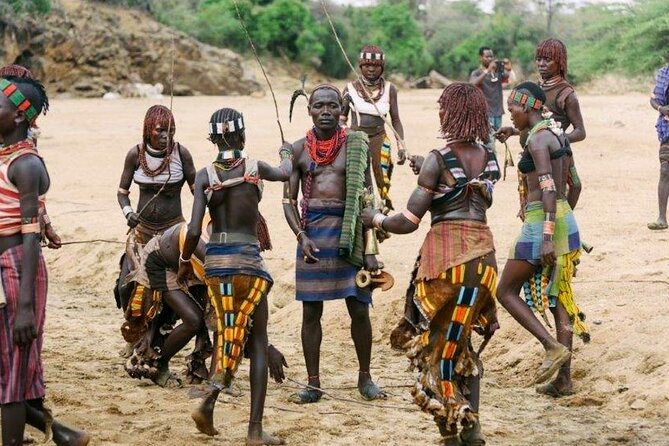
- Seven distinct cultural groups: Meet Dorze, Konso, Arbore, Hamar, Karo, Dassanech, Ari, and Mursi communities.
- Two memorable coffee ceremonies: Visit a Karo family in Korcho Village and a Hamar family in a traditional house.
- Ceremonies depend on timing: Hamar markets follow set days, while bull jumping takes place only when available.
- Domestic flights cost extra: The $750 tour price includes accommodation, meals, guiding, transport, and entry fees, but not the Addis Ababa round-trip flight.
- A demanding five-day route: Expect several hours in the vehicle each day, with drives of up to 200 kilometers between stops.
- Helpful local staff: Abey and Mickey are names associated with the guiding team, while the company arranges the driver and southern Ethiopia logistics.
What this Omo Valley trip is really about
Southern Ethiopia is not a quick sightseeing circuit. It is a large, dry, culturally varied region where roads can take much longer than the distance on a map suggests. This itinerary works because it combines planned village visits with a little flexibility for markets and ceremonies.
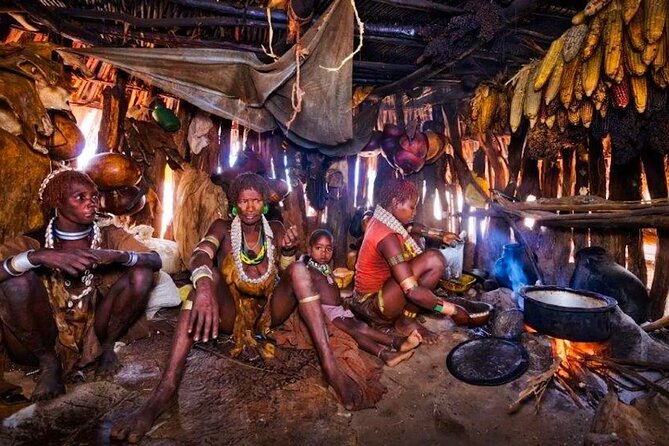
You are not simply looking at displays in a museum. You visit villages, see houses in use, enter family spaces, watch weaving, share coffee, and speak with local people through the guide. That direct contact is the heart of the experience, though it also calls for good manners. Ask before taking photographs, listen to your guide, and remember that people are not attractions arranged for a camera.
The tour is operated by Danakil Depression Tours. English-speaking guides such as Abey and Mickey have been praised for staying in close contact, managing the road crew, and helping visitors make the most of changing conditions. Your exact guide is not guaranteed, so confirm the assigned team before departure if that matters to you.
More Omo Valley Tours in Addis Ababa
- 6 Days Omo Valley Tribes Tours From Addis Ababa
★ 5.0 · 33 reviews - 3 Days Omo Valley Tour
★ 5.0 · 24 reviews - Danakil Depression, Lalibela, Omo Valley and Simien Mountains
★ 5.0 · 23 reviews
Day 1: Arba Minch and the Dorze mountain villages
The trip begins with a transfer from your Addis Ababa hotel to Bole International Airport and an internal flight to Arba Minch. The domestic flight is not part of the $750 price, so check its cost before you commit to the full budget.
Arba Minch is the gateway to the southern region. After landing, you meet the driver and go to your accommodation. The afternoon visit heads into the Guge Mountains, where the Dorze people are known for cotton weaving and tall, beehive-shaped houses made from organic materials.
The Dorze homes are one of the day’s best details. Their shape is practical as well as striking, and the design gives you a useful introduction to how local building traditions respond to climate and available materials. You can also watch cotton weaving and hear about daily life and customs in the village.
This is a good first day because it is cultural without being rushed. The visit takes about six hours in total, though the flight and road transfer make the day longer than that activity estimate suggests. The planned accommodation is listed as Paradise Lodge, with Turmi also appearing in the lodging details, so ask the operator to confirm the exact hotel for your departure date.
Day 2: Konso terraces, museum displays, and the road to Turmi
Day two is a long one. You drive about 90 kilometers to Konso, visit the village and museum, then continue roughly 200 kilometers to Turmi. The schedule lists around seven hours, but road conditions, village visits, and stops can affect the actual timing.
Konso is important for more than its scenery. The area is recognized as a UNESCO World Heritage site for its carefully built terraces, traditional settlements, woven materials, and carved grave markers. The terracing shows how farming and community life have been shaped around steep hillsides. The carved totems add another layer, linking art, memory, and burial customs.
The museum gives you context before or after the village visit. I find that useful because it helps you understand what you are seeing rather than simply collecting photographs. Your guide can also explain how Konso differs from the groups you meet later in the Omo Valley.
The drive to Turmi is the price of reaching the more remote communities. Pack water, snacks, sun protection, and something to occupy you between stops. The itinerary also visits the Arbore community on the way, adding another cultural encounter to an already full day.
You spend the night at Buska Lodge. Turmi is your base for several visits, so this is where the trip begins to feel less like a transfer and more like a focused Omo Valley stay.
Day 3: Karo body painting and Hamar traditions
From Turmi, the road runs about 62 kilometers west to Korcho Village, home to the Karo people. The Karo are known for elaborate face and body painting, which can include bold patterns made with locally available materials. Your guide helps explain the meaning and setting of the designs, but the visit is most rewarding when you treat it as a meeting rather than a photo stop.
A traditional coffee ceremony with a Karo family is planned here. Coffee is central to Ethiopian hospitality, and sitting with a family gives the visit a slower pace than simply walking through a village. You can ask questions through the guide and pay attention to the preparation, serving, and social role of the ceremony.
After returning to Turmi for lunch, the schedule leaves room for a Hamar market. The best option depends on the day:
- Turmi market is listed for Monday or Thursday.
- Dimeka market is listed for Saturday.
The market may be one of the most useful parts of the trip if you want to see ordinary trade and social life alongside formal village visits. The itinerary also names Hamar markets in other towns on later days, so ask your guide to adjust the plan around the actual calendar.
At about 5:30 pm, you visit a Hamar traditional village and take part in a coffee ceremony inside a traditional house. This second ceremony is not just a repeat of the Karo visit. The Hamar have their own customs, clothing, hairstyles, and social traditions, and the setting lets you compare the two communities.
Hamar bull jumping may be available. Treat this as a fortunate possibility, not a promised feature. One person on the trip missed it because no ceremony was taking place, while another happened to attend one in Turmi. That difference says everything you need to know: the event depends on local timing and cannot be guaranteed by a fixed five-day schedule.
More Omo Valley journeys south:
- 6 Days Lalibela, Omo Valley and Harar
★ 5.0 · 15 reviews - Private Omo Valley Tours From Addis Ababa
★ 5.0 · 12 reviews - 9 Days Tours To Danakil Depression, Simen MNP, Lalibela With Omo Valley Tribes
★ 5.0 · 11 reviews - 8 Days Lalibela,Danakil Depression and Omo Vally Tours
★ 5.0 · 10 reviews
Day 4: Crossing the Omo River to meet the Dassanech
Day four starts with a drive of about 75 kilometers south to the Omo River. To reach the Dassanech community, you cross the river in a traditional dugout wooden canoe, then walk for roughly 10 minutes to the village.
The canoe crossing is one of the route’s more unusual practical details. It also means you should keep cameras and other valuables secure, and follow the guide’s instructions around the river. After reaching the village, you visit a family house and spend time with the Dassanech community before returning to Turmi for lunch.
The day then continues with a 130-kilometer drive to Jinka. If the calendar lines up, you may stop at another market in Turmi, Dimeka, Aldubba, or Keyafer. The stated market days are Monday, Tuesday, Thursday, and Saturday. This flexibility is valuable, since the best market stop depends on where you are and which day you arrive.
In Jinka, the itinerary includes a visit to an Ari village before you go to the lodge. The Ari are known for green village settings, so this stop offers a different feel from the drier areas around Turmi. The day is estimated at seven hours, but the river crossing, village visit, market option, and long drive can make it feel full.
Day 5: Mago National Park and the Mursi community
The final morning goes into Mago National Park to visit a Mursi village. The Mursi are widely known for the lip plates worn by some women, a tradition that the community uses to distinguish itself from surrounding groups. Your guide provides the cultural setting, which matters here because the custom is easy to reduce to a single photograph if you do not take time to understand it.
The Mursi visit is the trip’s headline stop for many people, but I would not rank it above the Dorze weaving, Konso terraces, Karo coffee ceremony, or Dassanech river crossing. The value of the Omo Valley route comes from the comparison between communities, not from one famous visual detail.
After the park visit, you transfer to the airport and fly back to Addis Ababa. Depending on the flight time, there may be an opportunity for final souvenir shopping. The evening plan includes a farewell dinner at a traditional restaurant with folkloric dancing, followed by an airport transfer for your flight home.
The schedule gives about five hours to the final day. Confirm flight times carefully, since the Mursi visit, return transfer, dinner, and onward airport plans all depend on the domestic flight schedule.
The price: what the $750 covers
At $750 per person, the tour includes a substantial amount: an air-conditioned vehicle, accommodation, an English-speaking guide, government taxes, airport or departure tax, program entrance fees, four dinners, four lunches, and five breakfasts.
The domestic flights are not included. That is the largest extra cost to plan for, and it is worth asking the operator to arrange or price the Addis Ababa to Arba Minch and Jinka to Addis Ababa flights before booking. One past itinerary had the round-trip flights handled by Mickey, which suggests the company can help even though they are outside the basic price.
For five days of private road transport, lodging, meals, entrance fees, and guiding across a difficult-to-organize region, the price can offer solid value. You are paying not only for a vehicle, but also for the local coordination needed to arrange village access, market timing, river transport, and guides in several areas.
Still, do not judge the value by the number of stops alone. The route covers a lot of ground, and several days involve long drives. If you prefer slow mornings, long stays in one village, or a photography schedule with time to wait for ideal light, a longer custom itinerary may suit you better.
Transport, group size, and comfort
Pickup is offered, with the listed meeting point at Edna Mall on Cameroon Street in Addis Ababa. The stated start time is 9:00 am, though your airport transfer and domestic flight details should be confirmed directly.
An air-conditioned vehicle is included, which matters in the southern heat and during the long transfers. The group can have up to 15 people. That is still large enough to affect how much time you get with a family or how easily everyone gathers for photographs, but it is smaller than a large coach tour.
The trip includes four dinners, four lunches, and five breakfasts. Since the first day begins with a flight and the final day ends with air travel, check exactly where meals are served on those travel days. Accommodation is included, with Paradise Lodge named in the first day information and Buska Lodge listed for the second night.
Most people can participate, according to the tour information. The schedule does include walking to a Dassanech village after the canoe crossing, long vehicle rides, and repeated getting in and out of the car. If you have mobility concerns, discuss them with the provider before booking.
How to prepare for the cultural visits
Bring patience. A village visit can be rewarding, but it is not a stage show with a fixed script. Customs and ceremonies happen according to local life, not the timetable on a website.
A few habits will make the experience better:
- Ask permission before taking portraits.
- Let the guide explain local expectations around photographs and payments.
- Carry small essentials in a day bag, since the vehicle may not be beside you at every stop.
- Keep water, sun protection, and comfortable walking shoes close at hand.
- Leave room in your schedule for a market or ceremony to change.
- Treat the coffee ceremonies as social occasions, not simply as refreshments.
Photography is clearly part of the appeal, and one December 2023 trip was arranged specifically for a professional photographer. Even so, this itinerary is not described as a dedicated photo workshop. If you need special vehicle positioning, extended time with subjects, or help with equipment, arrange that in advance.
Who will enjoy this five-day route
I would recommend this trip to you if you want a concentrated introduction to southern Ethiopia and are willing to accept long drives. It suits first-time visitors who want a guide to handle the route, transport, accommodation, and local introductions.
Families can also consider it. A family of four with children as young as two and four completed a similar five-day route, though young children may find the road time and heat tiring. Build in plenty of patience and confirm the vehicle arrangements before departure.
The tour also works for solo visitors and photographers, especially if you value help with local coordination. The maximum group size of 15 keeps it from being a huge expedition, though solo pricing and group composition should be checked when you book.
It is less suitable if your main goal is guaranteed bull jumping. It is also not the best choice if you dislike rough roads, early starts, changing plans, or visits where cultural etiquette needs careful attention.
Booking details worth checking
Confirmation is provided at booking, and free cancellation is available when you cancel at least 24 hours before the local start time. Cancellations or changes made inside that window are not refunded or accepted. The tour also requires a minimum number of participants, and if the operator cancels for that reason, you are offered another date or experience, or a full refund.
Ask for four details in writing:
- The exact domestic flight schedule and price.
- Your specific guide and driver.
- The confirmed lodges for each night.
- Which market is likely to fit your dates.
That short check can prevent the most common surprises. It also lets you plan around the market days rather than hoping they happen to match.
Should you book the Omo Valley tour?
Book it if you want breadth, local contact, and a well-supported route through one of Ethiopia’s most culturally varied regions. The itinerary gives you far more than the famous Mursi lip plates: Dorze weaving, Konso terraces, Karo painting, Hamar traditions, a Dassanech canoe crossing, Ari villages, markets, and two family coffee ceremonies.
Skip it if five days feels too compressed or if you need every ceremony to be guaranteed. The domestic flights are extra, the drives are long, and the southern roads require flexibility.
For most first visits, the $750 ground package is a sensible starting point. Just budget separately for flights, confirm the practical details, and go with the attitude that the people and places set the rhythm.
FAQ
Where does the Omo Valley tour start?
The listed meeting point is Edna Mall on Cameroon Street in Addis Ababa, Ethiopia. Pickup is offered, and the stated start time is 9:00 am.
How long does the tour last?
The experience lasts approximately five days, with the final day ending back in Addis Ababa after the return flight from southern Ethiopia.
Are domestic flights included in the $750 price?
No. Domestic flights are not included in the basic tour price. The package does include airport or departure tax, but you should confirm the flight cost separately.
Which communities do you visit?
The itinerary includes visits to the Dorze, Konso, Arbore, Hamar, Karo, Dassanech, Ari, and Mursi communities.
Can I see a Hamar bull jumping ceremony?
You may see one if a ceremony is taking place during your visit, but it is not guaranteed. The itinerary specifically says the event is available only if local timing permits.
Which markets might the tour visit?
Possible markets include Turmi, Dimeka, Aldubba, and Keyafer. The schedule depends on the market day, with Monday, Tuesday, Thursday, and Saturday listed as possible days.
What meals are included?
The tour includes five breakfasts, four lunches, and four dinners.
What is the cancellation policy?
You can receive a full refund if you cancel at least 24 hours before the experience start time. Cancellations or changes made less than 24 hours in advance are not accepted or refunded.
More Five-Day Trips from Addis Ababa
- 5 DAYS Lalibela, Axum, Tigray churches and Danakil
★ 5.0 · 34 reviews - Danakil Depression and Lalibela 5 Days Tours
★ 5.0 · 28 reviews - 5 Days North Ethiopia Tours
★ 5.0 · 23 reviews - 5 DAYS Axum, Lalibela, Tigray churches and Danakil
★ 4.5 · 22 reviews
Just added around Addis Ababa
- 6 days 5 nights Addis Abeba sightseeing & Lalibela Rock-Hewn Churches★ 5.0 · 3 reviews
- Addis Ababa Essentials: Flexible Full-Day City Sightseeing★ 5.0 · 3 reviews
- 4 Hours Addis Ababa Cultural Discovery Tour★ 5.0 · 3 reviews
- Northern Ethiopia (Historic route)★ 5.0 · 3 reviews
- Day Trip Around Addis Ababa★ 5.0 · 3 reviews
- Addis Ababa Half Day Shopping Tour★ 5.0 · 3 reviews
- Monastic Marvels Exploring the beauty of Debre Libanos Monastery★ 5.0 · 3 reviews
- 6 days Omo valley cultural Tour★ 5.0 · 3 reviews
Omo Valley Tribal Tours, compared.
Lalibela, Axum, Danakil and Omo Valley 8 DAYS
Read our review →
3 days around Arbaminch and Konso Adventure Tours Life Time
Read our review →Danakil Depression, Lalibela, Omo Valley and Simien Mountains
Read our review →


9 Days Tours To Danakil Depression, Simen MNP, Lalibela With Omo Valley Tribes
Read our review →
8 Days Lalibela,Danakil Depression and Omo Vally Tours
Read our review →
Browse the lists this tour appears in