
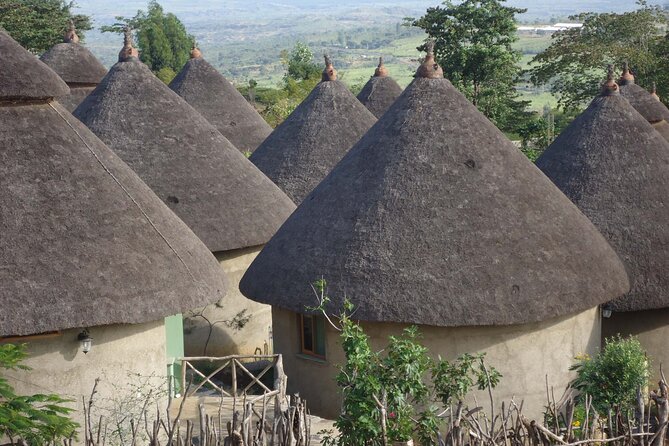
Reviewed · THE OMO VALLEY
6 day Omo ValleyTours
The Omo Valley packs an astonishing range of cultures into one remote corner of southern Ethiopia. In six days, you move from Hamar villages and bull jumping traditions to Karo body painting, a dugout canoe crossing, Mursi lip plates, Konso settlements, and Dorze food and crafts. The cultural variety is the main event.
I especially like the chance to see several communities rather than stopping at one village, and the practical help from the tour team. Mickey is praised for clear English, quick communication, and arranging plans around your time and budget, while Abey is named as a guide on one recent trip. The strongest caution is the pace: long road days, basic regional lodging, and extra domestic flights require patience and careful confirmation.
Key points to know before booking
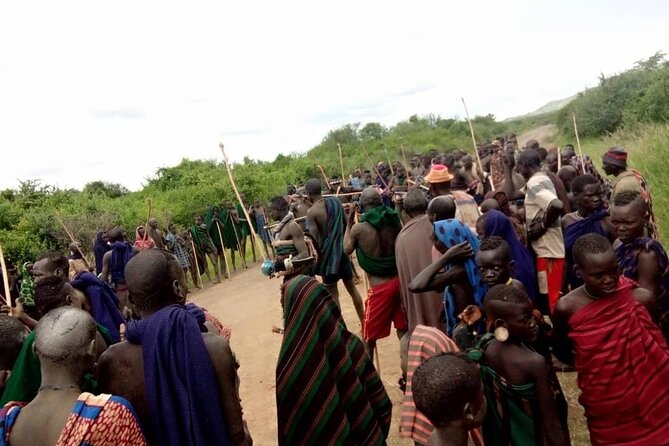
- Six ethnic communities in one fast-moving trip: Meet Hamar, Karo, Dassanech, Mursi, Konso, and Dorze people across southern Ethiopia.
- Market days can change the experience: Monday, Tuesday, Thursday, and Saturday offer possible market visits in towns such as Jinka, Keyafer, Alduba, and Turmi.
- Authentic does not mean effortless: Expect rougher roads, long drives, a short walk, and a dugout canoe crossing near Omo Rate.
- Ceremonies are optional: Hamar bull jumping and Evangadi dancing may be possible, depending on timing and local arrangements.
- The $899 price covers the ground package: Lodging, meals, guiding, transport, admissions, and taxes are included, but domestic flights are not.
- Check the final schedule carefully: The supplied program places Arba Minch and an Addis flight on both Days 5 and 6, so confirm the actual flight plan before paying for tickets.
Why the Omo Valley is worth the effort
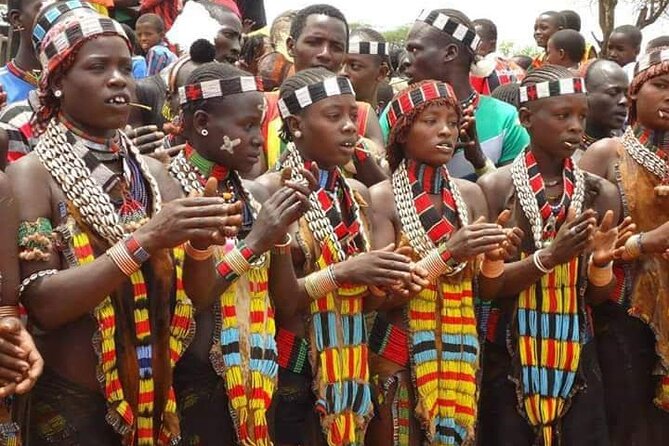
The Omo Valley is not a single attraction with a neat entrance gate. It is a large southern region where distinct communities have developed their own languages, dress, body decoration, food traditions, and social customs. The road between each stop is part of the experience, though not always the easiest part.
You may see elaborate Hamar hairstyles and clothing, Karo face painting, Dassanech village life near the Kenyan border, Mursi women wearing lip plates, Konso village traditions, and Dorze weaving and pottery. These details are often presented as visual symbols, but they are also connected to identity and daily life.
You should approach the visit with respect. A village encounter can easily become a quick photo stop if you are not careful. Your guide matters greatly here. Ask how photographs are handled, how village fees work, and how much time you will have to talk rather than simply walk through.
This trip also takes place during a period of change. Outside influences, roads, tourism, and modern services are reaching communities that were isolated for many years. That makes the visit important, but it also means you should not expect a frozen-in-time display. You are seeing living communities, not a museum.
More Omo Valley Tours in Addis Ababa
- 6 Days Omo Valley Tribes Tours From Addis Ababa
★ 5.0 · 33 reviews - 3 Days Omo Valley Tour
★ 5.0 · 24 reviews - Danakil Depression, Lalibela, Omo Valley and Simien Mountains
★ 5.0 · 23 reviews
Day 1: From Jinka Airport to Hamar country
Your guide meets you at Jinka, also called Baco, Airport, then drives about 130 kilometers to Turmi. The stated drive time is roughly two hours, followed by a late-afternoon visit to a Hamar village.
The Hamar are known for distinctive clothing, hairstyles, body decoration, and ceremonies. If local timing allows, you may see a bull jumping ceremony or Evangadi dancing. Both are listed as optional, and neither should be treated as guaranteed. Ceremonies depend on the community calendar and the day’s arrangements.
If your arrival falls on Monday, Tuesday, Thursday, or Saturday, you may also visit a tribal market. The possible locations include Jinka, Kako, Keyafer, Alduba, and Turmi. Market days add a useful glimpse of ordinary trade and social life, rather than focusing only on village presentation.
You spend the night at Paradise Lodge Turmi. The lodge gives you a practical base for the first two nights, but the program is not designed around long periods of rest. The first day is already about six hours of activity, and airport transfers can make it feel longer.
Day 2: Karo body painting beside the Omo River
Day 2 takes you west from Turmi for about 65 kilometers to meet the Karo, or Kara, people near the Omo River. The drive is listed at about one hour each way, with lunch back in Turmi.
The Karo are described as the smallest ethnic group in the Omo Valley and are especially known for elaborate face and body painting. You may have the chance to receive face or body painting in the Karo style. This can be a memorable part of the trip, but ask what is appropriate before agreeing, and make sure you understand the cost if any separate payment is requested.
The Karo visit is one of the clearest examples of why a local guide is valuable. The visual details are easy to notice, but the meaning behind them is harder to understand from a passing glance. Use the stop to ask about the painting, clothing, settlement, and relationship with the river.
A second market visit may be possible if the day matches the schedule. Hamar ceremonies may also be available. That gives you flexibility, but it also means the exact shape of the day can change. Do not expect every optional activity to fit neatly into the published hours.
You return to Paradise Lodge Turmi for another night. With seven hours of activity listed, this is a full day, though the relatively short drive keeps it more manageable than later sections.
Day 3: A dugout canoe to the Dassanech

Day 3 begins after breakfast with a drive of about 72 kilometers to Omo Rate, near the Kenyan border. The drive is listed at about one hour, but conditions on southern Ethiopian roads can affect actual timing, so keep your plans flexible.
Omo Rate is the gateway to a Dassanech visit. You first go to the immigration post, then cross the Omo River by dugout canoe. After landing, you walk for roughly ten minutes to reach the village.
The river crossing is one of the most unusual parts of the six-day program. It is also a point where comfort and convenience take a back seat. You should be ready for a simple boat, a short walk, and a day shaped by local conditions. The supplied information does not describe the canoe’s facilities or safety equipment, so ask your operator for current details before departure.
The Dassanech community lives close to the border area, and the visit gives you a different setting from the Hamar and Karo stops. Rather than seeing the Omo Valley as one uniform culture, you begin to notice how much the communities differ from one another.
After returning to Turmi for lunch, you may have another market or ceremony opportunity before continuing to Jinka. The day totals about seven hours, and you spend the night at Eco-Omo Lodge in the new-building rooms.
This is a demanding day because the route includes a border-area drive, immigration procedures, a boat crossing, walking, a village visit, lunch, and another transfer. I would avoid scheduling anything important for the evening.
More Omo Valley journeys south:
- 5 Days Omo Valley Tours
★ 5.0 · 15 reviews - 6 Days Lalibela, Omo Valley and Harar
★ 5.0 · 15 reviews - Private Omo Valley Tours From Addis Ababa
★ 5.0 · 12 reviews - 9 Days Tours To Danakil Depression, Simen MNP, Lalibela With Omo Valley Tribes
★ 5.0 · 11 reviews
Day 4: Mursi country, Mago National Park, and Konso
Day 4 is the longest listed day, at about eight hours. You drive about 50 kilometers through Mago National Park to meet the Mursi, then return to Jinka and continue roughly 150 kilometers to Konso.
The Mursi are widely associated with lip plates worn by some women. The visit is likely to be visually striking, but it is also a place where respectful behavior matters most. Ask before taking photographs, listen to your guide, and remember that a person’s appearance is not an invitation to treat them as a prop.
The route through Mago National Park adds another layer to the day, but the supplied program does not promise wildlife sightings. Go for the Mursi visit and the setting, not for a safari.
After returning to Jinka, the long drive to Konso makes this a serious road day. You may feel that the cultural reward is worth it, but the pace leaves little room for wandering or recovery. Comfortable vehicle transport and a reliable driver are important here.
In Konso, you visit a village and stay at Kanta Lodge. The Konso are included as a separate cultural stop, giving you another chance to compare settlement patterns, crafts, and community life with what you saw farther south.
Day 5: Dorze crafts and the road to Arba Minch
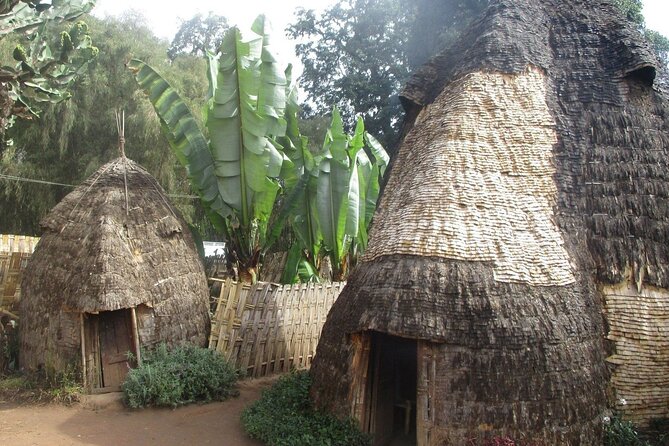
The program next takes you about 130 kilometers toward Arba Minch and the Guge Mountain area, where the Dorze live at an altitude of approximately 2,400 meters.
The altitude changes the feel of the day. The Dorze are known for weaving and pottery, and you also see how kocho is prepared from the false banana plant, or enset. Food demonstrations are most useful when you treat them as a window into daily life rather than a staged cooking show. The kocho preparation connects local agriculture with what appears on the plate.
After lunch, the schedule says you go to Arba Minch Airport for an afternoon flight to Addis Ababa. That creates a serious scheduling issue because Day 6 also begins in Arba Minch, includes a Lake Chamo excursion, and ends with another flight to Addis Ababa.
You should not assume both days apply exactly as written. The program may reflect alternative arrangements, a date change, or a duplicated section. Confirm whether your tour ends on Day 5 or Day 6, which flight you must book, and where you sleep before departure.
Day 6: Lake Chamo and the final flight
The sixth day begins with an 8 a.m. hotel pickup for Lake Chamo. The plan includes a boat trip lasting several hours, with chances to see crocodiles, visit a fish market, and spend time on the lake.
Lake Chamo gives the trip a change of rhythm after several days of village visits and road transfers. A boat outing also lets you see the area from the water, though the description does not guarantee specific wildlife numbers or sightings. You should treat crocodiles as a possibility, not a promise.
After the lake, you return to Arba Minch for a city walk before lunch. The listed transfer to the airport is at 1:30 p.m. for a flight to Addis Ababa.
Again, confirm the date and flight details. The tour begins at Bole Addis Ababa International Airport at 9 a.m., but the southern Ethiopia portion begins with pickup at Jinka Airport. That means air travel is part of the overall plan, and the domestic tickets are not included in the $899 price.
What the $899 price really covers
At $899 per person, the ground portion offers solid coverage for a six-day journey through a remote region. Included are an air-conditioned vehicle, local guide, accommodation, entrance fees listed in the program, government taxes, airport or departure tax, and meals.
The meal allowance is five breakfasts, six lunches, and five dinners. Drinks are not included, so budget separately for water and other beverages. The domestic flights are also excluded, and this is the largest cost you must add to the advertised price.
The value depends on how many people share the vehicle and how smoothly the flights connect. The maximum group size is 15, which is small enough for a more manageable group than a large coach, but not the same as a private trip. The operator has also arranged customized plans for short-notice bookings, so it is worth asking about a smaller group or adjusted schedule.
Accommodation includes Paradise Lodge Turmi for two nights, Eco-Omo Lodge in Jinka, and Kanta Lodge in Konso. The program does not give room categories beyond the new-building rooms at Eco-Omo Lodge, so ask about the exact room type and facilities before booking.
The guides can make or break the trip
The strongest praise for this experience centers on communication and personal service. Mickey is repeatedly associated with the company’s management and is described as easy to reach, good at English, quick to answer questions, and willing to shape a plan around available time and budget.
Abey is named as a guide on one six-day Omo Valley journey. Robel is also identified as Mickey in another account, so the names may reflect staff roles or nicknames. Ask who will lead your specific departure, who will drive, and whether the same guide stays with you for the full route.
That question matters because this is not a simple sightseeing loop. You need someone who can explain local customs, handle market and ceremony timing, manage the road schedule, and help you behave properly during village visits.
Who should book this Omo Valley trip?
I would recommend it to you if you want concentrated cultural variety and do not mind moving often. It suits people who are curious about daily life, local food, body decoration, craft traditions, and the differences among neighboring communities.
It also suits first-time visitors to southern Ethiopia who want transport, lodging, meals, entrance fees, and local guiding organized in one package. The airport pickup and mobile ticket make the booking side simple, while the maximum group size of 15 keeps the trip from becoming a huge bus outing.
This is less suitable if you want a slow holiday with late mornings and long afternoons at one lodge. The road schedule is tight, several days run six to eight hours, and the program includes an immigration post, a canoe crossing, high-altitude travel, and domestic flights.
You should also think carefully about photography. If your main goal is to collect portraits, this may feel like a series of quick stops. If your goal is to learn, observe, and accept a little discomfort, the trip has much more to offer.
Practical details I would confirm first
The tour offers pickup and starts at Bole Addis Ababa International Airport, with a stated start time of 9 a.m. Yet Day 1 begins at Jinka Airport, so confirm where you join the southern route and whether an Addis to Jinka flight is part of your arrangement.
Ask for the final day-by-day schedule in writing. The duplicated Arba Minch flight information is too important to leave unclear. Confirm the domestic flight dates, airport transfers, luggage rules, and the number of hotel nights.
I would also confirm the optional ceremony costs, photography expectations, canoe arrangements, and the exact accommodation. These questions are not signs of fussiness. They are sensible preparation for a remote trip where small misunderstandings can affect an entire day.
Free cancellation is available if you cancel at least 24 hours before the start time. Changes or cancellations inside that window are not accepted for a refund, and cut-off times use local time.
Should you book it?
Book this tour if you want a fast, well-supported introduction to the Omo Valley, with Hamar, Karo, Dassanech, Mursi, Konso, Dorze, markets, ceremonies, and Lake Chamo in one ambitious route. The combination is hard to match in only six days, and the team’s communication, especially through Mickey, is a real advantage.
I would book only after confirming the domestic flights and the Day 5 and Day 6 sequence. If you accept long drives, simple logistics, and a packed schedule, the $899 ground price can be good value. If you need a relaxed pace or fully inclusive airfare, ask for a customized version before committing.
FAQ
Where does the tour start?
The stated meeting point is Bole Addis Ababa International Airport in Addis Ababa, Ethiopia, with a start time of 9 a.m.
Where does the tour end?
The activity ends back at the meeting point, though the supplied schedule also describes flights from Arba Minch to Addis Ababa. Confirm the final airport and transfer plan before booking flights.
Are domestic flights included?
No. Domestic flights are not included in the $899 price.
What meals are included?
The package includes five breakfasts, six lunches, and five dinners. Drinks are not included.
What accommodation is provided?
The stated lodging includes Paradise Lodge Turmi, Eco-Omo Lodge in Jinka, using rooms in the new building, and Kanta Lodge in Konso.
Which communities do you visit?
The program includes visits with the Hamar, Karo or Kara, Dassanech, Mursi, Konso, and Dorze communities.
Can you visit a market?
Market visits may be possible on Monday, Tuesday, Thursday, or Saturday. Possible locations include Jinka, Kako, Keyafer, Alduba, and Turmi.
Are Hamar ceremonies guaranteed?
No. Hamar bull jumping and Evangadi dancing are listed as optional activities, so availability depends on timing and local arrangements.
How large is the group?
The activity can include a maximum of 15 people.
More Six-Day Trips from Addis Ababa
- 6-Day Omo Valley Cultural Private Tour
★ 5.0 · 6 reviews - 6 Days Visiting Omo Valley Tribes
★ 4.0 · 4 reviews - 6 days 5 nights Addis Abeba sightseeing & Lalibela Rock-Hewn Churches
★ 5.0 · 3 reviews - 6 days Omo valley cultural Tour
★ 5.0 · 3 reviews
Just added around Addis Ababa
- 6 days 5 nights Addis Abeba sightseeing & Lalibela Rock-Hewn Churches★ 5.0 · 3 reviews
- Addis Ababa Essentials: Flexible Full-Day City Sightseeing★ 5.0 · 3 reviews
- 4 Hours Addis Ababa Cultural Discovery Tour★ 5.0 · 3 reviews
- Day Trip Around Addis Ababa★ 5.0 · 3 reviews
- Northern Ethiopia (Historic route)★ 5.0 · 3 reviews
- Addis Ababa Half Day Shopping Tour★ 5.0 · 3 reviews
- Monastic Marvels Exploring the beauty of Debre Libanos Monastery★ 5.0 · 3 reviews
- 6 days Omo valley cultural Tour★ 5.0 · 3 reviews
Omo Valley Tribal Tours, compared.

Lalibela, Axum, Danakil and Omo Valley 8 DAYS
Read our review →
3 days around Arbaminch and Konso Adventure Tours Life Time
Read our review →Danakil Depression, Lalibela, Omo Valley and Simien Mountains
Read our review →



9 Days Tours To Danakil Depression, Simen MNP, Lalibela With Omo Valley Tribes
Read our review →
8 Days Lalibela,Danakil Depression and Omo Vally Tours
Read our review →Browse the lists this tour appears in