
Reviewed · ADDIS ABABA
12- Day Historical Route of Ethiopia
Ethiopia’s greatest sights are spread across a huge stretch of highland country, and this 12-day historical route links them in one serious journey. You’ll see Lucy in Addis Ababa, island monasteries on Lake Tana, royal castles in Gondar, ancient Axumite monuments, cliff churches in Tigray, and Lalibela’s remarkable rock-hewn sanctuaries.
I like the balance between major sites and remote scenery. Lalibela and Axum deliver the headline history, while the Simien Mountains and the Tigray road journeys show you why Ethiopia is much more than a list of old churches. I also like the small advertised group size of up to four people, plus domestic flights that save time at the start and end.
The trade-off is the amount of time spent on rough, winding roads. Day 5 is a full drive from Simien to Axum, and Day 9 is another long transfer to Lalibela. This is not a relaxed resort holiday. You need moderate fitness, patience, and a taste for early starts and changing accommodation.
Key points to know before booking
- Lucy and Entoto Mountain frame the Addis Ababa visits: You begin and end with Ethiopia’s capital, including the National Museum, a traditional clothing market, and broad city views.
- Lake Tana adds a quieter side of Ethiopian Christianity: A boat ride reaches Ura Kidane Mihret, with painted religious scenes and old Ge’ez manuscripts.
- The Simien Mountains bring wildlife and altitude: The route reaches about 3,250 meters, with possible sightings of endemic geladas and lammergeyer vultures.
- Axum and Yeha reach back thousands of years: Ancient stelae, churches, temples, and Red Sea connections give the northern route its historical weight.
- Tigray’s churches require more effort than Lalibela: Abune Yemata Guh and other rock-cut churches can involve demanding approaches, while other churches are easier to reach.
- The $2,597 price covers important essentials: Private transport, domestic flights, accommodation with breakfast, many lunches, two dinners, entrance costs, and a guide are included.
Why this northern route works
This trip is built around Ethiopia’s historic circuit, but its real strength is variety. In twelve days, you move from a modern capital to highland monasteries, imperial castles, mountain viewpoints, ancient ruins, and churches cut directly from stone.
I especially like the order. Addis Ababa gives you a gentle introduction. Bahir Dar and Gondar then build the story of northern Ethiopia before the route becomes more remote and physically demanding. Axum and Tigray bring the oldest material, while Lalibela provides the grand finale.
You will not spend every night in a large city. That matters because the most memorable parts of Ethiopia often come between the major stops: a high road over the Simien range, the Tekeze River gorge, or a quiet rural view outside Mekele. The same route can also feel tiring if you prefer short transfers and lots of free time.
The tour is private, with a maximum of four people stated for the activity. That is a useful size for narrow roads, church visits, and adjusting the pace. Enat Ethiopia Tours offers guides in English, Spanish, French, German, and Italian. Ashu, the company owner and organizer named in the trip information, is noted for planning, support, and flexibility, so it is worth confirming whether he will personally accompany you or assign another guide.
More historic sites near Addis Ababa:
- Day Trip From Addis Ababa See Historical Monastery,Stunning Nature,Animals,Birds
★ 5.0 · 303 reviews - Hidden Treasures of Addis Ababa – Food, Culture and History Tour
★ 5.0 · 57 reviews - Northern Ethiopia Historic Route
★ 5.0 · 12 reviews
Addis Ababa, Lucy, and the highland capital
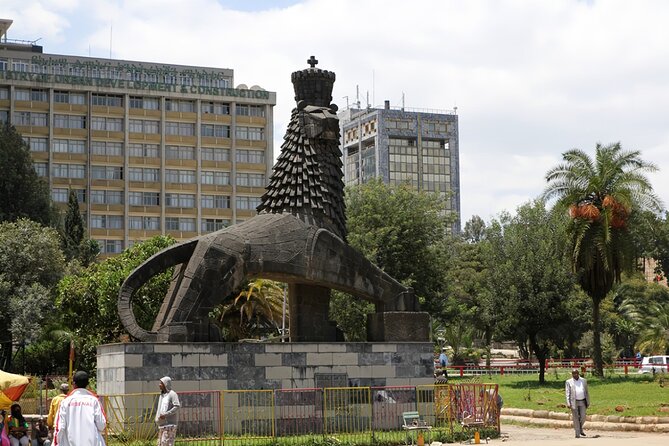
Your first day combines airport pickup, hotel transfer, and a city tour. Addis Ababa sits at about 2,438 meters, so the altitude can be noticeable when you first arrive. The stated average temperature is around 25 degrees Celsius, but mountain air and the time of day can make conditions feel cooler.
The National Museum is the essential first stop. Its collection includes Lucy, the famous 3.5-million-year-old hominid fossil discovered in Ethiopia, along with other early human remains and national treasures. This visit gives useful context before you encounter the country’s ancient churches and kingdoms.
On the final day, you return to Addis by air and go up Entoto Mountain. The eucalyptus forests and high viewpoint offer a different view of the capital. The stop at Shiro Meda, a major market for traditional clothing, gives you a chance to browse local textiles before the farewell dinner.
The evening meal includes traditional food, drinks, songs, and dances, followed by transfer to Bole International Airport. If your flight is late or you want more time in the city, additional Addis Ababa hotel nights and programs can be arranged on request.
Lake Tana and the monasteries near Bahir Dar
Day 2 begins with a domestic flight to Bahir Dar, on the shore of Lake Tana, Ethiopia’s largest lake. This flight is one of the trip’s practical advantages. It avoids a long overland transfer and lets you reach the water and monasteries early in the route.
The boat trip is the focus. You visit Ura Kidane Mihret on the Zeghie Peninsula, where the church has colorful religious paintings beneath a thatched roof. You’ll also see illuminated Bibles written in Ge’ez, the old religious language from which Amharic developed.
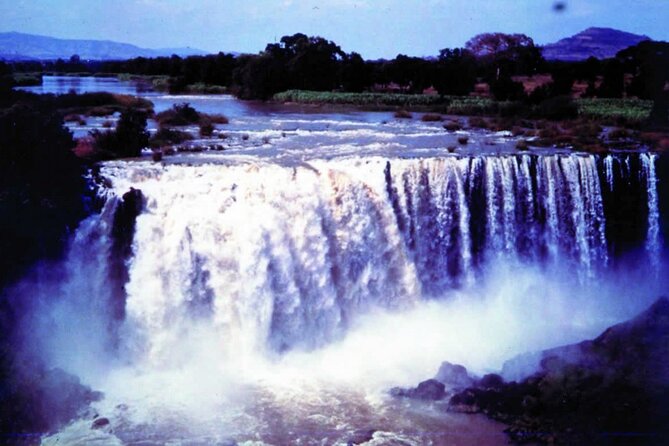
Later, the route continues to Tisissat Falls, whose name means water that smokes in Amharic. The stop adds a natural feature to a day already centered on water and religious sites.
Bahir Dar is described as one of Ethiopia’s best-planned cities, which makes it a useful contrast to the rural roads later in the trip. The day is full, but it is not overloaded with castles or ruins. You get a calm beginning, with time on the lake before the tougher mountain sections.
Gondar’s castles and the imperial past
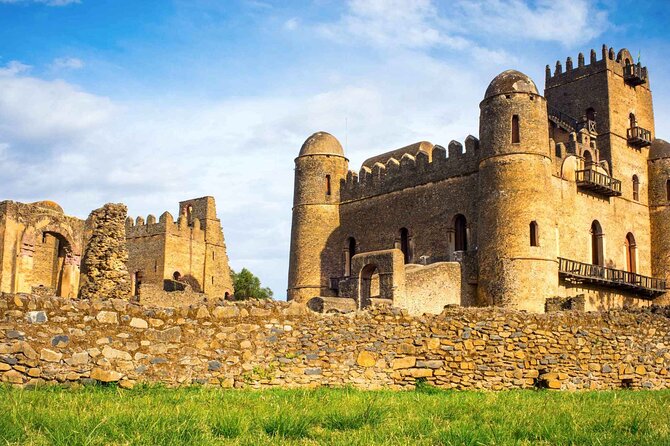
A three to three-and-a-half-hour drive takes you 185 kilometers to Gondar, once Ethiopia’s capital. The main attraction is the Royal Enclosure, a walled complex of stone castles from the seventeenth century.
King Fasilides’ castle is the largest and best preserved. Its round turrets and wooden balconies give it a distinctive appearance, quite different from the rock-cut churches later in the trip. Outside town, the Bathhouse of Fasil is linked to the annual Timkat celebration each January, when thousands gather for the Ethiopian Orthodox festival.
Gondar is a good place to pause and absorb the political side of Ethiopian history. The churches show religious continuity, while the royal compound explains how rulers governed and displayed power.
The limitation is simple: the itinerary gives you one main day in Gondar, so you should not expect a slow exploration of every church and museum in town. If castles are a top interest, ask how much time will be spent inside the Royal Enclosure and whether any additional local stops can be added.
A few more Addis Ababa trips to weigh up
- Full Day Tour of Addis Ababa with Hotel Pickup and Drop-off
★ 5.0 · 430 reviews - Taste of Ethiopia
★ 5.0 · 406 reviews - Addis Ababa: Debre Libanos, Blue Nile Gorge, and Cave Tour
★ 4.5 · 256 reviews - Addis Ababa Guided City Tour With Airport & Hotel Pick Up
★ 5.0 · 237 reviews
Simien Mountains at 3,250 meters
The route then heads to Debark and into Simien Mountains National Park, a UNESCO World Heritage site. This is one of the strongest scenic sections of the trip, with dramatic highland views and a chance to see animals found in Ethiopia.
An optional walk of about 1.5 hours is described as mostly flat or downhill. Possible sightings include gelada baboons, klipspringers, lammergeyer vultures, and bushbuck. The geladas are especially associated with Ethiopia’s high plateaus, but wildlife is never guaranteed, so the value of this stop rests on both the views and the chance of seeing animals.
The highest point reached is about 3,250 meters. That makes the day more demanding than the sightseeing in Addis or Gondar. You should be comfortable walking on uneven ground and should tell your guide if altitude or exertion is affecting you.
The overnight stay is listed as Simien camping. This is an important practical detail. Camping can make the mountain experience feel more direct, but it may be less comfortable than a standard hotel. Ask what camping equipment and bedding are supplied before you go.
The long road to Axum
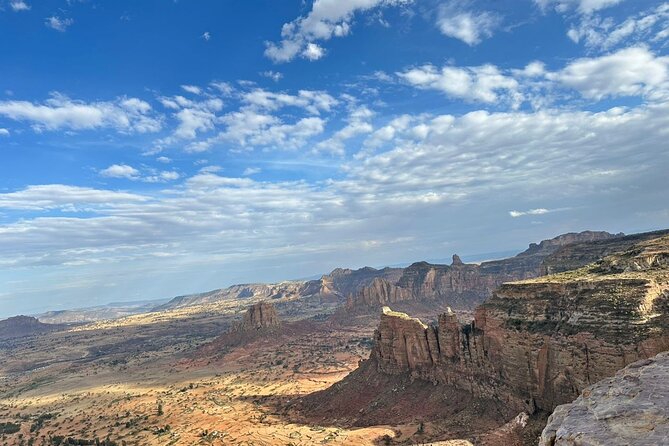
Day 5 is a full-day drive from Simien to Axum, passing through the lower parts of the mountains and the Tekeze River gorge. The route is described as rugged, but the views provide much of the day’s reward.
This is where you need realistic expectations. A full day in a vehicle can be tiring, particularly after camping and mountain walking. At the same time, the road gives you access to places that are difficult to reach by air, and the changing scenery creates excellent photo opportunities.
Axum was once the capital of a powerful kingdom and sat along trade routes between the Mediterranean and India. Its influence reached both sides of the Red Sea, with the port of Adulis helping connect the kingdom to wider commerce.
The city is not simply an archaeological stop. It is also central to Ethiopian Christianity. The old Church of St. Mary of Zion is associated with the early Christian period, and Axum is traditionally believed to be the resting place of the Ark of the Covenant. Your guide can help separate established history, religious tradition, and local belief, which is particularly useful at a site with so many layers.
Yeha, Adwa, and Tigray’s cliff churches
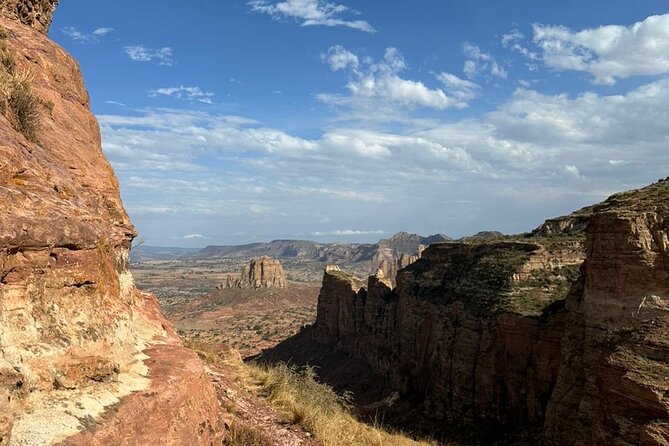
From Axum, the route continues to Yeha and Adwa before reaching the Gheralta area. Yeha is considered one of Ethiopia’s oldest settlements, with roots reaching back nearly 3,000 years. Its large temple was dedicated to the moon god Ilmuqah and reflects old connections across the Red Sea with Yemen.
The temple was later converted into a church, and ibex carvings remain visible on its façade. That mixture of older religious practice and later Christian use is one of the most interesting themes in northern Ethiopia.
Adwa adds a more recent chapter. It was the site where Ethiopian forces defeated a colonial power, making it a major symbol of African independence. The surrounding mountains also give the town a dramatic setting.
The Tigray churches are among the route’s most unusual stops. About 150 rock-cut churches are known in the region, with most still used by the Ethiopian Orthodox community. The program includes Abreha We Atsbeha, Degum Selassie, and Chirkos at Wukro, whose cruciform pillars and barrel-vaulted ceiling show the range of local construction.
Abune Yemata Guh is another possible highlight, but you should ask about the exact walking and climbing requirements. The supplied information identifies the church as part of the Tigray exploration, but it does not describe the approach in detail. Do not assume every church is reached by a simple roadside walk.
Mekele and the road south to Lalibela
After the Tigray churches, you continue to Mekele. The day includes more church visits and then travel through the highlands, with a night in Mekele before the long drive to Lalibela.
Day 9 is another full-day transfer. The road runs south between the mountains to the west and the Danakil Depression area to the east. You arrive in Lalibela after a long ride through striking countryside.
This is a route for someone who values access over speed. Flying between every major stop would be easier, but you would lose the gradual change in terrain and the sense of how far apart these historic centers are. Pack snacks, water, and anything you need for a long vehicle day, even though meals are included at several points.
Lalibela’s churches cut from living rock
Lalibela receives two days, which is right. The churches are too important and too detailed for a rushed stop.
The complex is often called the New Jerusalem and is associated with King Lalibela, who is thought to have commissioned it about 800 years ago. The churches were carved down into the rock, with workers shaping a solid block from the outside and then forming the interior.
The first cluster begins on Day 10. Expect narrow passages, carved courtyards, steps, and detailed stonework. The churches are not just monuments to view from a distance. Their design, scale, and continuing religious use make the visit feel active and immediate.
Day 11 adds Yemrehana Krestos, an exquisite church known for Axumite wood-and-stone construction. Its wooden coffered ceiling contains hexagons, medallions, figurative motifs, and geometric decoration.
The afternoon returns to Lalibela’s remaining churches, including Bete Gabriel and Rafael, Merkorous, Emanuel, and Abba Libanos. Bete Emanuel is singled out for its careful carving and Axumite details, including wall indentations, false windows, and monkey-head decoration.
You will want comfortable shoes and enough time to move carefully. The itinerary includes admission fees and a guide, but the physical setting still requires attention. Churches remain places of worship, so dress and behavior should be respectful.
What the $2,597 price really covers
At $2,597 per person, this is not a budget overland trip, but the price includes many expensive pieces: private transportation, air-conditioned vehicles, domestic flights, accommodation with breakfast, ten lunches, two dinners, entrance fees and taxes, and a professional multilingual guide.
The private format matters most. With a maximum of four people, you are paying for control over the vehicle, guide attention, and a smaller group at churches and viewpoints. The value improves if you want a structured trip and do not want to arrange several internal flights, hotels, drivers, and local guides yourself.
The included meals are useful, but dinner is not covered every night. Personal needs and gratuities are also excluded. The information lists eight breakfasts, ten lunches, and two dinners, so ask for a clear meal-by-meal plan before booking.
Pickup is offered, with the stated meeting point at the Skylight Hotel parking area on Africa Avenue. The listed start time is 12:00 am, which is unusually broad and may reflect an arrival-day setting rather than a normal sightseeing departure. Confirm the actual airport pickup time and flight schedule directly.
Who should book this Ethiopia tour?
I would recommend it to you if you want Ethiopia’s major northern historic sites in one organized trip and are comfortable with long drives. It suits people who care about archaeology, Orthodox Christian architecture, mountain scenery, and cultural history more than nightlife or leisurely hotel time.
It is also a good fit if you want a private trip but prefer a set route. The inclusion of domestic flights, transport, meals, and entrance fees removes much of the planning burden. Ashu and the Enat team are specifically praised for organization, support, and flexibility, which are valuable qualities on a route with remote stops and changing road conditions.
I would hesitate if you dislike rough roads, high elevations, camping, or full sightseeing days. Families can enjoy the route, but everyone should be ready for the physical demands and should confirm the church access conditions in Tigray.
Should you book it?
Book this tour if you want the broadest historical introduction to northern Ethiopia in twelve days. The strongest reasons are the small private format, the thoughtful mix of flights and road travel, and the rare chance to connect Axum, Yeha, Tigray, and Lalibela in one continuous journey.
Before paying, confirm the hotel list, camping arrangements, exact domestic flight times, the day-by-day meal plan, and how strenuous the Tigray church visits will be. If those details suit you, the $2,597 cost is reasonable for the amount of transport, guiding, admission, and logistics included.
FAQ
How long is the historical route of Ethiopia?
The tour lasts approximately 12 days, beginning and ending in Addis Ababa.
What destinations are included?
The route includes Addis Ababa, Bahir Dar, Lake Tana, Gondar, Simien Mountains National Park, Axum, Yeha, Adwa, the Gheralta area, Mekele, and Lalibela.
Are domestic flights included?
Yes. The included services list all domestic flights. The itinerary specifies flights between Addis Ababa and Bahir Dar, and between Lalibela and Addis Ababa.
What meals are included?
The tour includes accommodation with breakfast, eight breakfasts, ten lunches, and two dinners. Dinner, personal needs, and gratuities are not included.
How large is the tour group?
The activity states a maximum of four participants and uses private transportation.
Is airport pickup available?
Yes. Pickup is offered, and the stated meeting point is the Skylight Hotel parking area on Africa Avenue in Addis Ababa.
Just added around Addis Ababa
- 6 days 5 nights Addis Abeba sightseeing & Lalibela Rock-Hewn Churches★ 5.0 · 3 reviews
- Addis Ababa Essentials: Flexible Full-Day City Sightseeing★ 5.0 · 3 reviews
- 4 Hours Addis Ababa Cultural Discovery Tour★ 5.0 · 3 reviews
- Northern Ethiopia (Historic route)★ 5.0 · 3 reviews
- Day Trip Around Addis Ababa★ 5.0 · 3 reviews
- Addis Ababa Half Day Shopping Tour★ 5.0 · 3 reviews
- Monastic Marvels Exploring the beauty of Debre Libanos Monastery★ 5.0 · 3 reviews
- 6 days Omo valley cultural Tour★ 5.0 · 3 reviews
Addis Ababa Tours, compared.
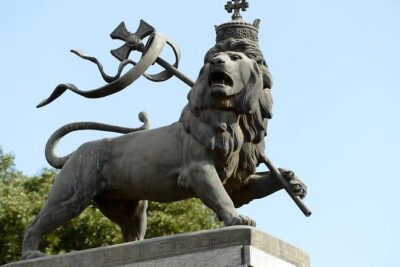
Full Day Tour of Addis Ababa with Hotel Pickup and Drop-off
Read our review →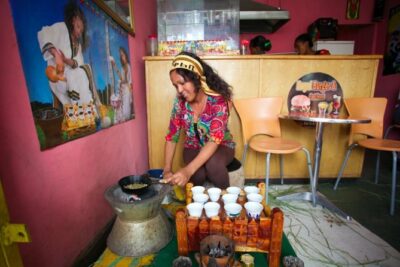
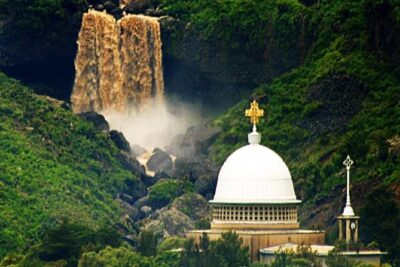
Day Trip From Addis Ababa See Historical Monastery,Stunning Nature,Animals,Birds
Read our review →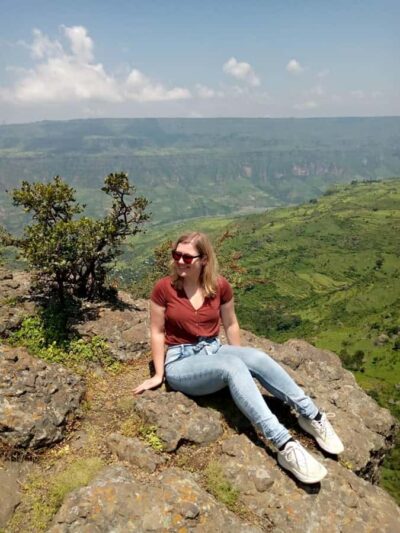
Addis Ababa: Debre Libanos, Blue Nile Gorge, and Cave Tour
Read our review →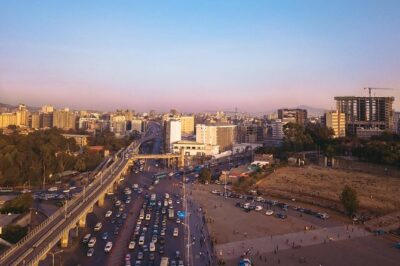
Addis Ababa Guided City Tour With Airport & Hotel Pick Up
Read our review →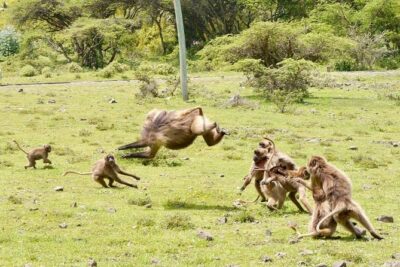
Breathtaking Nature, Wildlife and Cave Church Tour – Free Pickups
Read our review →
Browse the lists this tour appears in