
Reviewed · ADDIS ABABA
Addis Ababa City Tours
Addis Ababa makes a strong first impression through its contrasts: 3.3-million-year-old human fossils, crowded market streets, imperial churches, and eucalyptus-covered Mount Entoto all fit into one long day. This tour connects those pieces by air-conditioned minivan, with hotel or airport pickup and entrance fees included.
I like the way the day joins Ethiopia’s ancient past to its modern city life. I also like the mix of major sights and shopping stops, especially Shiro Meda for handwoven cotton clothing and Merkato for a look at Addis at full speed. The main caution is the $600 per person price, which is high for a city day tour, particularly if you are traveling alone.
Key points at a glance
- Lucy and Selam at the National Museum: See some of the world’s most important early human fossils, including Lucy and the child fossil Selam.
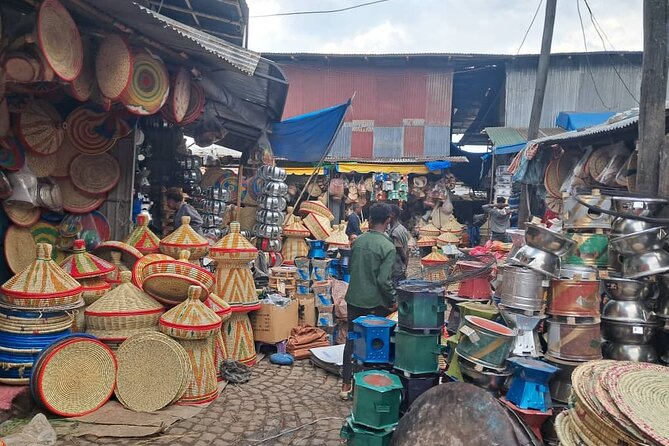
- Two hours in Merkato: The visit gives you time to see Africa’s largest open-air market, though it can feel intense and crowded.
- Entoto above the city: Reach the mountain associated with Menelik II for broad views and a look at Addis’s eucalyptus forests and monasteries.
- A serious look at recent history: The Red Terror Martyrs Memorial Museum adds difficult but important context.
- Flexible guide support: The operator has used guides including Mickey, Mulate, Getachew, Haile, Alex, and Yosef, though your assigned guide is not guaranteed.
- Useful for a layover: Airport pickup, a private vehicle, and hotel drop-off can make a short stay in Addis much easier to manage.
What this Addis Ababa day actually covers
This is a seven to eight hour city tour built for a first look at Addis Ababa. It is not just a drive past landmarks. You get museum time, markets, churches, a memorial, and a mountain viewpoint, with transport between stops.
The supplied schedule adds up to a full day even before traffic and meal breaks. The named stops include two hours at the National Museum, one hour at the Ethnological Museum, 30 minutes at Shiro Meda, two hours at Merkato, one hour at St. George’s Cathedral, 30 minutes at the Red Terror Martyrs Memorial Museum, and one hour at Mount Entoto.
Meskel Square is also included as a city sight, although no separate duration is given. Ask your guide how it fits into the day. Addis traffic can affect the order and length of stops, so treat the schedule as a framework rather than a minute-by-minute promise.
A few more Addis Ababa trips to weigh up
- Full Day Tour of Addis Ababa with Hotel Pickup and Drop-off
★ 5.0 · 430 reviews - Taste of Ethiopia
★ 5.0 · 406 reviews - Day Trip From Addis Ababa See Historical Monastery,Stunning Nature,Animals,Birds
★ 5.0 · 303 reviews
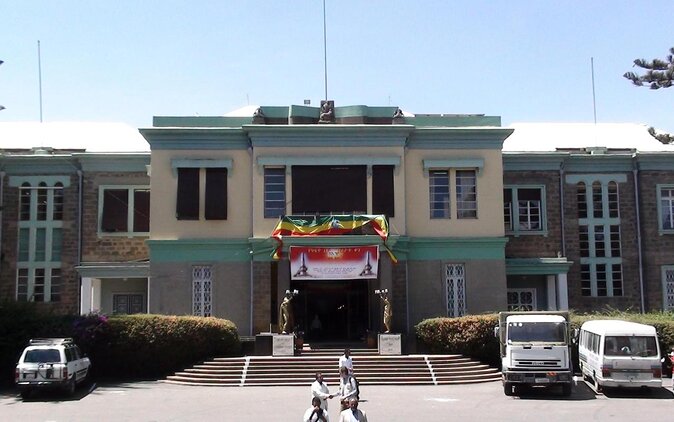
Lucy, Selam, and Ethiopia’s story at the National Museum
The National Museum is the day’s essential stop. Its most famous resident is Lucy, the early hominid fossil discovered near Hadar in 1974 and estimated at about three million years old.
A newer display focuses on Selam, estimated to be 3.3 million years old and regarded as the earliest child found in the fossil record. Seeing both fossils gives the museum a special weight. You are not simply looking at old bones. You are looking at evidence tied to the long human story in Ethiopia.
The museum also presents archaeology, objects from ancient and medieval periods, royal regalia, artwork, and everyday arts and crafts from different Ethiopian communities. That wider scope matters because it keeps the visit from becoming only a Lucy stop.
You have two hours scheduled here, which is generous compared with many quick city tours. Use some of that time for the displays beyond paleoanthropology. Your guide can help link the objects to Ethiopia’s many peoples and traditions.
There is one important practical warning. One tour participant found the National Museum closed and did not see Lucy. Opening conditions can change, so confirm the museum’s status before departure if Lucy is your main reason for booking. The company may adjust the day, but you should not assume the fossil display is guaranteed without checking.
The Ethnological Museum inside the university campus
The Ethnological Museum is located on the main campus of Addis Ababa University and houses the Institute of Ethiopian Studies. It focuses on Ethiopian culture and ethnology, with anthropological, musicological, and cultural objects.
The setting adds interest. This is not only a collection of isolated objects. The museum is part of an academic institution devoted to studying Ethiopia’s peoples, languages, music, and traditions.
The one-hour visit should complement the National Museum. The first museum looks far back into human origins and Ethiopia’s archaeological past. The Ethnological Museum shifts attention toward cultural life and social traditions.
I would ask your guide to make the connection between the two museums clear. Without explanation, museum displays can blur together during a packed day. With a good guide, the pairing gives you a much broader understanding of Ethiopia.
Shiro Meda for cotton clothing and small gifts
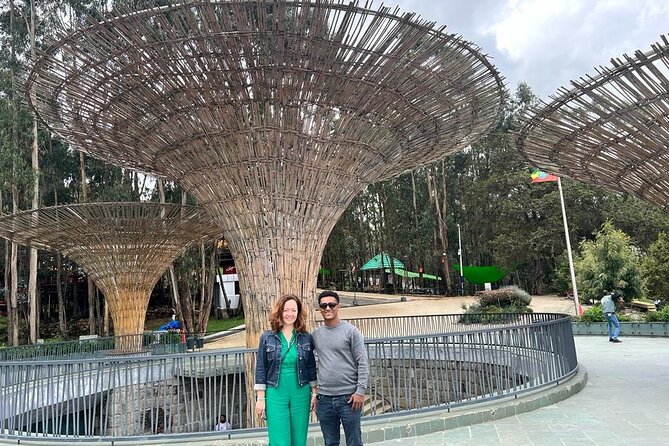
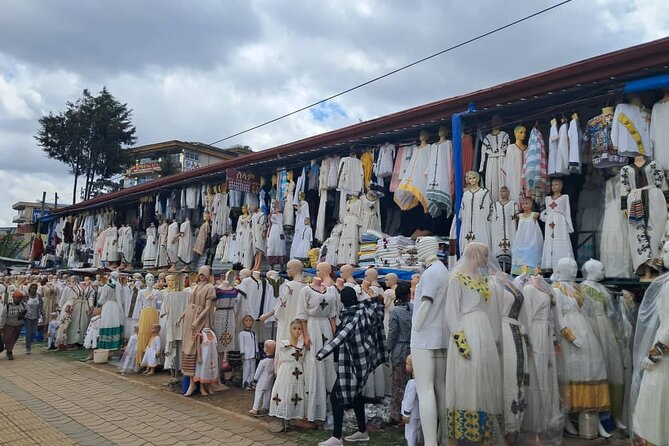
Shiro Meda is a smaller and more manageable market stop than Merkato. It is known for handwoven cotton clothing, especially women’s dresses and scarves decorated with colorful embroidery.
You can also look for shirts, necklaces, earrings, and other small gifts. The stop is scheduled for 30 minutes, so this is a place to browse with a purpose rather than wander for hours.
Bargaining is expected here. Go in with a friendly manner and remember that the first price is not necessarily the final one. If you see a scarf or garment you like, take a moment to check the weave, embroidery, and stitching before buying.
The stop may suit shoppers who want a distinctly Ethiopian textile rather than a generic souvenir. It may feel less appealing if you do not shop, since half an hour is a meaningful portion of a long day. Tell your guide if you prefer more museum time or a shorter market visit.
More city tours in Addis Ababa:
- Addis Ababa Guided City Tour With Airport & Hotel Pick Up
★ 5.0 · 237 reviews - Full-Day Private City Tour of Addis Ababa
★ 5.0 · 147 reviews - Addis Ababa Authentic Private City Tour
★ 5.0 · 134 reviews - Authentic Addis Ababa City Tour with a Local Guide
★ 4.9 · 109 reviews
Merkato, Addis at full volume
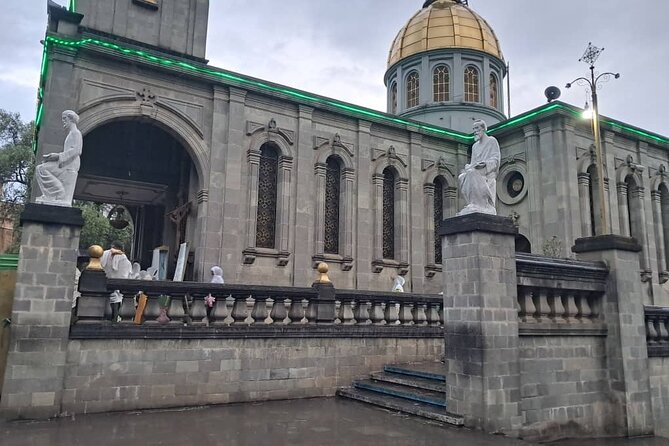
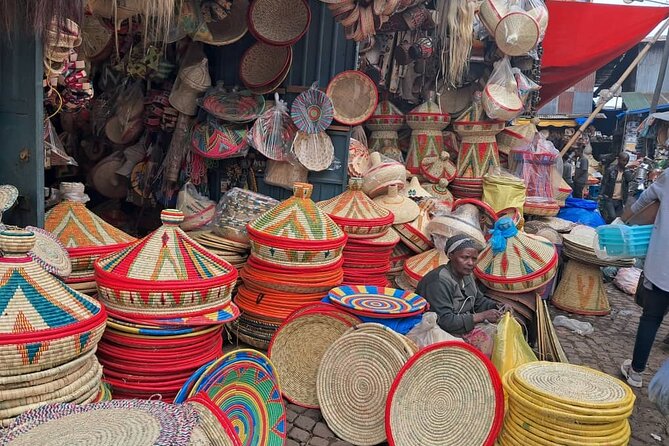
Merkato is the largest open-air market in Africa and receives the longest market visit on the schedule, about two hours. Its background is tied to the Italian occupation of the 1930s, when the market was moved west from the area near St. George Church. The current market grew around the compound of Fitawrari Habte Giyorgis Dinagde.
The market’s past also reflects segregation under Italian rule. Europeans were directed toward Piazza near the old St. George market, while the larger local market developed elsewhere. That history gives Merkato more meaning than a simple shopping stop.
Expect a busy, fast-moving place with many kinds of trade. The supplied information does not promise particular purchases or a fixed route through the market, so your experience will depend on the guide, the day, and what you want to see.
Two hours is enough to get a sense of the market without making the whole tour about shopping. Keep your belongings close and follow your guide’s advice. If you dislike crowded commercial areas, Merkato may be the hardest part of the day.
Still, I would not skip it too quickly. Museums explain Ethiopia through objects and history. Merkato shows the city as a working place, with commerce, movement, and daily life all around you.
St. George’s Cathedral and the Battle of Adwa
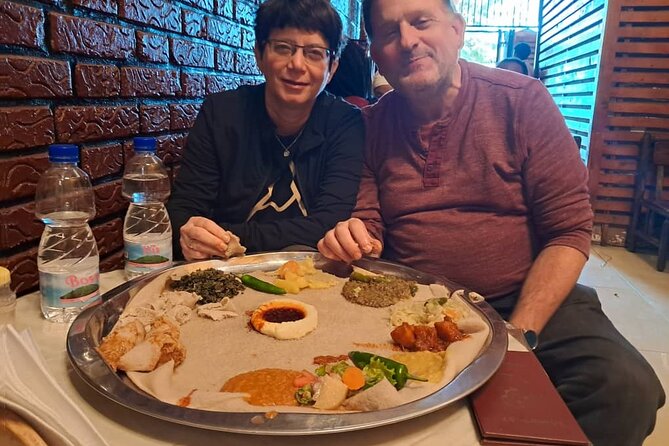
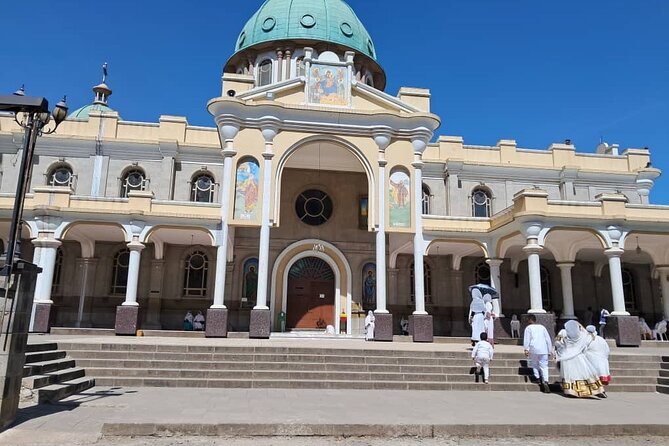
St. George’s Cathedral sits at the northern end of Churchill Road and is known for its unusual octagonal shape. It was designed by Sebastiano Castagna and built by Italian prisoners of war after Ethiopia’s victory at Adwa in 1896.
The cathedral’s name connects to that victory. St. George’s ark was carried to the Battle of Adwa, where Ethiopian forces defeated Italy. The building was later set on fire by Italian Fascist authorities in 1937 and restored after liberation in 1941.
The museum inside the cathedral adds an especially useful layer. Displays include an imperial throne and weapons used in wars against the Italians, including curved swords, tridents, and large helmets made with lion manes.
You have about an hour here. That allows time for the building, museum, and historical explanation without rushing. Ask about photography rules and dress expectations at the entrance, since this is an active Orthodox religious site as well as a museum.
Meskel Square, ceremonies, and public life
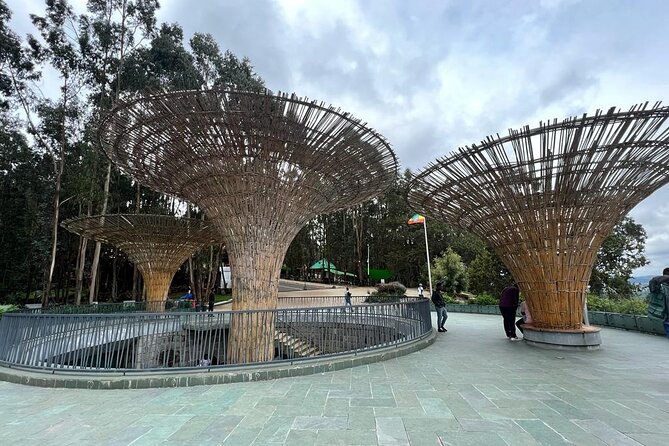
Meskel Square is one of Addis Ababa’s main public gathering places. It is used for demonstrations, festivals, and large public events, especially the Meskel Festival, which gives the square its name.
The square was previously called Stephen Square before its name changed in the early 1950s. Its importance comes less from a single monument than from its role in the city’s public life.
The tour does not provide a separate visit length for Meskel Square. You may stop for a view, a short explanation, or a photo while moving between other sights. If you want time to understand the square’s religious and civic role, ask your guide not to treat it as only a quick roadside pause.
The Red Terror Memorial Museum
The Red Terror Martyrs Memorial Museum was established in 2010 to remember people who died during the Red Terror under the Derg government. The displays include torture instruments, skulls and bones, coffins, bloodstained clothing, and photographs of victims.
This is the most emotionally difficult stop. The museum explains the events leading up to the Red Terror, the treatment of people who opposed the Derg, and the ways prisoners secretly communicated.
You have about 30 minutes scheduled here. That is enough for an introduction, but not a long study of the period. The material is direct and upsetting. I would not rush through it simply to stay on schedule, but I would also recognize that some people may need to limit their time.
Placed after the cathedral and central-city sights, the museum gives the day a modern political dimension. Ethiopia’s story is not only imperial, ancient, or religious. This stop asks you to face the country’s more recent pain.
Mount Entoto and the view over Addis Ababa
Mount Entoto is the final major stop and one of the day’s best changes of pace. Emperor Menelik II lived here and built his palace after coming from Ankober and founding Addis Ababa.
The mountain is considered sacred and is home to monasteries and churches, including Saint Raguel and Saint Mary. Its eucalyptus forest is another defining feature. The trees were brought from Australia during Menelik II’s reign and planted in larger numbers during Haile Selassie’s time.
Entoto is sometimes called the lungs of Addis Ababa because its forest has long supplied firewood and earlier building materials. The mountain helps explain the city’s setting, not just its skyline.
The hour here should give you time for views and a historical introduction. At this elevation, conditions may feel different from the city below, though the tour information does not specify weather or walking requirements. Wear practical shoes if you expect to walk around the mountain sites.
The view is the payoff. After museums and markets, you get a broad sense of Addis Ababa’s size and position. It is also a good place to ask your guide how the city developed from Menelik II’s settlement into Ethiopia’s capital.
Coffee, food, and the cost of the day
The tour description includes traditional Ethiopian coffee and food as part of the Addis Ababa experience, but food and drinks are not included in the price. Alcoholic drinks are also excluded.
That arrangement gives you some choice. You can buy lunch or coffee according to your appetite and budget, but you should ask early when and where the meal break will happen. A long day with several museums and markets is better when you are not waiting until late afternoon to eat.
At $600 per person, this is an expensive city tour. The price covers an air-conditioned minivan, driver-guide service, a Blue Badge guide, hotel pickup and drop-off, entrance fees, taxes, and handling charges. The group is capped at 10 people, and some bookings have become private tours when demand was low.
The value depends heavily on your circumstances. For a solo visitor, the price is difficult to justify unless airport pickup, a private vehicle, and a tightly managed day are especially important. For a small group splitting vehicle and guide costs, it may make more sense.
The strongest value comes when you have a long layover or only one day in Addis Ababa. You can cover a wide spread of sights without arranging separate taxis, museum tickets, and market visits. If you have several days in the city, comparing the cost with a shorter tour or private guide is sensible.
Guides, pickup, and the practical details
The company has used guides named Mickey, Mulate, Getachew, Haile, Alex, and Yosef on different tours. Mickey receives particular praise for quick communication, careful timing, and clear explanations, while Mulate is described as especially strong at linking the city’s sights to Ethiopian history. Your booking does not guarantee one of these individuals, so ask who will guide you and what languages are available.
Pickup is offered from your hotel or the airport. The stated meeting point is Edna Mall on Cameroon Street, while the tour information also says hotel drop-off is included and the activity ends back at the meeting point. Confirm the exact pickup and return arrangement before the day begins, especially if you are arriving on a flight.
Transport is by air-conditioned minivan. That matters because the day involves several parts of the city, and Addis traffic can make walking or arranging separate rides inefficient. The maximum group size is 10, though reports of private departures suggest the actual group may sometimes be smaller.
Confirmation is provided when you book. Most people can participate, according to the supplied information, but the tour involves multiple stops and a full day in a vehicle, so consider your own stamina.
Free cancellation is available up to 24 hours before the start time for a full refund. Cancellations or changes made within 24 hours are not refunded or accepted. The tour also requires a minimum number of participants, and if that minimum is not met, the operator offers another date or experience, or a full refund.
Who should book this tour?
I would recommend it most to a first-time visitor with one day in Addis Ababa, an airport layover long enough for city sightseeing, or a small group that wants transport and admissions handled together.
It also suits you if you want more than postcard stops. The National Museum, Ethnological Museum, cathedral museum, and Red Terror Memorial Museum give the day real substance. Shiro Meda and Merkato add direct contact with the city’s commercial life.
I would hesitate if you are on a tight budget, dislike markets, or prefer slow museum visits. The day covers a lot, and $600 per person is a serious price. I would also confirm the National Museum’s opening status before paying, since missing Lucy would change the day’s central appeal.
If you do book, ask three questions first: who the guide will be, where pickup and drop-off will occur, and how the meal and coffee break will be handled. With those details clear, this is an efficient and unusually broad introduction to Addis Ababa.
FAQ
How long does the Addis Ababa city tour last?
The tour lasts approximately seven to eight hours.
How much does the tour cost?
The listed price is $600 per person.
Is hotel pickup available?
Yes. Hotel pickup is included, and airport pickup is also offered.
Is hotel drop-off included?
Yes. Hotel drop-off is listed as included, although you should confirm the exact return arrangement because Edna Mall is also given as the meeting and ending point.
What is the maximum group size?
The tour has a maximum of 10 participants.
Is transportation included?
Yes. Transport is provided in an air-conditioned minivan with a driver-guide.
Are entrance fees included?
Yes. Entrance fees and admission to the National Museum, St. George’s Cathedral, Mount Entoto, the Red Terror Martyrs Memorial Museum, and Merkato are included.
Are food and drinks included?
No. Food and drinks are available to purchase but are not included. Alcoholic drinks are also excluded.
Can I cancel for a full refund?
Yes, if you cancel at least 24 hours before the experience start time. Cancellations within 24 hours are not refunded.
What happens if the tour does not meet its minimum number of participants?
You will be offered a different date or experience, or a full refund if the tour is canceled because the minimum is not met.
Just added around Addis Ababa
- 6 days 5 nights Addis Abeba sightseeing & Lalibela Rock-Hewn Churches★ 5.0 · 3 reviews
- Addis Ababa Essentials: Flexible Full-Day City Sightseeing★ 5.0 · 3 reviews
- 4 Hours Addis Ababa Cultural Discovery Tour★ 5.0 · 3 reviews
- Northern Ethiopia (Historic route)★ 5.0 · 3 reviews
- Day Trip Around Addis Ababa★ 5.0 · 3 reviews
- Addis Ababa Half Day Shopping Tour★ 5.0 · 3 reviews
- Monastic Marvels Exploring the beauty of Debre Libanos Monastery★ 5.0 · 3 reviews
- 6 days Omo valley cultural Tour★ 5.0 · 3 reviews
Addis Ababa Tours, compared.
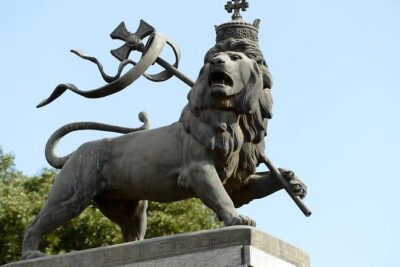
Full Day Tour of Addis Ababa with Hotel Pickup and Drop-off
Read our review →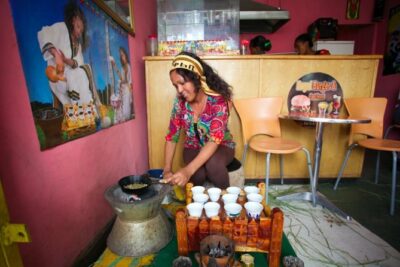
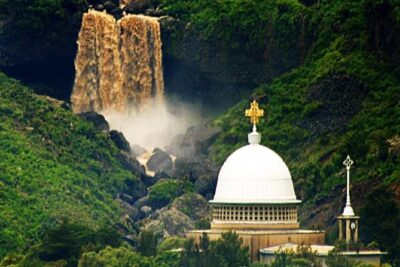
Day Trip From Addis Ababa See Historical Monastery,Stunning Nature,Animals,Birds
Read our review →
Addis Ababa: Debre Libanos, Blue Nile Gorge, and Cave Tour
Read our review →
Addis Ababa Guided City Tour With Airport & Hotel Pick Up
Read our review →
Breathtaking Nature, Wildlife and Cave Church Tour – Free Pickups
Read our review →

Browse the lists this tour appears in