
Reviewed · THE OMO VALLEY
Omo Valley 4days 3nights Cultural Tour
The Omo Valley is not a quick sightseeing stop. It is a demanding, memorable journey into southern Ethiopia, where Ari pottery, Mursi lip plates, Hamer ceremonies, and Karo body painting offer glimpses of traditions that remain part of daily life. I like the chance to see several distinct communities in only four days, and I like that a private Land Cruiser keeps the route flexible. The main catch is the pace: long drives, rough roads, and domestic flights are not included in the $1,307.70 price.
I also like the human touch reported by the operator’s past guests, particularly the named guides Gashaw, Dr Turmi, and Zemariam, along with drivers such as Addis. Their local connections matter in a place where timing and introductions can shape what you see. Still, you should approach the cultural encounters with respect, ask before taking photographs, and remember that this is a real home region, not a staged theme park.
Key points to know before booking
- Four days covers four cultural groups: The route introduces you to Ari, Mursi, Hamer, and Karo communities, though time with each group is limited.
- Jinka is the practical base: You spend nights at Jinka Resort, with another night at Buska Lodge in Turmi.
- Mago National Park adds the adventure: The road to the Mursi passes through rough country, so expect a bumpy ride rather than a polished transfer.
- The price excludes flights: Domestic and international airfares are separate, which can change the real cost considerably.
- A private vehicle offers control: Your group travels in a recent-model, air-conditioned Land Cruiser rather than joining a large bus.
- Photography needs planning: Camera and photography fees are not included, and you should confirm local rules before shooting.
Why the Omo Valley feels so different
Southern Ethiopia’s Omo Valley has long been separated from the country’s main urban centers. That distance helped many small communities retain distinctive clothing, body decoration, ceremonies, and craft traditions.
You will not see one single Omo culture. The Ari, Mursi, Hamer, and Karo communities have different customs and visual styles. That variety is the reason this short tour can feel full, but it also means you need to accept brief visits and a lot of time on the road.
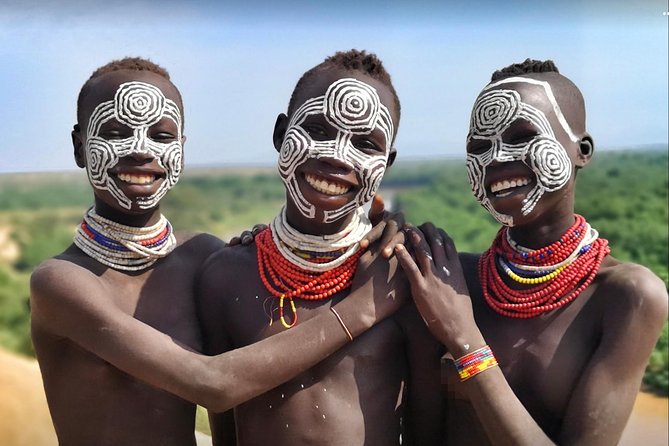
The body painting is one of the most striking details. Karo and Hamer people use clay and plant pigments to create patterns on the face, chest, arms, and legs. These designs can be playful and artistic, made for appearance rather than for a museum display or formal performance.
You may also see jewelry, piercings, beadwork, and clothing made from local materials. The value of the visit is not simply taking in unusual images. A good guide helps explain what the decorations mean, who makes them, and how they fit into ordinary life.
More Omo Valley Tours in Addis Ababa
- 6 Days Omo Valley Tribes Tours From Addis Ababa
★ 5.0 · 33 reviews - 3 Days Omo Valley Tour
★ 5.0 · 24 reviews - Danakil Depression, Lalibela, Omo Valley and Simien Mountains
★ 5.0 · 23 reviews
Day 1: Flying to Jinka and meeting the Ari

Your first day begins at Bole Airport in Addis Ababa at 6:00 am. You fly to Jinka, check into Jinka Resort, and then head out for a cultural visit.
The day’s description refers to the Konso Cultural Centre but then describes the Ari people, so confirm the exact first-day route with the operator before you leave. The Ari are known for pottery, jewelry, ear piercings, and skirts made from enset, often called the false banana plant.
This is a useful first encounter because it introduces you to the practical side of local culture. Pottery is not just a decorative object, and enset is not just an exotic plant. These details show how clothing, craft, food, and trade connect in the region.
Ari women are described as selling pottery and wearing beadwork around their arms and waist. You will have the chance to observe these details at close range, but do so thoughtfully. Ask your guide how purchases work, and agree on prices before buying anything.
The day is relatively short on paper, but the flight, hotel check-in, and road transfer can make it feel busy. The included breakfast applies to three mornings, while the flight itself is separate. That distinction matters when you calculate the final price.
Day 2: Mursi country through Mago National Park
Day two is the tour’s big road day. You leave Jinka in the morning and drive toward the Mursi through Mago National Park.
The Mursi are widely known for the geometrical lip plates worn by some women. The custom is visually powerful, but you should resist treating it as a spectacle detached from the people who practice it. Let your guide set the tone, and ask permission before taking photographs.
Mago National Park gives the journey a remote feel. The road conditions are rough, and the transfer is part of the day rather than a minor detail between attractions. A modern, air-conditioned Land Cruiser helps, but it does not turn an uneven road into a smooth one. If you suffer from motion sickness or back trouble, bring the medication and support you normally use.
In the afternoon, you continue toward Turmi, passing smaller villages and reaching the Hamer area. The Hamer are associated with bull jumping and the Evangadi dancing ceremony. The description does not guarantee that a ceremony will take place during your visit, so treat it as a possibility rather than a promised performance.
That point is important. Ceremonies follow local timing, not an outside tour schedule. You may see daily life and community activity instead of a formal event. That can be just as meaningful, but it may not match the dramatic scene you have seen in photographs.
You spend the night at Buska Lodge in Turmi. This overnight stop breaks up the long route and puts you closer to the next day’s southern excursion.
Day 3: The long road to the Karo area

The third day starts early. You travel over rough roads into the Omo lowland area, crossing extensive Hamer territory before reaching a Karo village.
The day heading identifies Dasenech Village, while the detailed description focuses on the neighboring Karo community. Ask the operator to confirm whether Dasenech is included, whether Karo is the main destination, or whether the route changes according to road and local conditions.
The Karo are known for body painting and for distinctive lower-chin piercings described in the tour material. Their painted designs use locally available clay and vegetable pigments. You may see patterns on faces, chests, arms, and legs, with each person using decoration in a personal and artistic way.
This is one of the places where a local guide earns his keep. Introductions, translation, and advice on photography can make the meeting more comfortable for everyone. Zemariam has been associated with photography-focused trips and local connections, while Dr Turmi and Gashaw are among the guides linked with the operator. You should request a particular guide when booking, but do not assume a specific person is guaranteed.
The road back to Jinka is another major part of the day. You return to Jinka Resort for the final night. In practical terms, this is a very full day with little spare time. It suits you if you would rather cover more ground than linger in one village, but it may feel rushed if your main aim is careful portrait photography or long conversations.
More Omo Valley journeys south:
- 6 Days Lalibela, Omo Valley and Harar
★ 5.0 · 15 reviews - 5 Days Omo Valley Tours
★ 5.0 · 15 reviews - Private Omo Valley Tours From Addis Ababa
★ 5.0 · 12 reviews - 9 Days Tours To Danakil Depression, Simen MNP, Lalibela With Omo Valley Tribes
★ 5.0 · 11 reviews
Day 4: Back to Addis Ababa

After breakfast, you transfer to the airport for the flight back to Addis Ababa. The schedule lists the day as taking about 12 hours, so do not plan an important international connection without checking the actual flight times and allowing a generous margin.
The return flight is not included. The same applies to the outbound domestic flight, so ask for the current flight schedule and total airfare before making a firm budget.
This last morning is simple, but it is a useful reminder that the tour is built around air links and road access. A delay can affect the whole day. Keep essentials in your hand luggage and avoid booking a tight onward connection.
What the private Land Cruiser changes

The private vehicle is one of the tour’s strongest practical features. Your group travels in a recent-model, air-conditioned Land Cruiser, with a local guide and professional guide service included.
In the Omo Valley, private transport is more than a comfort upgrade. It gives your group a way to handle long transfers, stop in smaller villages, and adjust the day with the guide. The information does not promise unlimited flexibility, so you should still expect a set route.
The vehicle will not remove the physical demands of the trip. Mago National Park and the lowland roads can be rough, and the early start on day three leaves little room for a slow morning. Pack light, carry water, and wear clothing that can handle dust and heat.
The tour is private, meaning only your group participates. That is a better setup for sensitive cultural meetings than a large coach group, especially when you need time to ask questions or discuss photography.
What the $1,307.70 price really covers

At $1,307.70 per person, this is not a budget add-on. The price includes:
- Local and professional guide fees
- A recent-model, air-conditioned Land Cruiser
- Entrance fees for the listed destinations
- Three breakfasts
- Pickup service
The price does not include domestic or international flights. It also excludes photography and camera fees. Because flights are a major part of reaching Jinka, you should treat the advertised amount as the land-tour cost rather than the complete trip cost.
The value depends on how you use the four days. If you want private transport, a guide, entrance fees, and an ambitious route through several communities, the package can make sense. Arranging every road transfer, park entrance, hotel night, and local introduction independently would require time and careful coordination.
The value is weaker if you want a slow cultural stay. Four days allows a broad introduction, not a detailed study. A longer Omo Valley itinerary would give you more room for changing road conditions, village visits, and photography, but it would also cost more.
Cultural visits require a careful approach

The Omo Valley is often photographed for its striking clothing and body decoration. That makes respectful behavior especially important.
Treat people as hosts and community members first, not as photographic subjects. Ask before taking a picture, follow your guide’s advice about fees, and do not assume that a payment automatically gives permission for unlimited photographs.
The tour specifically excludes photography and camera fees. That wording means you should budget for possible charges and clarify them before shooting. A good conversation with your guide can prevent awkward bargaining later.
You can also make the visit better by looking beyond the most famous images. Notice the pottery, beadwork, enset clothing, village layout, farming life, and the way people decorate themselves for artistic reasons. Those details give you a fuller understanding than a quick series of portraits.
The operator’s named guides, including Gashaw, Dr Turmi, and Zemariam, have been connected with different Omo Valley trips. The strongest practical advice is to request a guide with local community contacts and clear photography guidance, then confirm who will actually lead your departure.
Who should choose this four-day route
This tour suits you if you want a concentrated first look at southern Ethiopia and are comfortable with a fast schedule. It is particularly useful for:
- People with limited time in Ethiopia
- Small private groups
- Visitors interested in living cultural traditions
- Photographers who can work within local rules
- People who accept early starts and rough roads
- Those who want guide support rather than independent logistics
It is less suitable if you need soft transfers, long rest periods, or a highly predictable schedule. It also may not satisfy you if you expect every named ceremony to occur exactly when you arrive.
Most participants can take part, and service animals are allowed. The activity is near public transportation at its starting point, but the main route itself is handled by the tour vehicle and domestic flights.
Booking details worth checking first
Pickup begins at Bole Airport in Addis Ababa at 6:00 am. Confirmation is provided when you book, and cancellation is free if you cancel at least 24 hours before the local start time. Within 24 hours, the payment is not refunded, and late changes are not accepted.
Before paying, confirm four items in writing:
- The current domestic flight cost
- The exact first-day destination, since the description mentions both Konso and Ari
- Whether day three includes Dasenech, Karo, or both
- The guide and driver assigned to your group
These questions are not nitpicking. They help you match your expectations to the actual route and avoid surprises in a region where road and local conditions can affect plans.
Should you book the Omo Valley tour?
Book it if you want a private, tightly planned introduction to several Omo Valley communities and you accept that the road is part of the adventure. The combination of a Land Cruiser, local guide support, park access, and two nights in Jinka makes the route practical for a short visit.
Think twice if your budget must include flights, or if you want a relaxed cultural exchange rather than a fast circuit. Ask about the guide, photography rules, ceremony timing, and the unclear Konso, Ari, and Dasenech references before booking.
For a first taste of the Omo Valley, this four-day plan covers a remarkable amount of ground. Its real strength is access and variety. Its cost is time, comfort, and the need to remain flexible.
FAQ
Where does the tour start?
The tour starts at Bole Airport in Addis Ababa, Ethiopia, with pickup at 6:00 am.
How long is the tour?
The tour lasts approximately four days and includes three nights, with overnight stays in Jinka on the first and third nights and Turmi on the second night.
Which communities are included?
The route describes visits involving the Ari, Mursi, Hamer, and Karo communities. The day one description also mentions the Konso Cultural Centre, so you should confirm the exact first-day stop.
Is transportation included?
A recent-model, air-conditioned Land Cruiser, guide services, destination entrance fees, and airport transfers are included. Domestic and international flights are not included.
Are meals included?
Three breakfasts are included. Other meals are not listed among the included services.
Are photography fees included?
No. Photography and camera fees are excluded from the tour price.
Can I cancel for a full refund?
Yes, if you cancel at least 24 hours before the experience start time. Cancellations or changes made within 24 hours are not refunded or accepted.
More Four-Day Trips from Addis Ababa
- Arba Minch, Dorze Tribe, Konso, and Awasa Private 4 Days Tour from Addis Ababa
★ 5.0 · 3 reviews - 4-Day Tour: Tigray Churches & Danakil Depression Adventure.
★ 5.0 · 11 reviews - 4 days semien mountain national park trekking,
★ 5.0 · 11 reviews - Simien Mountains – 4 Days
★ 4.0 · 7 reviews
More Historic Sites near Addis Ababa
- Day Trip From Addis Ababa See Historical Monastery,Stunning Nature,Animals,Birds
★ 5.0 · 303 reviews - Hidden Treasures of Addis Ababa – Food, Culture and History Tour
★ 5.0 · 57 reviews - Northern Ethiopia Historic Route
★ 5.0 · 12 reviews - DAY TRIP TO THE UNESCO HERITAGE SITE TIYA & Melka Kunture
★ 4.5 · 10 reviews
Just added around Addis Ababa
- 6 days 5 nights Addis Abeba sightseeing & Lalibela Rock-Hewn Churches★ 5.0 · 3 reviews
- Addis Ababa Essentials: Flexible Full-Day City Sightseeing★ 5.0 · 3 reviews
- 4 Hours Addis Ababa Cultural Discovery Tour★ 5.0 · 3 reviews
- Northern Ethiopia (Historic route)★ 5.0 · 3 reviews
- Day Trip Around Addis Ababa★ 5.0 · 3 reviews
- Addis Ababa Half Day Shopping Tour★ 5.0 · 3 reviews
- Monastic Marvels Exploring the beauty of Debre Libanos Monastery★ 5.0 · 3 reviews
- 6 days Omo valley cultural Tour★ 5.0 · 3 reviews
Omo Valley Tribal Tours, compared.

Lalibela, Axum, Danakil and Omo Valley 8 DAYS
Read our review →
3 days around Arbaminch and Konso Adventure Tours Life Time
Read our review →Danakil Depression, Lalibela, Omo Valley and Simien Mountains
Read our review →



9 Days Tours To Danakil Depression, Simen MNP, Lalibela With Omo Valley Tribes
Read our review →
8 Days Lalibela,Danakil Depression and Omo Vally Tours
Read our review →Browse the lists this tour appears in