
Reviewed · THE DANAKIL
3 Days Danakil Depression Tour
The Danakil Depression is the sort of place that makes ordinary travel feel very far away. In three demanding days, you move from a salt lake below sea level to an active volcano, then on to Dallol’s yellow, turquoise, black, and white mineral pools. It is a geology lesson with a camp stove, a long drive, and very little sleep.
I like two things especially. First, the tour packs the region’s major sights into one route, including Erta Ale, Lake Asale, and Dallol. Second, air-conditioned vehicles, camping mattresses, meals, permits, and local staff are included, which takes care of many hard details in a place where doing everything independently would be difficult.
The trade-off is comfort. Camping is basic, the drives are long, and the heat can be punishing. The Erta Ale walk is short on paper, but volcanic ground, darkness, heat, and fatigue make it a real physical outing rather than a casual stroll.
What makes this three-day tour worth considering
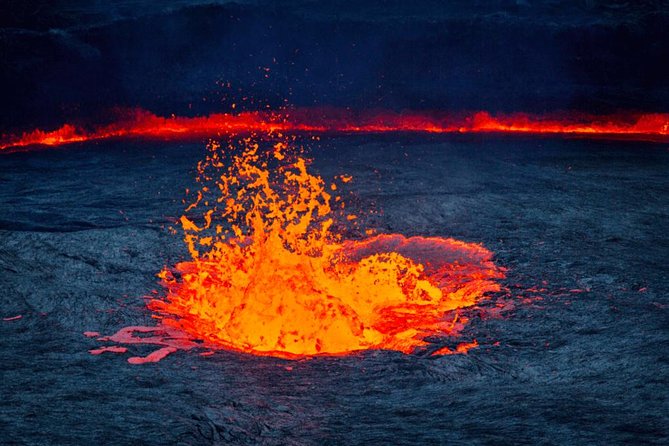
- Watch for lava at Erta Ale: You hike about 30 minutes from base camp to the crater rim and camp nearby for sunrise.
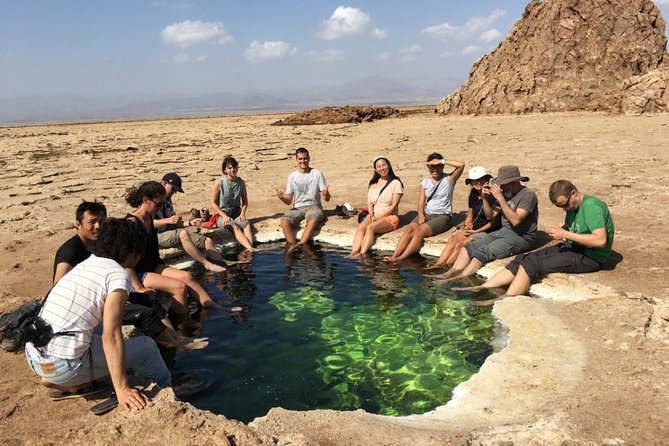
- Float in Lake Afdera: The saline water near Afdera gives you a rare chance to swim and float in one of the lowest parts of the region.
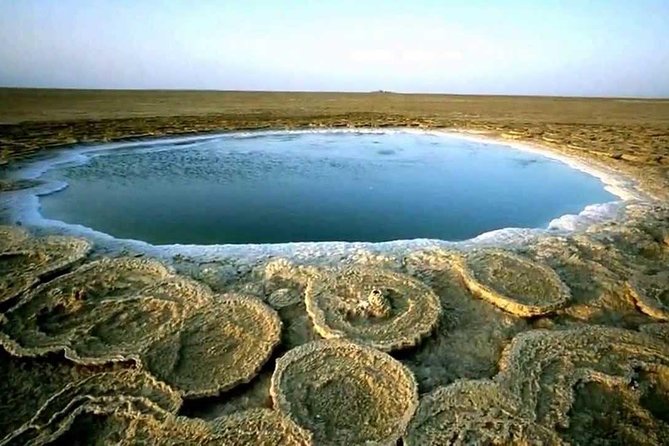
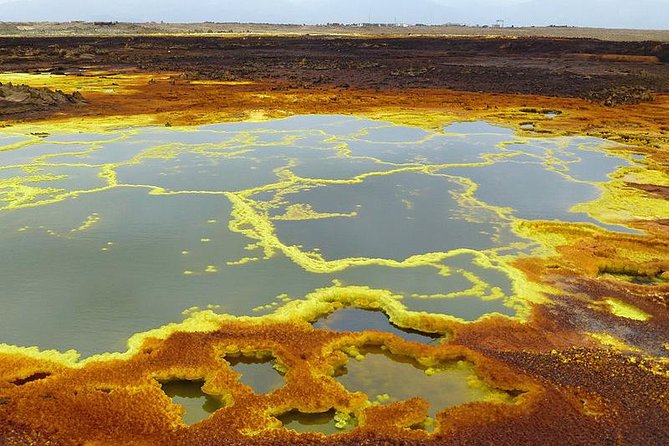
- See Dallol’s mineral colors: Hydrothermal pools, salt formations, and volcanic features create scenery unlike a normal desert.
- Follow the salt trade: At Lake Asale, camel caravans carry salt toward Ahmed Ela, linking dramatic scenery with a living local industry.
- Travel with practical support: Air-conditioned vehicles, a cook, camping equipment, meals, permits, and entrance fees are included.
- Keep expectations realistic: A $450 price is strong value for transport, food, camping, and access, but this is not a soft adventure with hotel comforts.
The real appeal: three extreme environments in one trip
This tour works because each day feels different. Day one is about height, heat, and fire at Erta Ale. Day two shifts to open salt flats and camel caravans. Day three brings the strange chemistry of Dallol, where mineral deposits and hot springs create colors that look almost artificial.
You also get a sense of the Afar region as a place where people work in severe conditions. The salt is not just a pretty backdrop. It is cut, shaped, loaded, and moved by camel to towns farther north. That connection gives the trip more substance than a series of scenic stops viewed through a vehicle window.
The group can reach a maximum of 15 people. That is large enough to share costs and company, yet small enough for a guide to keep the group together at the main stops. Since this is a remote area, the quality of the driver, guide, and vehicle matters as much as the scenery. Names connected with the operation include Isaac and Aki, though you should confirm who will lead your specific departure.
More Danakil and Afar expeditions:
- 3 Days Danakil Depression Tour
★ 4.5 · 135 reviews - 3 Days Danakil Depression Tours Via Semera
★ 5.0 · 47 reviews - 12 Days SIMIEN MOUNTAIN-LALIBELA-DANAKIL-TIGRAY CHURCHES
★ 5.0 · 45 reviews
Day one: Semera, Afdera, and the climb to Erta Ale
The trip begins with pickup in Semera, the capital of the Afar Regional State. The schedule gives a morning start, with the itinerary describing pickup from Semera Airport at 8:00 a.m. and the meeting information listing 9:00 a.m. Confirm the exact pickup time before setting out.
A short coffee and juice stop gives you time to meet the team and settle into the vehicle. From Semera, the road heads toward Afdera. This is not a quick transfer. The attraction is the change in surroundings as you move into one of Ethiopia’s lowest and hottest regions, but you should be ready for several hours in the car.
Afdera sits about 102 meters below sea level and is a major center for salt production and distribution. After lunch, you visit the nearby salt lake. The chance to swim and float in saline water is a welcome break from the road, though anyone with open cuts or sensitive skin should take care around highly salty water.
From Lake Afdera, you continue toward Erta Ale. The schedule places arrival at base camp around 6:00 p.m., followed by a hike of roughly 30 minutes to the crater rim. The distance sounds modest, but conditions matter. The walk takes place around an active volcano, often in low light, and the ground may feel rough underfoot. Good shoes, water, and a headlamp are sensible choices.
Erta Ale is the emotional high point for many people. It is one of the few active lava lake sites in the world, and the sight of molten rock, smoke, or glowing volcanic activity can be extraordinary. Volcanic activity changes, so nobody can honestly promise a particular level of lava flow. The tour’s own accounts include times when powerful lava movement was visible and one departure that coincided with an eruption.
You camp near the rim after the visit, with the goal of catching sunrise. The included camping setup covers mattresses and bedsheets, but do not picture a tented lodge. This is a remote overnight camp with basic conditions. The reward is the night sky, the unusual setting, and the chance to see the volcano change character as darkness gives way to morning.
Day two: the long road to Ahmed Ela and Lake Asale
The second day begins with departure from the Erta Ale base area at 8:00 a.m. The drive to Hamedela, also written as Ahmed Ela, takes much of the day. The stated arrival is around 4:00 p.m., when camping gear and the cook are unloaded in the salt-mining settlement.
This day is less about a long list of stops and more about reaching the salt flats at the right time. That timing matters because the visit to Lake Karum, also called Lake Asale in the schedule, is planned around sunset. The low light softens the harsh white salt and brings out the shapes of the flat, empty basin.
A particularly memorable sight can be the camel caravans moving across the salt. Salt bricks from Lake Asale are transported toward Ahmed Ela and then onward toward Mekele. You are not simply looking at an empty white plain. You are seeing part of an old working route that still supports local communities.
The tour also includes a small gathering at the lake before sunset. The exact form of this event is not explained in detail, so treat it as a simple group moment rather than a polished entertainment program. After sunset, you drive back to Ahmed Ela for dinner and camping.
The second night is again basic. Some people love the simplicity, sleeping under the stars and waking in a place with almost no urban distraction. Others find that two nights without a conventional bed become the hardest part of the trip. I would choose this tour for the scenery, not for rest.
Day three: Dallol’s hot springs, salt towers, and strange colors
The final sightseeing day starts early, with a drive to Dallol for sunrise. Dallol is around 130 meters below sea level and is known for extreme heat, volcanic activity, and mineral deposits. Morning is the right time for the visit because the heat builds quickly.
At Dallol, you move through a collection of small but visually powerful sites. The colors come from minerals, hot water, salt, and volcanic chemistry. The ground may look calm, but this is not a place for wandering off alone or stepping close to pools without guidance.
The salt canyons west of Mount Dallol are marked by towers and pinnacles. They offer a different view from the broad salt flats, with narrow formations and sharp, sculpted shapes. Allow about an hour here, enough to walk, photograph, and take in the scale without rushing.
Black Water Spring adds another unusual detail. Bubbling hypersaline water appears dark, likely because of dissolved potassium salts. It is a reminder that the Danakil is not just dry and empty. Water, heat, and minerals are constantly working below and around the surface.
Gaet’ale Pond is known for its turquoise color and high salinity. Extremophile organisms can survive in conditions that are hostile to most life, but this is still a viewing stop, not a swimming stop. The vivid color is best treated as a natural warning as much as a photographic opportunity.
The final major visit is Assa Ale and the Lake Asale salt flats. Here you can see salt excavation methods and the camel trade at close range. The setting is stark, but the human activity gives it meaning. Salt is cut from the basin, shaped into bricks, and carried out through the desert in a practice that has endured for generations.
After the salt flats, the group drives back toward Semera. The stated arrival at Semera Airport is around 4:00 p.m. The schedule also says the company can take you to Mekele if you plan to visit the Tigray mountain churches, Axum, or Lalibela. Since the stated end points differ, settle this transfer plan before departure, especially if you have a flight or onward connection.
A few more Ethiopia trips to weigh up
- 3 Day Danakil Depression Ertale and Dallol Tours
★ 5.0 · 44 reviews - 3 Days Dankile Depression group Tours
★ 5.0 · 40 reviews - 3 Days Danakil Depression Tour from Semera City
★ 4.7 · 34 reviews - 2-Night 3-Day Danakil Depression Tour without Flights
★ 4.8 · 31 reviews
What the $450 price really covers
At $450 per person, the tour offers solid value if you want the main Danakil sights without arranging every moving part yourself. The price includes an experienced local guide, an air-conditioned vehicle, camping gear, mattresses, bedsheets, permits, entrance fees, two breakfasts, two dinners, and three lunches.
The vehicle is important. The region involves long road sections in severe heat, and air conditioning can make the difference between arriving ready to explore and arriving drained. Meals also matter because there are few practical alternatives in the remote areas covered by the route.
The price does not include domestic flights. You need to arrange your own flight to the starting area and account for the cost of reaching Semera. Ask the operator to confirm the airport pickup, the final drop-off point, and the arrangements for any onward transfer to Mekele.
The package is not cheap in the way a local day trip is cheap, but the remoteness explains much of the cost. Transport, food, staff, camping supplies, permits, and access all have to be coordinated across a difficult region. The best value comes if you want Erta Ale, Lake Asale, and Dallol in a single compact trip.
Heat, safety, and the comfort trade-off
You should have moderate physical fitness for this activity. The hike to Erta Ale is short, but you will also face heat, uneven volcanic ground, long vehicle journeys, and two nights of basic camping. Carry water, sun protection, sturdy footwear, and clothing that protects you from the sun.
The company emphasizes safety around volcanic activity, and the guides have taken care to keep people at a sensible distance from lava and hot areas. That matters. The most exciting version of this trip is not the one that gets closest at any cost. It is the one that lets you see remarkable activity without ignoring changing conditions.
The heat is the biggest practical concern. Dallol and the salt flats can feel severe, especially during the day. Early starts help, but you should still expect sweat, dust, glare, and limited shade.
The accommodation is intentionally simple. Camping near Erta Ale and under the stars around Ahmed Ela is part of the point, but it will not suit anyone who needs a private room, a shower, or a soft bed every night. Think expedition camp rather than standard lodging.
Who will enjoy this tour most
I would recommend this experience to you if you value rare natural sights more than comfort. It is a good match for photographers, geology enthusiasts, adventurous first-time visitors to Ethiopia, and anyone who wants to see the Afar region with local support.
You will probably enjoy it most if you can accept schedule changes caused by road conditions or volcanic activity. Erta Ale is active, so the exact spectacle cannot be guaranteed. The tour gives you access and a strong route, not control over nature.
I would be cautious about booking if you dislike long drives, hot weather, rough camping, or early mornings. The trip is short in calendar terms but intense in physical terms. It also requires careful planning around domestic flights because those are not included.
The operation has earned a 4.9 rating from 15 ratings, with 100 percent recommending it. The strongest praise centers on the guides, organization, food, air-conditioned jeeps, and the chance to see lava, Dallol, Lake Asale, and Lake Afdera in one trip. Those are exactly the areas where a remote expedition can succeed or fail.
Free cancellation is available up to 24 hours before the start time for a full refund. Changes or cancellations within 24 hours are not accepted for a refund, and cut-off times follow local time.
Should you book the three-day Danakil Depression tour?
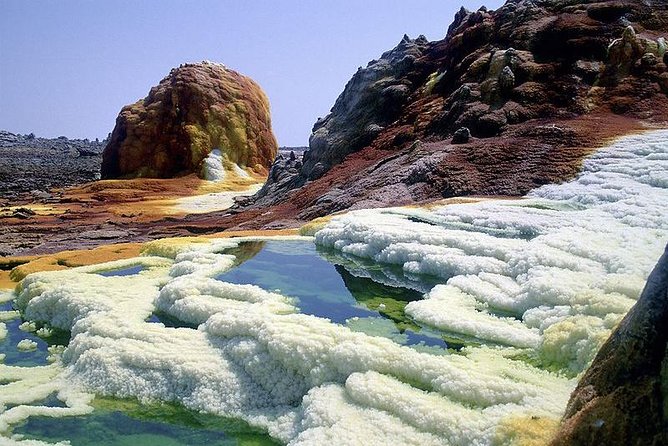
Book it if you want the essential Danakil experience in a tightly organized three-day route. The combination of an active volcano, saline lake, salt caravans, hot springs, and mineral formations is hard to match, and the included transport and meals make the cost easier to justify.
Skip it if you want a relaxed holiday or hotel-level comfort. This is a demanding journey with long drives and simple camps. For the right person, though, that hardship is part of the story. You leave with more than photographs of strange colors. You see how people, animals, salt, fire, and water still meet in one of the world’s most severe places.
FAQ
How long is the Danakil Depression tour?
The tour lasts approximately three days. It begins in Semera and visits Afdera, Erta Ale, Ahmed Ela, Lake Asale, Dallol, the salt canyons, Black Water Spring, Gaet’ale Pond, and Assa Ale.
What is included in the $450 price?
The price includes local guides, an air-conditioned vehicle, camping gear with mattresses and bedsheets, permits, entrance fees, two dinners, two breakfasts, and three lunches.
Are domestic flights included?
No. Domestic flights are not included, so you must arrange and pay for flights separately.
Where does the tour start?
Pickup is offered from Semera Airport. The itinerary gives an 8:00 a.m. pickup time, while the meeting information lists a 9:00 a.m. start, so confirm the exact time before the trip.
How difficult is the Erta Ale hike?
The stated hike from base camp to the crater rim takes about 30 minutes. The tour requires moderate physical fitness because of the volcanic ground, heat, darkness, long drives, and camping conditions.
Can I cancel for a full refund?
Yes. You can cancel at least 24 hours before the local start time for a full refund. Cancellations or changes made within 24 hours are not refunded or accepted.
Just added around Ethiopia
- 6 days 5 nights Addis Abeba sightseeing & Lalibela Rock-Hewn Churches★ 5.0 · 3 reviews
- 4 Hours Addis Ababa Cultural Discovery Tour★ 5.0 · 3 reviews
- Addis Ababa Essentials: Flexible Full-Day City Sightseeing★ 5.0 · 3 reviews
- Lalibela 2-Day Eco Trekking Tour★ 5.0 · 3 reviews
- 2 days Tigray Church★ 5.0 · 3 reviews
- Private Guided Tours To Bahir Dar Lake Tana Monastery & Blue Nile Waterfalls★ 5.0 · 3 reviews
- Day Trip Around Addis Ababa★ 5.0 · 3 reviews
- Northern Ethiopia (Historic route)★ 5.0 · 3 reviews
Danakil Depression Expeditions, compared.
12 Days SIMIEN MOUNTAIN-LALIBELA-DANAKIL-TIGRAY CHURCHES
Read our review →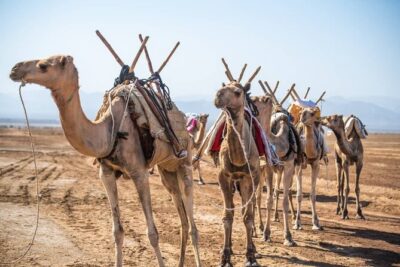
3 Day Danakil Depression Ertale and Dallol Tours
Read our review →3 Days Danakil Depression Tour from Semera City
Read our review →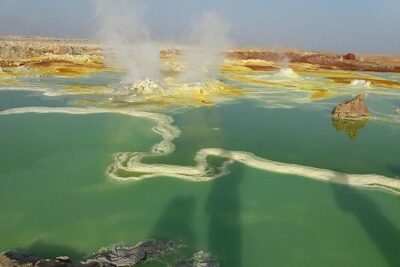
5 DAYS Lalibela, Axum, Tigray churches and Danakil
Read our review →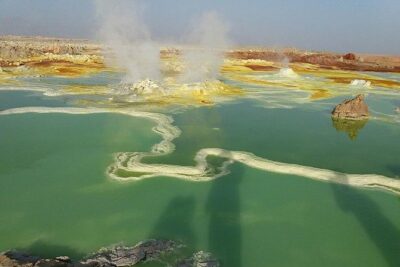
6 Days tour Package (Simien Mountains, Lalibela, and Danakil Depression)
Read our review →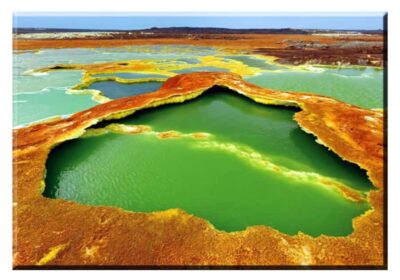
2-Night 3-Day Danakil Depression Tour without Flights
Read our review →Browse the lists this tour appears in