
Reviewed · ADDIS ABABA
Ethiopian Culinary Tour – Market, Food, Coffee Ceremony & more
The best part of this Addis Ababa food tour is that it treats food as a doorway into daily life. You move from produce stalls and spice sellers to an injera-making session, an old coffeehouse, a historic hotel, and a rural coffee ceremony. It is a busy, varied day with plenty to taste and see.
I especially like the hands-on injera lesson and the time spent at Taitu Hotel, Ethiopia’s oldest hotel. The traditional coffee ceremony in Sululta is another strong point, with live bean roasting followed by honey wine tasting. Guides such as Zerefa, Seya, Samuel, and Emmanuel have been praised for clear English, local insight, and flexibility.
The main consideration is pace. The tour covers several parts of Addis Ababa and Sululta in about 5 to 6 hours, and markets can be crowded and chaotic. One traveler also had a serious pickup and communication problem, so confirm your meeting details before the day begins.
Key points to know before booking
- Atkilt Tera and Merkato: Walk through Ethiopia’s largest produce market and Africa’s largest open-air market, including the central spice area.
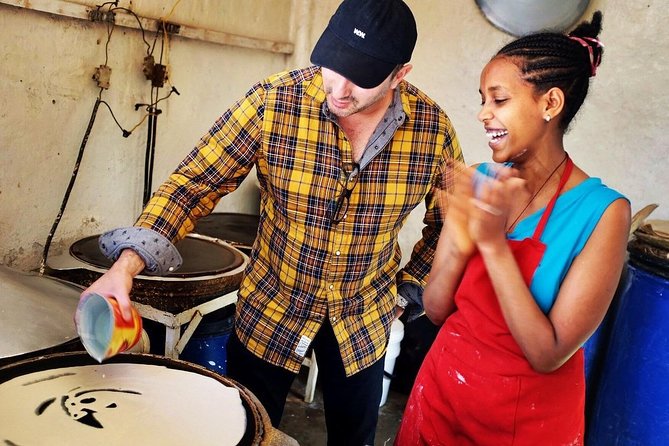
- Make your own injera: Work with local women to learn how Ethiopia’s famous sourdough flatbread is prepared.
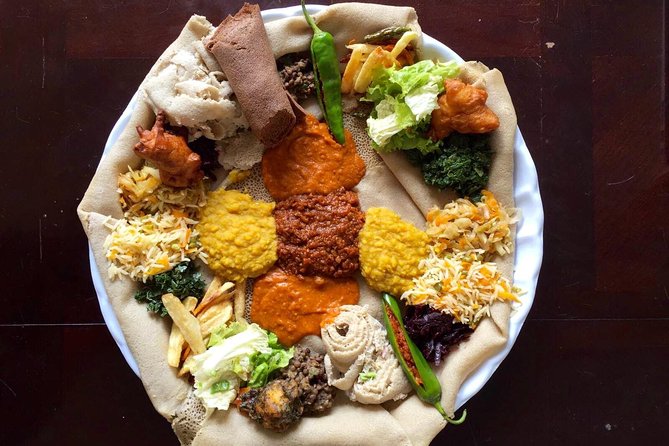
- Historic Taitu Hotel lunch: Sample assorted Ethiopian dishes in buffet form at the country’s first hotel.
- Tomoca Coffee: Taste coffee or a macchiato at one of Addis Ababa’s oldest coffee institutions and buy beans to take home.
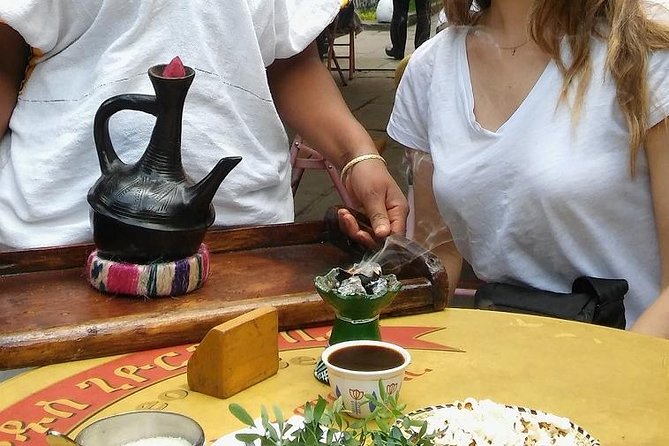
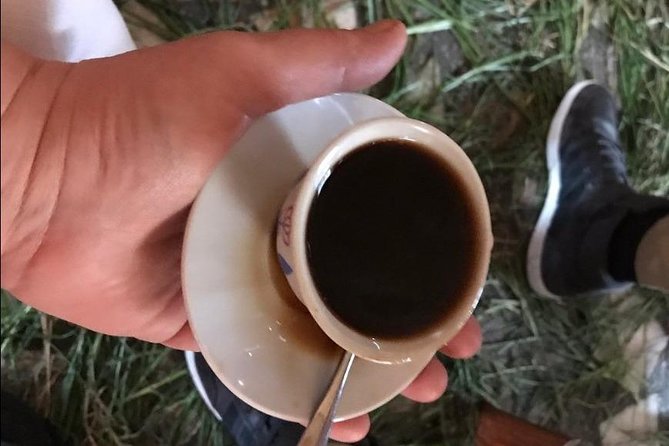
- Sululta coffee ceremony: Watch beans being washed and roasted before drinking freshly prepared coffee and tasting tej, Ethiopian honey wine.
- Flexible guiding: Guides including Zerefa, Seya, Samuel, Abiy, Desale, and Emmanuel have been praised for adapting the day to suit what you have already seen.
A food tour that shows how Addis eats
Many city tours keep you inside museums, churches, and formal sights. This experience takes a more ordinary route. You see where food is bought, how injera is made, how coffee is prepared, and how dishes come together at a traditional hotel meal.
That makes the day useful if you have limited time in Addis Ababa. You get a broad introduction to Ethiopian food and drink without having to arrange several separate outings. The tour also gives you a feel for the city’s streets and markets, not just its major monuments.
The advertised schedule calls it a full-day tour, but the stated duration is about 5 to 6 hours. I would treat it as a long half-day or compact full-day experience, depending on traffic and how much time your group spends at each stop.
Pickup and drop-off are offered at hotels, private homes, and the airport in Addis Ababa. Ground transport, a driver, fuel, an English-speaking guide, local guides, lunch, water, and hot drinks are included in the $85 price. For a private booking or a small group, that is a reasonable package because transportation and several food experiences are bundled together.
The maximum group size is 30. That is not a tiny group, and the market portions may feel less personal if the vehicle is full. Ask about the expected group size when booking if close interaction matters to you.
More coffee ceremonies in Addis Ababa:
Atkilt Tera: start with the city’s food supply
The morning begins at Atkilt Tera, described as Ethiopia’s largest fruit and vegetable open market. Its location between Piassa and Merkato makes it a useful starting point for understanding how Addis shops for fresh food.
This is not a polished market built for sightseeing. You are there to see the working side of the city, with produce, people, colors, and the practical business of buying ingredients. Your guide helps explain what you are looking at and keeps the walk organized.
The stop is especially helpful before the later cooking and dining portions. You first see raw ingredients in their market setting, then encounter them again as part of Ethiopian meals. Bring a camera if you like street scenes, but keep it away when someone does not want to be photographed.
Merkato and the spice market
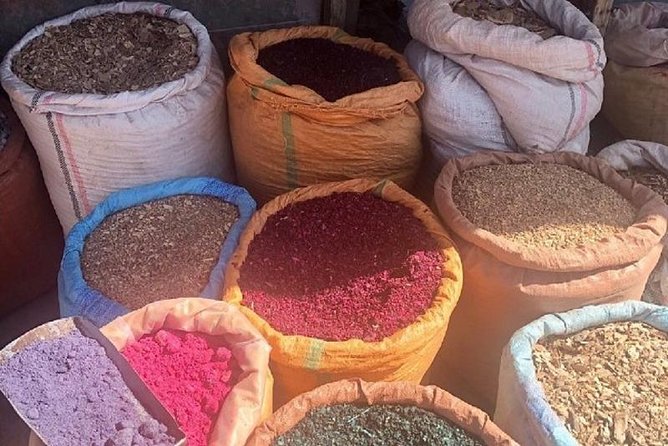
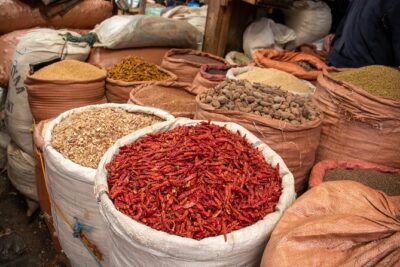
Next comes Merkato, the city’s largest and busiest open-air market and widely described as the largest of its kind in Africa. The tour focuses on the spice market in its center.
This is the part I would not want to tackle alone on a first visit. The setting can be crowded and confusing, and the sheer number of stalls makes it hard to know where to look. A guide and driver are useful here, both for orientation and for staying together in busy areas.
The spice stop gives the culinary theme some depth. Ethiopian cooking depends on layered seasoning, and the market lets you see those ingredients before they appear in lunch or later tastings. You may smell spices before you find the stall selling them, so take your time and let your guide explain what is on display.
Do not expect a quiet browsing experience. Merkato is a working market, not a relaxed food hall. Wear comfortable shoes, keep your belongings secure, and dress for the weather. The tour operates in all weather conditions unless poor weather causes cancellation, so a light rain layer can be useful.
Making injera with local women

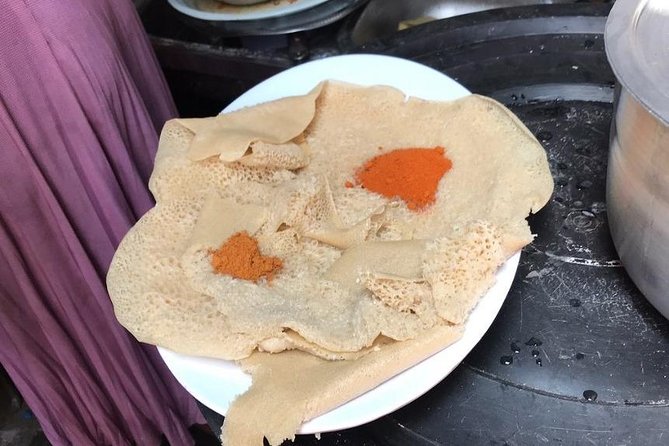
The most hands-on section is the injera lesson. You meet a group of local women who show you how the traditional Ethiopian bread is made, then you get a chance to try it yourself.
Injera is central to Ethiopian dining. It serves as both bread and plate, and many meals are eaten by tearing off pieces and using them to scoop up the food. Making it yourself gives you a better sense of the skill involved than simply seeing it arrive beneath a stew.
Do not worry about producing a perfect round. One person described their attempt as hilariously bad, but still enjoyed the activity. That is the right attitude. This is a practical cultural experience, not a professional cooking class with a graded result.
The strongest part is that you eat what you make. That small detail turns a demonstration into a personal memory. The session also creates time for conversation, and one highly praised guide was noted for making the bread activity a highlight through relaxed conversation and local context.
One limitation is that the culinary instruction focuses on injera. You learn how the bread is made, but not necessarily how to prepare the stews, sauces, and spice mixtures served with it. If you want a full cooking class, this tour may feel incomplete. If you want one memorable food activity within a wider city tour, it fits well.
More food tours in Addis Ababa:
- Hidden Treasures of Addis Ababa – Food, Culture and History Tour
★ 5.0 · 57 reviews - Addis Ababa City Tours With Cocking Class of Ethiopian Food
★ 5.0 · 20 reviews - Ethiopia coffee cupping class/Ethiopian food injera making
★ 5.0 · 10 reviews - Food tours in Addis Ababa tastever with lunch
★ 5.0 · 9 reviews
Lunch at Taitu Hotel in Piassa
Lunch takes place at Taitu Hotel in Piassa, identified as Ethiopia’s oldest hotel and the first hotel in the country. The setting adds a layer of history to what could otherwise be a standard restaurant meal.
The food is served as an assortment in buffet form, giving you a chance to sample several Ethiopian dishes rather than choosing only one plate. Lunch includes a bottle of water and hot drinks.
This is a good format for first-time visitors. You can try different flavors and textures, then ask your guide what you are eating. Ethiopian meals often make more sense when tasted together with injera, and the earlier bread-making session gives lunch added meaning.
Portions have been described as generous, but individual tastes and dietary needs are not explained in the tour details. If you have food restrictions, tell the operator before departure rather than waiting until lunch.
After eating, the route includes sightseeing in Piassa. The schedule does not list specific sights, so think of this as a short city segment rather than a dedicated historical tour. Guides have sometimes adjusted the route for repeat visitors, including adding an art gallery when planned stops had already been seen.
A coffee stop at Tomoca
Tomoca Coffee is a short stop, about 30 minutes, at one of Addis Ababa’s oldest coffee cafés. You can order a cup of coffee or a macchiato prepared with decades of local experience.
This visit works well because Ethiopian coffee culture is not treated as a single ceremonial event at the end of the tour. You first encounter coffee in a city café, then later see the traditional preparation in Sululta. The contrast helps you understand how an everyday drink and a formal social ritual fit into the same culture.
Tomoca also sells roasted and ground coffee. If you want a practical souvenir, this is one of the easiest purchases on the tour. Ask your guide about buying beans or ground coffee for yourself or family at home.
The visit is brief, so do not expect a long café stay or a full lesson in coffee production. It is a tasting and buying stop, not a separate coffee workshop.
Sululta and the full coffee ceremony
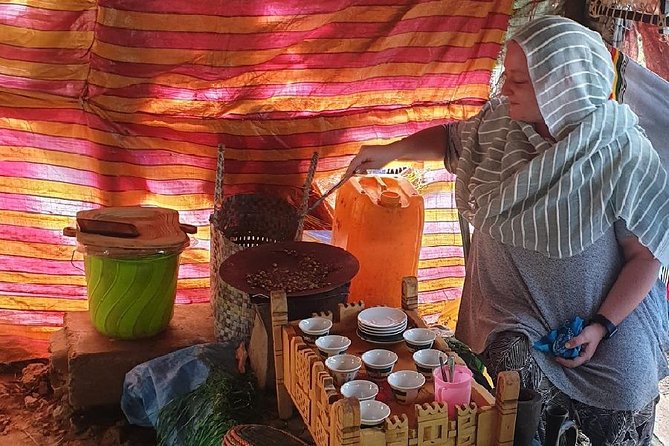
The final major experience takes you out to Sululta, a mountain town outside Addis Ababa. The drive adds a change of scenery after the city markets and streets, and the mountain setting was singled out for its views.
Here you watch a complete Ethiopian coffee ceremony. The process includes washing the beans, roasting them live, and preparing the coffee before you sit down to drink it. This slow sequence matters. Coffee is not simply poured and consumed; preparation is part of the social experience.
The ceremony is a good place to ask questions. Your guide or local host can explain what is happening as the beans change from raw to roasted and then become a finished drink. The pace is calmer than the market sections, giving you a chance to absorb the day.
You also taste tej, Ethiopian honey wine. It is one of the country’s specialties and is made with honey. The tour includes the honey wine tasting, but other alcoholic drinks are not included. Some experiences may offer or discuss locally made beer or vodka, but you should expect those to cost extra if available.
The Sululta stop lasts about two hours, making it the longest scheduled portion. That gives the ceremony room to unfold, but it also means you spend a significant part of the tour outside Addis Ababa. If your priority is only city food, you may prefer a shorter market-and-restaurant outing. If coffee culture is a major reason for visiting Ethiopia, Sululta is likely worth the drive.
Guides, flexibility, and the human side of the tour
The guides are an important part of this experience. Names associated with strong outings include Zerefa, Seya, Samuel, Emmanuel, Abiy, Desale, and drivers such as Muse and Tamirsat.
Specific praise has focused on flexible planning, strong English, history and culture explanations, and personal care in difficult market areas. One guide changed the route after the guest had already completed some stops on an earlier Addis tour. Another helped with souvenir shopping and finding fair prices.
That flexibility is worth asking for. If you have already visited Tomoca or Taitu Hotel, tell the operator ahead of time. The tour has enough moving parts that an experienced guide may be able to adjust the day, although changes are not guaranteed.
The guide can also make the difference between simply seeing a spice stall and understanding why it matters. Ask questions as you go. The tour includes local guides as well as an accompanying English-speaking guide, and it may be operated by a multilingual guide.
Is $85 a fair price?
At $85 per person, the value depends on how you normally arrange sightseeing. The price includes round-trip transport within Addis Ababa, a driver, fuel, an English-speaking guide, local guides, lunch, water, hot drinks, a Tomoca coffee stop, injera making, and the Sululta coffee and honey wine experience.
That is a solid bundle for someone with only one spare day. You are not paying separately for taxis between markets, lunch, and the countryside stop. The tour also handles the route through Merkato, where independent navigation can be tiring.
The value is less clear if you are a confident independent visitor who wants to spend hours at one market or restaurant. The group can reach up to 30 people, and a set route gives you less control than arranging a private day.
Group discounts are offered. Since the tour is often booked about 26 days ahead, reserve early if your Addis dates are fixed, especially if you want a particular guide or need airport pickup.
Who will enjoy this Addis food tour?
I would choose this tour if you want a quick but broad introduction to Ethiopian food culture. It suits first-time visitors, people with a free day after a conference, and anyone who wants market access without handling the route alone.
It is also a good match for coffee fans. The Tomoca stop and Sululta ceremony provide two different views of Ethiopian coffee, from an established city café to live roasting in a traditional setting.
Families can participate if children are at least 8 years old. Most people can take part, but you should be ready for walking through crowded markets, getting in and out of a vehicle, and spending time outdoors.
I would be more cautious if you need a slow pace, want a detailed chef-led cooking class, or dislike unstructured market conditions. The day packs in several stops, and the setting is practical rather than polished.
Practical details that matter
Pickup is available from an Addis Ababa hotel, house, or airport. The listed meeting point is Edna Mall on Cameroon Street, and the activity ends back at the meeting point, although the broader tour information also describes hotel drop-off. Confirm your exact pickup and end point before departure.
The tour runs in all weather conditions, so dress appropriately. Since the program includes markets, walking, transport, and Sululta scenery, comfortable clothing and shoes are sensible.
Free cancellation is available if you cancel at least 24 hours before the local start time. Changes made inside that 24-hour window are not accepted, and poor weather may lead to another date or a full refund.
One poor experience involved a missed pickup and an unanswered emergency phone. The operator attributed that incident to a wartime communication failure and later described adding outside customer support. It appears to be an unusual case beside the otherwise strong record, but it is still smart to save the pickup contact and confirm arrangements the day before.
Should you book it?
Book this tour if you want food, coffee, markets, and local life in one organized day. The best elements are the injera making, the hands-on coffee ceremony, the generous tasting lunch at Taitu Hotel, and the chance to enter Merkato with a guide.
Do not book it expecting a quiet gourmet tour or a full course in Ethiopian cooking. It is a city-and-countryside cultural outing with food at its center. For a first visit to Addis Ababa, that mix offers good value and a memorable way to get your bearings fast.
FAQ
How long does the Ethiopian Culinary Tour last?
The stated duration is approximately 5 to 6 hours. It is described as a full-day experience, but the actual schedule is closer to a long half-day.
What is included in the price?
The $85 price includes pickup and drop-off in Addis Ababa, ground transportation, a driver, fuel, an English-speaking guide, local guides, lunch, a bottle of water, and hot drinks.
Is hotel pickup available?
Yes. Pickup and drop-off are offered at hotels, houses, and the airport in Addis Ababa.
What markets does the tour visit?
The tour visits Atkilt Tera, Addis Ababa’s large fruit and vegetable market, and Merkato, including its central spice market.
Do I get to make injera?
Yes. You meet local women who demonstrate the process and give you the chance to make injera yourself. You can eat what you prepare.
Where is lunch served?
Lunch is served at Taitu Hotel in Piassa, described as Ethiopia’s first hotel and oldest hotel.
Does the tour include a coffee ceremony?
Yes. In Sululta, you watch a full Ethiopian coffee ceremony that includes washing and roasting the beans before drinking the coffee.
Is honey wine included?
Yes. The Sululta stop includes a tasting of Ethiopian honey wine, also called tej.
Are alcoholic drinks included?
Honey wine is included, but other alcoholic drinks are not included in the tour price.
Can children join the tour?
The minimum age is 8 years old. Most people can participate, but the tour operates in all weather conditions and includes market walking and transportation.
More Markets in Addis Ababa
- Addis Ababa +Mount Entoto View Point,Museums Palace Market Tours
★ 5.0 · 42 reviews - Go wheretheLocalsgo, Eatwhat thelocalseat!open Market&More Tours
★ 5.0 · 33 reviews - Addis Mercato Market
★ 5.0 · 22 reviews - Ethiopian Culinary Tour – Market, Coffee Ceremony and More
★ 5.0 · 10 reviews
More Food in Addis Ababa
- city tour of Addis Ababa ( history ,culture , food and more)
★ 5.0 · 7 reviews - Local Ethiopian Food Tour
★ 4.0 · 7 reviews - Local Ethiopian Food Tour
★ 4.0 · 4 reviews - Addis Food Tasting Tour
★ 5.0 · 4 reviews
Just added around Addis Ababa
- 6 days 5 nights Addis Abeba sightseeing & Lalibela Rock-Hewn Churches★ 5.0 · 3 reviews
- Addis Ababa Essentials: Flexible Full-Day City Sightseeing★ 5.0 · 3 reviews
- 4 Hours Addis Ababa Cultural Discovery Tour★ 5.0 · 3 reviews
- Day Trip Around Addis Ababa★ 5.0 · 3 reviews
- Northern Ethiopia (Historic route)★ 5.0 · 3 reviews
- Monastic Marvels Exploring the beauty of Debre Libanos Monastery★ 5.0 · 3 reviews
- Addis Ababa Half Day Shopping Tour★ 5.0 · 3 reviews
- 6 days Omo valley cultural Tour★ 5.0 · 3 reviews
Addis Ababa Tours, compared.

Full Day Tour of Addis Ababa with Hotel Pickup and Drop-off
Read our review →
Day Trip From Addis Ababa See Historical Monastery,Stunning Nature,Animals,Birds
Read our review →
Addis Ababa: Debre Libanos, Blue Nile Gorge, and Cave Tour
Read our review →
Addis Ababa Guided City Tour With Airport & Hotel Pick Up
Read our review →
Breathtaking Nature, Wildlife and Cave Church Tour – Free Pickups
Read our review →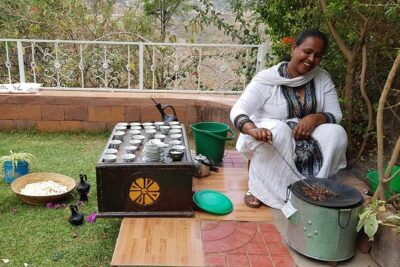
Browse the lists this tour appears in