

Reviewed · THE OMO VALLEY
Tribes of the Ethiopian Omo Valley – 9 Day Tour
The most striking part of this 9-day Omo Valley tour is how quickly Ethiopia changes outside Addis Ababa. You go from Lucy’s fossilized bones and Orthodox cathedrals to remote villages, crocodile-filled Lake Chamo, Thursday markets, and the Mursi communities of Mago Park. This is a road journey first, and a cultural trip second.
I like the mix of major sights and everyday places, especially the Dorze village, Key Afer market, and the stop at a traditional Dorze house. I also like that the tour includes a guide, vehicle, meals, park scout fees, and accommodation-related meal coverage, which takes much of the planning burden off your shoulders.
The main caution is the pace. Several days involve long drives on rough or tiring roads, and the schedule can change because local ceremonies and village visits depend on timing and access. You should come with moderate fitness, patience, and respect for communities where tourism can feel very direct.
Key points to know before booking
- See five distinct cultural groups: The route includes the Mursi, Dorze, Erbore, Konso, Hamer, and other South Omo communities.
- Expect substantial driving: Addis Ababa, Arba Minch, Turmi, Jinka, Konso, Langano, and Addis are linked by road over eight active touring days.
- Thursday is market day at Key Afer: The schedule is designed to reach this important weekly market.
- The tour blends culture with nature: Lake Chamo brings wild crocodiles, hippos, and water birds, while Lake Langano offers time by the water.
- A professional guide and scout are included: This matters in remote areas and at protected sites such as Mago Park.
- The group may reach 20 people: That keeps the price accessible, but village visits may feel less personal than a private trip.
Why the Omo Valley route is so different

The Omo Valley is not a polished sightseeing circuit. The appeal is the sense of distance, the range of cultures within one region, and the chance to see markets, homes, ceremonies, and local customs in settings far removed from Addis Ababa.
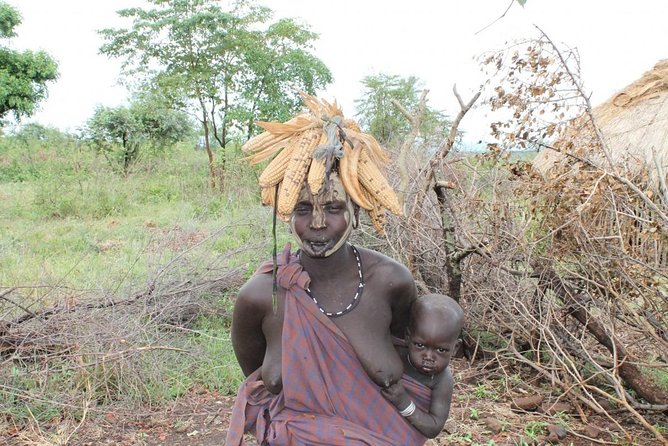
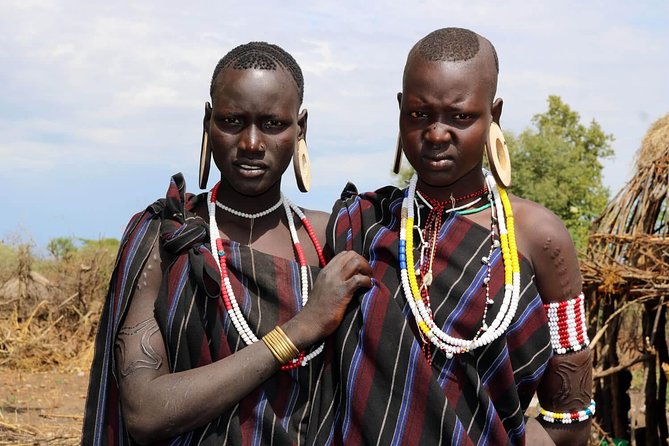
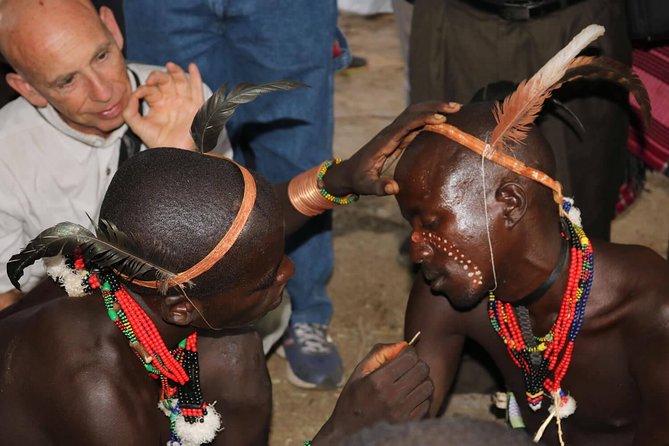
You will visit communities with very different clothing, building styles, farming traditions, and ceremonies. The Mursi are known for lip plates worn by some women and donga stick fighting among men. The Hamer are associated with bull jumping, a rite connected with adulthood and marriage. The Dorze are known for distinctive houses and food made from false banana.
That variety gives the trip real depth. You are not simply checking off one village after another. Still, the experience depends heavily on how the guide handles introductions, photography, and local etiquette. The supplied information does not name individual guides, so you cannot choose a particular escort in advance. You can, however, ask about the guide’s approach to village visits before departure.
More Omo Valley Tours in Addis Ababa
- 6 Days Omo Valley Tribes Tours From Addis Ababa
★ 5.0 · 33 reviews - 3 Days Omo Valley Tour
★ 5.0 · 24 reviews - Danakil Depression, Lalibela, Omo Valley and Simien Mountains
★ 5.0 · 23 reviews
Days 1 and 2: Addis Ababa gives you the essential context
Your first day is simple. A company representative meets you at the airport and transfers you to a city-center hotel, leaving time to rest. That pause matters after an international flight, since the next morning begins a full city program.
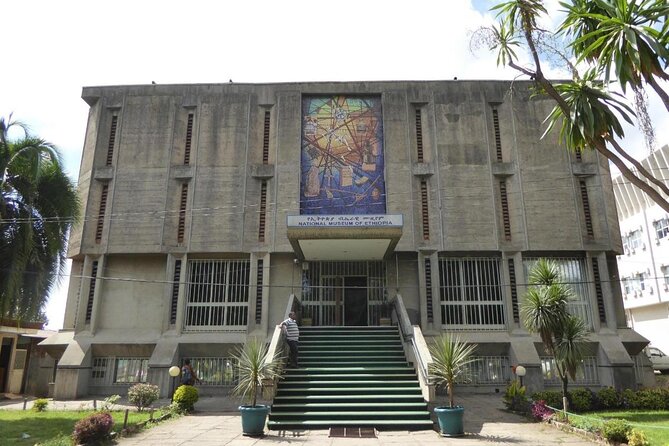
Day 2 covers the main sights in Addis Ababa. At the National Museum of Ethiopia, the central attraction is Lucy, the fossilized skeleton of an Australopithecus afarensis who lived about 3.2 million years ago. Seeing Lucy before heading south gives you a useful introduction to Ethiopia’s place in human history.
The Ethnological Museum is set in Haile Selassie’s former palace, within the grounds of Addis Ababa University. Its displays focus on Ethiopian cultures and daily life, making it particularly useful preparation for the communities you will see later. I would pay close attention here, because the museum can help you understand that Ethiopia is not one single cultural block.
The religious stops are also worthwhile. Holy Trinity Cathedral is Ethiopia’s highest-ranking Orthodox cathedral in Addis Ababa and was built to mark liberation from Italian occupation. St. George’s Cathedral was built by Italian prisoners of war after the Battle of Adwa, an important Ethiopian victory over Italy in 1896.
The final major stop is Mount Entoto, where Menelik tried to establish a capital in 1881. A church museum near St. Mary’s and Menelik’s old house add historical interest, while the mountain gives you a different view of the capital.
The day lasts about seven hours, with separate visits to the museums, cathedrals, and mountain. In the evening, the tour can include a traditional Ethiopian restaurant with local food and dancing. This is a good cultural introduction, though the full day may feel packed if you are still adjusting to the altitude and time zone.
Day 3: Tiya and the long road to Arba Minch
The southbound drive begins after breakfast, with a stop at Tiya World Heritage Site. The site contains 36 monuments, including 32 carved stone stelae marked with symbols that remain difficult to interpret. Their exact age is not established, which gives the place a quiet sense of mystery without requiring elaborate presentation.
Tiya is a good stop because it breaks up the journey and adds archaeology to a trip otherwise focused on living cultures. You will have about two hours there, followed by lunch in Sodo and arrival in Arba Minch late in the afternoon.
This is one of the first days when you need to accept the road-trip nature of the program. The schedule covers a lot of ground, and the destination is more important than any single roadside stop. Keep water, sun protection, and any personal snacks accessible, since long transfers are part of the deal.
Day 4: Lake Chamo and the Dorze people
Day 4 offers one of the strongest combinations of wildlife and culture. A boat ride on Lake Chamo, part of Nech Sar Park, gives you a chance to see large crocodiles and hippos in the wild, along with many water birds.
The boat trip is a welcome change after the road time. It also gives the day a clear natural highlight rather than making every stop about cultural encounters. Wildlife sightings are never guaranteed, but crocodiles, hippos, and birds are the main reasons this lake visit is included.
After lunch in Arba Minch, you travel to Chencha to visit a Dorze village. A traditional Dorze house is central to the visit. You can see how bread is made from false banana and try locally made alcohol.
This stop has practical value because it focuses on food and architecture rather than only on costumes or photographs. The Dorze house visit helps you see how local materials and cooking methods fit into daily life. You will return to Arba Minch in the evening, so the day is full but not as dominated by driving as some of the later sections.
More Omo Valley journeys south:
- 5 Days Omo Valley Tours
★ 5.0 · 15 reviews - 6 Days Lalibela, Omo Valley and Harar
★ 5.0 · 15 reviews - Private Omo Valley Tours From Addis Ababa
★ 5.0 · 12 reviews - 9 Days Tours To Danakil Depression, Simen MNP, Lalibela With Omo Valley Tribes
★ 5.0 · 11 reviews
Day 5: Konso, Erbore, Turmi, and the chance of bull jumping

The road becomes more demanding as you leave Arba Minch for Turmi. Stops are planned at Karat Konso, Weito, and Erbore. At Erbore, the program specifically allows time to photograph members of the community.
You should think carefully about photography here. The information provided describes the stop as a chance to take photos, but a respectful approach is still essential. Ask before photographing people, follow your guide’s instructions, and remember that a village is a home, not a stage set.
The possible highlight is a Hamer bull-jumping ceremony near Turmi. It may happen if the timing is right, but it is not promised. That uncertainty is normal for a trip involving living ceremonies. If one takes place, it can be a powerful cultural experience, but it should not be treated as an arranged performance created for your schedule.
The day is listed at about five hours for the Turmi section, though the route includes several stops and a long transfer. You spend the evening resting at the lodge. That quiet time is welcome, since the next day also includes a market and another road transfer.
Day 6: Key Afer market and the South Omo meeting point
The drive from Turmi to Jinka includes a stop at Key Afer, where a local market is held every Thursday. Timing matters here. If your route reaches Key Afer on another day, you should not assume the same market will be operating.
The Thursday market draws Hamer, Benna, Konso, Ari, and other people from South Omo. This may be one of the best places to see regional life gathered in one setting. Markets are valuable because they show trade, movement, clothing, food, and social contact in a way a short village visit cannot.
The stop lasts about two hours, followed by arrival in Jinka late in the afternoon. The day is not a slow market wander. You will have a set schedule and must continue to Jinka, so keep your expectations realistic.
Still, Key Afer is one of the smartest inclusions on the route. It gives you a broader view of the area and helps prevent the trip from becoming a series of isolated cultural encounters.
Day 7: Mago Park and the Mursi communities
Day 7 takes you toward Mago Park, home to Mursi communities. The Mursi are widely known for lip plates worn by some women. Men are also associated with donga, a stick-fighting tradition linked with choosing eligible bachelors for marriage.
The Mursi visit is likely to be the most visually striking part of the trip, but it also calls for the most care. Avoid reducing people to one custom or a photo opportunity. You are seeing a living community with its own social rules, not a museum display.
A professional guide and scout fee are included, which is important in a protected park and remote setting. The route returns to Jinka around lunchtime before continuing to Karat Konso.
The day heading and sequence can feel slightly confusing because the program also refers to the Konso Cultural Centre while describing the Mago Park excursion. Confirm the exact order with the operator before departure. The key point is that this day combines Mursi country with the onward journey to Karat Konso.
Day 8: The return begins at Lake Langano
The early drive from Karat Konso to Lake Langano marks the start of the return toward Addis Ababa. Langano is one of the Rift Valley lakes and offers time for a swim.
This is a useful change of mood after several demanding days in the Omo region. The lake is popular with people from Addis Ababa seeking a short break, so it works as a rest stop before the final drive.
The schedule allows about five hours for the Langano section. Do not expect a long resort stay. The program is still moving toward the capital, and the lake is a chance to pause rather than a full beach holiday.
Day 9: Back to Addis Ababa
The final day completes the drive to Addis Ababa, with the program ending after arrival in the afternoon. There is no sightseeing program listed for the capital on this day, so plan any onward flight or extra hotel night with care.
The airport transfer is specifically provided on arrival, but the information does not state that a departure transfer is included at the end. Ask the company about this if you need help reaching the airport.
What the $1,111 price means
At $1,111 per person, this is not a cheap short excursion, but the price covers a large amount of ground over nine days. The package includes an air-conditioned vehicle, professional guide, park scout fee, taxes, eight breakfasts, eight lunches, and eight dinners.
That meal coverage is useful in the Omo Valley, where independent dining choices may be limited during long road days. The air-conditioned vehicle also matters because the route involves repeated transfers in a warm, remote region.
The price does not include alcoholic drinks or services not listed. The group size can reach 20 people. A larger group helps spread transport and guide costs, but it may make village visits less flexible and photography more complicated.
The strongest value here is planning. The operator has handled a difficult route with several cultural stops, protected-area access, accommodation transfers, and meals. The tradeoff is that you have less freedom to linger or change the itinerary at short notice.
Comfort, fitness, and practical expectations
You need a moderate level of physical fitness. The information does not promise luxury accommodation, and the remote route means you should be prepared for basic conditions and long periods in the vehicle.
Pickup is offered, the start time is 8:30 a.m., and confirmation is received at booking. The tour accepts mobile tickets, and the maximum group size is 20.
Pack light but thoughtfully. Sun protection, comfortable clothing, sturdy shoes, and personal medication will make the road days easier. Bring patience for changes in timing, especially when a ceremony or market depends on local conditions.
The tour is best for someone who values access and structure more than independence. If you want to arrange every village visit yourself or spend several nights in one place, this program may feel rushed. If you want a guided route through a difficult-to-organize part of Ethiopia, the included planning has real value.
Should you book this Omo Valley tour?
Book it if you want a broad first look at southern Ethiopia and are comfortable with long drives, a group of up to 20, and a schedule shaped by local conditions. The mix of Addis museums, Tiya’s stelae, Lake Chamo, the Dorze, Erbore, Hamer, Mursi, Konso, Key Afer market, and Lake Langano is unusually varied.
You should think twice if your priority is luxury, slow travel, or guaranteed ceremonies. Bull jumping is only possible if timing works, and market visits depend on the correct day. Before paying, confirm the exact hotel standards, the day of the Key Afer visit, the handling of photography, and the final-day airport transfer.
For a first Omo Valley trip, I find the strongest reasons to book are the route planning, the included meals and scout fee, and the chance to connect several major cultural areas in nine days. The main cost is time spent on the road, but that is the price of reaching this remote corner of Ethiopia.
FAQ
How long is the Omo Valley tour?
The tour lasts approximately nine days, beginning with arrival in Addis Ababa and ending after the drive back to Addis Ababa on Day 9.
What communities and cultural groups does the tour visit?
The route includes the Mursi, Dorze, Erbore, Konso, and Hamer, along with Benna, Ari, and other South Omo communities encountered at Key Afer market.
Is transportation included?
Yes. An air-conditioned vehicle is included, along with a professional guide, all fees and taxes, and a scout fee.
Are meals included?
Yes. The package includes eight breakfasts, eight lunches, and eight dinners. Alcoholic drinks are not included.
Does the tour visit a local market?
Yes. The program stops at Key Afer market, which operates every Thursday and attracts Hamer, Benna, Konso, Ari, and other people from South Omo.
What happens if I need to cancel?
You can receive a full refund if you cancel at least three full days before the experience start time. Cancellations or changes made less than three full days in advance are not accepted for a refund.
Just added around Addis Ababa
- 6 days 5 nights Addis Abeba sightseeing & Lalibela Rock-Hewn Churches★ 5.0 · 3 reviews
- Addis Ababa Essentials: Flexible Full-Day City Sightseeing★ 5.0 · 3 reviews
- 4 Hours Addis Ababa Cultural Discovery Tour★ 5.0 · 3 reviews
- Day Trip Around Addis Ababa★ 5.0 · 3 reviews
- Northern Ethiopia (Historic route)★ 5.0 · 3 reviews
- Addis Ababa Half Day Shopping Tour★ 5.0 · 3 reviews
- Monastic Marvels Exploring the beauty of Debre Libanos Monastery★ 5.0 · 3 reviews
- 6 days Omo valley cultural Tour★ 5.0 · 3 reviews
Omo Valley Tribal Tours, compared.

Lalibela, Axum, Danakil and Omo Valley 8 DAYS
Read our review →
3 days around Arbaminch and Konso Adventure Tours Life Time
Read our review →Danakil Depression, Lalibela, Omo Valley and Simien Mountains
Read our review →



9 Days Tours To Danakil Depression, Simen MNP, Lalibela With Omo Valley Tribes
Read our review →
8 Days Lalibela,Danakil Depression and Omo Vally Tours
Read our review →Browse the lists this tour appears in