
Reviewed · THE OMO VALLEY
6 Days Omo valley Tribal Tour (Starts Arba Minch End Jinka)
The most striking part of this six-day journey is the change in scenery and culture as you travel south from Arba Minch to Jinka. You move from the cool Dorze highlands and views over two lakes to dry Omo Valley roads, remote villages, river crossings, and some of southern Ethiopia’s best-known communities.
I like the small maximum group of four, which suits an area where roads are rough and village visits need patience. I also like the guide support from Debebe, known variously as Debe or Debaba, and driver China. Their local relationships can help turn a quick village stop into a more useful conversation.
The main drawback is the price, $1,600 per person, especially since fees and taxes are extra. The schedule also includes long drives, off-road sections, basic facilities, and a start time listed as 6:30 pm that you should confirm carefully before booking.
Key points to know before you book

- Dorze homes and false-banana food: Begin in the highlands around Chencha, where beehive-shaped houses and a traditional staple food provide a gentle introduction to southern Ethiopia.
- Small-group 4×4 travel: The air-conditioned vehicle and maximum group size of four matter on the long, rough roads between Arba Minch, Turmi, and Jinka.
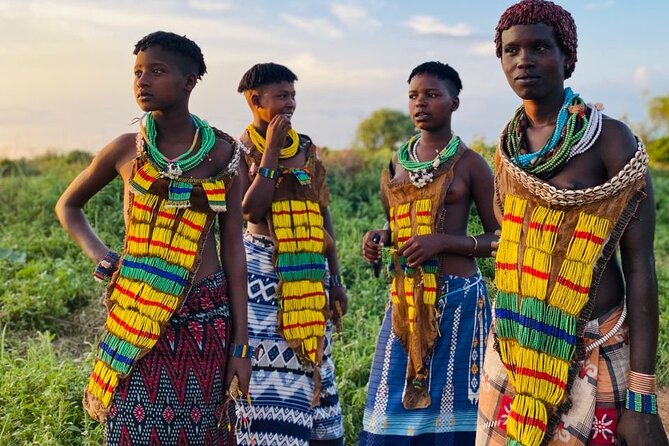
- Six distinct cultural visits: The route includes Dorze, Hamar, Kara, Nyangatom, Dassanech, and Mursi communities, each with a different setting and way of life.
- Market timing matters: Dimeka markets take place Tuesday and Saturday, while Keyafer market is held Thursday, so your dates affect what you can see.
- A real off-road section: Reaching Kara village involves about 80 kilometers of rough travel, making this more demanding than a simple sightseeing tour.
- Airport-to-airport route: You start at Arba Minch Airport and finish at Jinka International Airport after visiting the Mursi in Mago National Park.
Why the route from Arba Minch to Jinka works so well
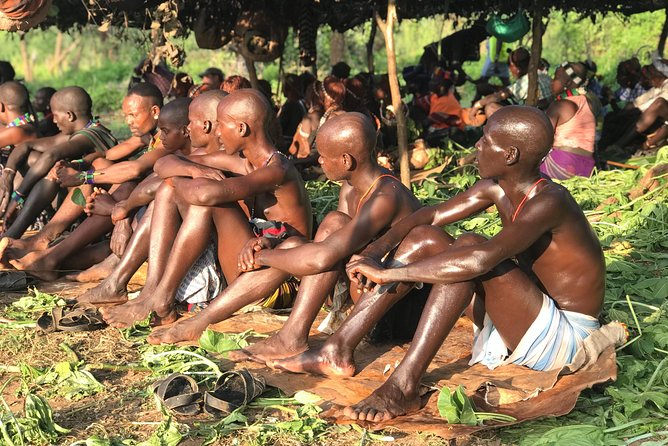
This trip is designed as a one-way journey rather than a return circuit. That saves you from retracing the same roads, and it gives the six days a clear sense of movement. You begin in Arba Minch, head south through several tribal areas, and finish in Jinka after a final visit to the Mursi.
The route is not fast. Roads are long, and some sections are rough. That is part of the cost of reaching remote communities, but it also means you should not think of this as six easy sightseeing days. You will spend a good deal of time in the vehicle.
The air-conditioned 4×4 is an important practical feature. It gives you protection from heat and dust, while four-wheel drive is suited to the off-road section near Kara. With no more than four people, you should have more room for bags and a better chance to pause when the guide sees something worth explaining.
Guide Debebe is a useful part of the experience. Past clients have also referred to him as Debe and Debaba, so confirm the name when arranging pickup. His style appears to be friendly and flexible, and he can adjust plans when a new interest comes up. He also arranges local guides or contacts in the communities, which is especially helpful when customs and introductions need explanation.
More Omo Valley Tours in Arba Minch
- 3 days around Arbaminch and Konso Adventure Tours Life Time
★ 5.0 · 24 reviews - 5 Day Private tour to the Omo Valley Tribes and Adventure Tour
★ 5.0 · 11 reviews - Omo Valley Tribes 6 Days Tours
★ 4.9 · 10 reviews
Day 1: Dorze houses above Lake Abaya and Lake Chamo
From Arba Minch, you drive about 36 kilometers to Chencha, a highland town at roughly 2,900 meters. The trip takes about an hour and a half, although road conditions can affect the timing. As you climb from Arba Minch at around 1,400 meters, you get broad views over Lake Abaya and Lake Chamo.
The altitude changes the feel of the day. Arba Minch is warmer, while Chencha is cooler and higher. The road itself is part of the attraction, with the two lakes providing a strong visual contrast to the cultivated highlands.
The Dorze are especially known for their tall, beehive-like huts. These homes are one of the most memorable sights on the first day, but the visit is more worthwhile when you look beyond the architecture. You also see how false banana, locally important as a staple, is prepared.
You get to try the food yourself. That small tasting is valuable because it connects the visit to daily life rather than making it only a photo stop. The food may be unfamiliar, but the point is to understand what grows locally and how it becomes a basic part of the diet.
After the Dorze visit, you return to Arba Minch for the night. This is a relatively gentle opening day compared with what follows. You get culture, scenery, and food without immediately facing the longest road sections.
Day 2: The long southern road to Turmi
Day two covers about 277 kilometers and takes roughly five and a half hours of driving. The route passes through areas associated with the Konso, Tsamay, Arbore, and Hamar peoples before reaching Turmi.
This is where you begin to feel the scale of southern Ethiopia. The drive is not filled with formal stops every few minutes, and you should expect stretches where the road, heat, and passing villages become the main experience. Bring patience. A six-day route covering this much ground cannot offer long visits everywhere.
The planned stop is Dimeka market, held on Tuesdays and Saturdays. If your timing matches, it can add a great deal to the day. Market days bring together people from nearby communities, making Dimeka a useful place to see regional trade and social contact in one setting.
If you arrive on another day, the market portion may not be available. This is one of the most important details to check before you pay, since the market schedule is fixed. After Dimeka, you continue to Turmi for the night.
Day 3: Rough roads and the Kara village of Duse or Labuck

The third day goes to a Kara village known as Duse or Labuck. It lies about 80 kilometers off-road from Turmi. The distance may look modest on paper, but the rough surface can make this a slow trip.
The Kara population is estimated at between 1,000 and 3,000 people, and their communities are located along the eastern banks of the Omo River. Their farming practices include flood-retreat cultivation, using the land left workable as river waters recede.
Sorghum, maize, and beans are among the crops grown here. Those details help explain why the river is so important. You are not simply visiting a remote settlement. You are seeing how farming responds to the Omo’s seasonal pattern.
The village visit is followed by the drive back to Turmi. This round trip makes the day tiring, particularly after the previous day’s long transfer. Still, it is one of the most distinctive parts of the route because the off-road journey takes you well beyond the main road.
More Omo Valley journeys south:
- 6 Days Omo Valley Tribes Tours From Addis Ababa
★ 5.0 · 33 reviews - Lalibela, Axum, Danakil and Omo Valley 8 DAYS
★ 5.0 · 29 reviews - 3 Days Omo Valley Tour
★ 5.0 · 24 reviews - Danakil Depression, Lalibela, Omo Valley and Simien Mountains
★ 5.0 · 23 reviews
Day 4: Nyangatom and Kara communities near Turmi
The fourth day begins with a visit to a Nyangatom village. You then continue to a Kara village, where body painting is a major part of the visual culture associated with the community.
The provided schedule gives a distance and travel time of about 101 kilometers and six hours. That ratio tells you what to expect: slow roads, pauses, and time spent reaching places rather than simply driving between towns.
This day is less about ticking off sights and more about allowing a local guide to explain customs. Debebe has arranged local contacts or guides during past tours, and that support is useful here. It can help you understand the meaning behind body painting and avoid treating it as a costume display.
Accommodation on this part of the journey is listed as a Turmi hotel with a portable shower and toilet. That is a clear sign that facilities are basic. You should be comfortable with simple conditions for at least part of the trip. Meals are listed as full board for this day, but do not assume that every meal on every day is included without checking the final booking details.
Day 5: Canoe crossing to the Dassanech and Keyafer market

On day five, you drive about 72 kilometers to Omerate, a journey listed at around one and a half hours. Omerate is on the east bank of the Omo River, in the area of the Dassanech people.
To reach a Dassanech village, you cross the river by local canoe. This is a memorable change from the vehicle-based days, though it also means you should keep your belongings secure and follow local instructions. The crossing is part of the visit, not just a way to get from one road to another.
After the Dassanech village, the route continues toward Jinka. If the day falls on Thursday, you can stop at Keyafer market. The market is known for bringing together Hamar, Benna, and Kara people, among others, so the timing can give you a broader look at the region than a single village visit.
The order of the day can feel busy, with the morning drive, canoe crossing, village visit, market possibility, and onward transfer. If Keyafer is a priority, ask how the timing will work for your departure date. You spend the night in Jinka.
Day 6: Mago National Park and the Mursi visit

The final morning takes you from Jinka into Mago National Park to visit the Mursi. The drive to one of the villages takes about two hours, and you return to Jinka for lunch before being dropped at the airport.
The park visit is primarily cultural rather than a wildlife outing. The schedule specifically cautions that you should not expect much game on this brief visit. That honesty is useful. You are going for the Mursi community and the journey into the park, not for a full safari.
The Mursi are among the most widely known communities in the Omo Valley. A local guide matters here, since a short visit can otherwise become little more than photographs. You should listen carefully to explanations and follow the guide’s advice about respectful interaction.
After lunch in Jinka, the tour ends with airport drop-off. The listed endpoint is Jinka International Airport, making the route convenient if you are continuing by air. Confirm your flight time before booking, since the morning visit, return drive, lunch, and airport transfer all need to fit together.
What $1,600 buys you, and what it does not

At $1,600 per person, this is a substantial purchase. The value comes from the route, the private-style small group, the air-conditioned 4×4, the driver, and the guide support needed to reach several distant communities in six days.
You are also paying for a one-way journey through a difficult region rather than a simple town tour. The vehicle covers long distances, including rough roads to Kara and the route into Mago National Park. With a group capped at four, the trip should feel more personal than a large coach excursion.
The price needs closer checking because all fees and taxes are excluded. The supplied information does not spell out every cost covered by the $1,600, so ask for a written breakdown before booking. Confirm accommodation by night, meals for every day, village or park charges, market visits, canoe costs, and airport transfers.
The listed inclusion is an air-conditioned vehicle. Full board is specified for day four, but the wider meal plan is not fully explained. That does not automatically make the tour poor value, but it means you should not compare the price with an all-inclusive package until you know what is extra.
Comfort, pace, and practical concerns
This is a demanding trip for anyone who dislikes long road journeys. Day two includes around 277 kilometers, day three has an 80-kilometer off-road run, and day four lists six hours of travel across 101 kilometers. The numbers tell you to expect bumps, dust, and changing road speeds.
The reward is access. You reach communities and settings that are not practical to see from Arba Minch on short day trips. The air conditioning helps, but it does not remove the physical strain of spending hours in a vehicle.
Accommodation is not described in detail for every night. Turmi is specifically linked with a hotel using a portable shower and toilet, so you should expect basic facilities there. Ask about the Jinka and Arba Minch hotels if room standards matter to you.
The maximum group size of four is a real advantage for this kind of trip. A small vehicle is easier to manage on narrow roads, and you have more room to ask questions or request a short pause. It also allows the guide to adjust the schedule, something Debebe has done when people developed new interests during longer trips.
The start time shown is 6:30 pm, which does not fit neatly with a day-one arrival and morning-style sightseeing schedule. Treat this as a point to verify, not as a reason to reject the trip. Confirm the exact pickup time, airport meeting plan, and whether the stated time refers to a different part of the booking system.
Who will get the most from this Omo Valley trip
I would recommend this experience to you if you want cultural encounters, remote-road travel, and a clear route from Arba Minch to Jinka. It suits people who prefer a local guide and driver to arranging complex transport between widely separated areas.
You should also be comfortable with cultural visits that are brief and structured. The tour covers many communities in six days, so you will not have unlimited time in each place. The quality of the explanation and the way you approach each visit will matter as much as the number of stops.
This is a good match if markets are important to you and your dates can line up with Dimeka or Keyafer. Dimeka is held Tuesday and Saturday, while Keyafer is held Thursday. If your dates miss both, the route still has plenty to offer, but the market experience will not be part of it.
I would hesitate to recommend it to you if you need polished hotels, short transfers, or a fixed schedule with no surprises. The price is high enough that you should demand clarity about exclusions, and the roads are rough enough that comfort cannot be guaranteed simply because the vehicle has air conditioning.
Should you book the six-day route?
Book it if the combination of Dorze food and homes, Omo River communities, market days, a local canoe crossing, and the Mursi visit is worth the cost and effort to you. The one-way design, small group, and guide support make the route practical for seeing a wide section of southern Ethiopia in limited time.
Before booking, confirm four things: the actual start time, the complete list of included costs, the accommodation and meal plan, and whether your dates match Dimeka or Keyafer market days. If those answers suit your plans, this is a strong choice for an active cultural trip with plenty of road time and very little polish.
FAQ
Where does the tour start?
The tour starts at Arba Minch Airport in Arba Minch, Ethiopia.
Where does the tour end?
The tour ends at Jinka International Airport after the Mursi visit and the return to Jinka for lunch.
How long does the tour last?
The experience lasts approximately six days.
How many people can join the tour?
The maximum group size is four travelers.
What type of vehicle is used?
Ground transportation is provided in an air-conditioned 4×4 vehicle.
Which communities are included?
The route includes visits connected with the Dorze, Hamar, Kara, Nyangatom, Dassanech, and Mursi peoples.
Which market days are included?
Dimeka market takes place on Tuesdays and Saturdays. Keyafer market takes place on Thursdays.
Are fees and taxes included in the price?
No. All fees and taxes are listed as not included.
Can I cancel for a full refund?
Yes, if you cancel at least 24 hours before the experience start time. Cancellations or changes made less than 24 hours in advance are not refunded or accepted. Weather or minimum-participant cancellations may result in a different date, another experience, or a full refund.
More Six-Day Trips from Ethiopia
- 6 Days tour Package (Simien Mountains, Lalibela, and Danakil Depression)
★ 5.0 · 32 reviews - 6 Days Lalibela, Omo Valley and Harar
★ 5.0 · 15 reviews - 6 Days Bale Mountains Trekking
★ 5.0 · 10 reviews - 6-Day Omo Valley Cultural Private Tour
★ 5.0 · 6 reviews
Just added around Ethiopia
- 6 days 5 nights Addis Abeba sightseeing & Lalibela Rock-Hewn Churches★ 5.0 · 3 reviews
- Addis Ababa Essentials: Flexible Full-Day City Sightseeing★ 5.0 · 3 reviews
- 4 Hours Addis Ababa Cultural Discovery Tour★ 5.0 · 3 reviews
- Private Guided Tours To Bahir Dar Lake Tana Monastery & Blue Nile Waterfalls★ 5.0 · 3 reviews
- Lalibela 2-Day Eco Trekking Tour★ 5.0 · 3 reviews
- 2 days Tigray Church★ 5.0 · 3 reviews
- Day Trip Around Addis Ababa★ 5.0 · 3 reviews
- Northern Ethiopia (Historic route)★ 5.0 · 3 reviews
Omo Valley Tribal Tours, compared.

Lalibela, Axum, Danakil and Omo Valley 8 DAYS
Read our review →
3 days around Arbaminch and Konso Adventure Tours Life Time
Read our review →Danakil Depression, Lalibela, Omo Valley and Simien Mountains
Read our review →


9 Days Tours To Danakil Depression, Simen MNP, Lalibela With Omo Valley Tribes
Read our review →
8 Days Lalibela,Danakil Depression and Omo Vally Tours
Read our review →Browse the lists this tour appears in