

Reviewed · THE OMO VALLEY
Omo Valley Cultural Tours 7 Days From Addis Ababa
The Omo Valley is where this seven-day journey earns its keep. You move from Addis Ababa’s museums and markets to Dorze houses, Konso terraces, Mursi villages, Hamer country, and the Dassanech communities near Lake Turkana. Lake Chamo’s boat safari adds crocodiles, hippos, and birdlife to the cultural focus.
I like the private format, which gives you more room to ask questions and adjust the pace than a large group trip. I also like the range: six nights of lodging, six breakfasts, six lunches, ground transport, and an English-speaking guide are included. The main caution is the long road travel and the fairly brisk schedule, with some days reaching six to eight hours.
Key points before you book

- Lake Chamo boat cruise: Look for Nile crocodiles, hippos, and many kinds of birds from the water.
- Seven major cultural stops: The route includes Dorze, Konso, Bana, Ari, Mursi, Hamer, and Dassanech communities.
- Private attention: Only your own group takes part, with a driver and English-speaking guide.
- Addis Ababa opening and finale: See Entoto, the National Museum, Holy Trinity Cathedral, the Ethnographic Museum, and Mercato, then attend a folkloric dinner.
- Six nights included: Breakfast and six lunches are listed as included, but the booking details also say lunch is not included, so confirm this point before paying.
- Domestic flights cost extra: The route uses air travel between Addis Ababa and Arba Minch, and those tickets are not part of the $1,545 price.
Why the Omo Valley route is worth your time
This is not a quick city tour with a short cultural show added at the end. You spend several days in southern Ethiopia, where communities have distinct homes, clothing, food traditions, farming methods, and ways of life.
The route also gives you more than village visits. You see Ethiopia’s national story in Addis Ababa, learn about terraced agriculture around Konso, watch for wildlife on Lake Chamo, and finish with a formal cultural evening. That range makes the trip useful if you want an introduction to Ethiopia beyond its famous northern churches and historic cities.
The private setup matters here. Cultural visits can raise plenty of questions, and a private guide gives you a better chance to stop, ask, and clarify. The tour is listed with guides including Joseph and Yihun in past arrangements, while Nico has also worked on an Omo Valley departure. Guide assignment can change, so confirm who will lead your group.
You should also set your expectations carefully. This is a road-based tour through a large region. The itinerary is active, and the distances make early starts and long drives part of the experience. It suits you best if you value access and variety more than a slow, resort-like holiday.
More Omo Valley Tours in Addis Ababa
- 6 Days Omo Valley Tribes Tours From Addis Ababa
★ 5.0 · 33 reviews - 3 Days Omo Valley Tour
★ 5.0 · 24 reviews - Danakil Depression, Lalibela, Omo Valley and Simien Mountains
★ 5.0 · 23 reviews
Day 1: Addis Ababa from Entoto to Mercato

Your first day begins with arrival pickup and a transfer to your hotel. After time to refresh, you drive up Mount Entoto for broad views over Addis Ababa.
The descent brings you to the National Museum, where you can see the fossil remains of Lucy, one of Ethiopia’s best-known links to early human history. The visit gives useful context before you head south, though the day contains several major sights and may feel full after an international flight.
Holy Trinity Cathedral follows. It was built during the Second World War and adds a religious and architectural dimension to the morning’s museum visit.
You then visit the Ethnographic Museum, housed in what was once Emperor Haile Selassie’s palace. This is a particularly helpful stop before the Omo Valley because it introduces the country’s many cultural groups and traditions in one setting.
The day ends at Mercato, described as the largest market in East Africa. Expect a sensory introduction to Addis, with a very different feel from the quiet museum stops. Keep your personal belongings secure and stay close to your guide in crowded areas.
The sightseeing portion lasts about six hours. Admission is included, and the day provides a useful orientation before the long southern journey.
Day 2: Dorze homes and the road to Arba Minch
Day two takes you toward Arba Minch, with a stop in Dorze country. The drive is listed at about eight hours, so this is one of the tour’s longer days.
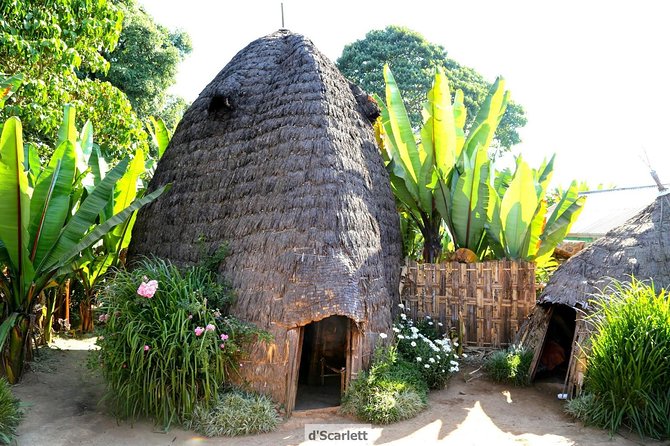
The Dorze are known for weaving, including their traditional shamma cloth. Their houses are shaped like elephants, a form linked to the animals that once lived in the area. That detail gives the visit a clear sense of place: the building itself carries a memory of the local environment.
You also learn about enset, sometimes called false banana. It is a staple food for the Dorze people, and the visit offers a practical look at how food production shapes daily life.
This stop is valuable because it moves beyond costumes and photographs. You get to connect housing, weaving, and farming with the community’s way of life. Ask your guide to explain what you are seeing rather than treating the village as a quick photo stop.
The long drive is the tradeoff. The route covers considerable ground, and the day may feel tiring if you prefer short transfers. Still, reaching Arba Minch places you well for the Lake Chamo cruise and the southbound route ahead.
Day 3: Lake Chamo, Konso, Bana, and Ari
Day three packs several distinct experiences into roughly six hours of listed touring time. It begins with a boat cruise on Lake Chamo, identified as Ethiopia’s third-largest lake.
From the boat, you may see Nile crocodiles, hippos, and different bird species. Wildlife sightings are not guaranteed, so treat the cruise as a chance to watch the lake rather than a promise of a particular animal. The boat ride gives the schedule a welcome change from road travel.
You then continue toward Jinka through Konso country. Konso is known for its terracing and is one of Ethiopia’s UNESCO-listed cultural sites. The terraces are not just scenic. They show how people have shaped steep or difficult ground for agriculture over generations.
Konso is also associated with some of Ethiopia’s best coffee. If coffee interests you, this is a good place to ask about cultivation and local production.
The journey continues to a Bana village. The Bana are described as indigenous pastoral and semi-nomadic people living in the lower Omo Valley’s demanding conditions. Men may wear hair dressed with a colorful clay cap decorated with feathers, a distinctive style that reflects local identity.
The route also visits the Ari people. The supplied schedule cuts off during this description, so the exact length and details of the Ari stop are not clear. Plan for a full day of transitions, village visits, and changing scenery rather than a single extended cultural encounter.
More Omo Valley journeys south:
- 5 Days Omo Valley Tours
★ 5.0 · 15 reviews - 6 Days Lalibela, Omo Valley and Harar
★ 5.0 · 15 reviews - Private Omo Valley Tours From Addis Ababa
★ 5.0 · 12 reviews - 9 Days Tours To Danakil Depression, Simen MNP, Lalibela With Omo Valley Tribes
★ 5.0 · 11 reviews
Day 4: Mago National Park, Mursi, and Hamer country
Day four is devoted to Mago National Park and a visit to a Mursi village. The total excursion lasts about seven hours.
The Mursi live in low huts made from straw and leaves. The tour description also highlights the clay ornaments worn by some women on stretched lower lips and ear lobes. This is a striking cultural practice, but it deserves a respectful approach. Listen to the guide’s explanation, ask before taking photographs, and remember that people are not scenery.
After returning to Jinka for lunch, you continue to Turmi, home of the Hamer people. The schedule places the Hamer visit after the Mursi excursion, so this is another day with a lot of road time and two major cultural settings.
Mago National Park adds a nature element, but the description does not promise particular wildlife beyond the cultural visit. That distinction matters. You should book this day for the combination of park access and Mursi culture, not on the assumption that it is a dedicated game drive.
The private vehicle helps on a day like this. You are not sharing the schedule with a large group, and your guide can provide context as the focus shifts from the national park to the communities around Turmi.
Day 5: Omorate and the Dassanech people

Day five takes you to Omorate, about 75 kilometers from Turmi, with the drive listed at roughly two hours each way. The destination is a community of Dassanech people, described as people of the delta, living on the northern shore of Lake Turkana.
The day is focused. Unlike day three, which strings together several stops, this excursion gives you time in one area before returning to Turmi for the night.
The setting near Lake Turkana helps explain why the Dassanech way of life is closely tied to water and the delta. Your guide’s role is especially important here, since the value of the visit comes from understanding the community rather than simply arriving, taking pictures, and leaving.
The total touring time is about six hours. You return to Turmi for an overnight stay, which avoids adding another long transfer at the end of the day.
As with the Mursi visit, photography requires care. Video and photography fees are specifically excluded, and personal expenses are also your responsibility. Carry some local currency or confirm the payment arrangements with the operator before setting out.
Day 6: Returning from Turmi to Arba Minch

Day six is a return drive from Turmi to Arba Minch, taking about six hours. The route includes a visit to the Arobre tribes.
This is mainly a repositioning day, but that does not make it disposable. The Arobre stop breaks up the drive and gives you one more cultural encounter before the journey turns back toward Addis Ababa.
The distance also explains why the itinerary uses a domestic flight connection. Driving the entire route from Addis Ababa and back would require even more time on the road. By flying between Addis Ababa and Arba Minch, the tour concentrates its ground travel in the Omo Valley rather than spending the full seven days on intercity highways.
The flight costs are not included in the listed price. This is one of the most important budget points to settle before booking. Ask exactly which flight legs you must purchase and how the schedule connects with the vehicle pickup.
Day 7: Addis Ababa and the folkloric dinner
The final day includes airport transfer arrangements and a return to Addis Ababa. The schedule then places a folkloric dinner in the evening.
This dinner gives you a chance to sample several Ethiopian national dishes while watching dances from different ethnic groups. A traditional coffee ceremony is also included, providing a fitting final look at one of Ethiopia’s best-known social customs.
The wording of the schedule combines airport transfers, the return flight, and the evening dinner, so confirm the exact timing before you travel. You need enough space between the domestic flight, any onward international departure, and the evening program.
This final event is more structured than the village visits. That is not necessarily a weakness. It lets you see several dance traditions in one place, though it cannot replace the slower, more direct cultural encounters earlier in the route.
What the $1,545 price really covers
At $1,545 per person, the price includes six nights of hotel accommodation, breakfast each day, a professional driver, an English-speaking guide, the Lake Chamo boat trip, and six lunches as stated in the inclusions.
The private vehicle and guide are the main value. In a region with long road transfers and several culturally sensitive visits, having one team handle the route is easier than piecing together transport and local arrangements yourself.
The price does not include domestic flights, alcohol, video and photography fees, gratuities, or other personal expenses. Dinner is also listed as excluded, although the final folkloric dinner is described as part of the itinerary. Lunch appears in both the included and excluded sections, creating a clear inconsistency. Confirm meals and the final dinner in writing before booking.
You should also budget for drinks, tips, and photo or video charges. The tour offers free cancellation up to 24 hours before the start time, with no refund for cancellations or changes inside that period. Poor weather may lead to a different date or a full refund.
Comfort, pace, and practical planning
The tour begins at 7:00 a.m. and requires moderate physical fitness. You do not need an extreme level of athletic ability based on the supplied details, but you should be comfortable with long drives, village walking, changing daily settings, and full sightseeing days.
Accommodation is included for six nights, but hotel names and room standards are not provided. If comfort is important to you, ask for the properties before booking.
The experience is private, which means only your own group participates. Group discounts are available, and the operator offers pickup. Service animals are allowed.
The route is also dependent on weather. That matters most for road conditions, boat travel, and the timing of domestic flights. Keep some flexibility in your plans if possible.
The guides and the value of personal attention
The strongest practical reason to choose this format is the guide. Joseph is named in the supplied material as a key guide on Ethiopia trips, while Yihun is described as providing information about animals, national parks, tribes, and nature. Nico is also associated with an Omo Valley departure.
Those names do not guarantee who will lead your trip, but they give you useful questions to ask. Request the assigned guide’s name, confirm that the guide speaks English, and ask how cultural visits and photography are handled.
A private guide can also help you understand what you see at a useful pace. The Omo Valley contains many groups, and reducing every community to a single costume or custom would miss the point. A good guide should explain differences, correct misunderstandings, and help you behave respectfully.
Who should book this Omo Valley tour?
You should consider booking if you want a structured introduction to southern Ethiopia and prefer a private vehicle to independent logistics. The trip suits you if you want cultural visits supported by a guide, while still adding wildlife, museums, markets, and an evening performance.
It is also a good fit for friends or couples who want personal attention and may qualify for a group discount. The mix of included lodging, meals, driver, guide, and boat trip can offer fair value once you add up the cost of arranging the same services separately.
You may want a different plan if you dislike long drives, need a slow schedule, or want detailed control over hotel choice. You should also pause if the meal inclusions and domestic flights are not clearly explained before payment.
Should you book it?
I would choose this tour for its broad reach and private format. In seven days, you see Addis Ababa’s major cultural sights, travel through Arba Minch and Jinka, visit several Omo Valley communities, cruise Lake Chamo, and end with Ethiopian food, coffee, and dance.
Before booking, confirm three things: the domestic flight schedule, the exact hotels, and the conflicting lunch and dinner details. If those points are clear and you are comfortable with long road days, the tour offers a practical way to reach a remote part of Ethiopia with transport and cultural guidance already arranged.
FAQ
How long is the Omo Valley cultural tour?
The experience lasts approximately seven days and includes six nights of accommodation.
Where does the tour begin?
The tour begins in Addis Ababa, with pickup offered and a stated start time of 7:00 a.m.
Is this a private tour?
Yes. This is a private activity, so only your own group participates.
Are domestic flights included?
No. Domestic flights are specifically excluded from the price.
Is accommodation included?
Yes. Hotel accommodation for six nights is included, along with breakfast.
Is lunch included?
The inclusions list six lunches, but the exclusions also mention lunch. Confirm the exact meal arrangement with the operator before booking.
What wildlife might I see on Lake Chamo?
The boat cruise offers the chance to see Nile crocodiles, hippos, and different types of birds.
What is the cancellation policy?
You can cancel up to 24 hours before the experience for a full refund. Cancellations or changes made less than 24 hours before the start time are not refunded or accepted. If poor weather causes cancellation, you can receive a different date or a full refund.
More Week-Long Trips from Addis Ababa
- 7 Days Cultural Tours to Omo Valley
★ 5.0 · 5 reviews - Simien Mountains National Park – 7 Day Trek
★ 5.0 · 5 reviews
Just added around Addis Ababa
- 6 days 5 nights Addis Abeba sightseeing & Lalibela Rock-Hewn Churches★ 5.0 · 3 reviews
- Addis Ababa Essentials: Flexible Full-Day City Sightseeing★ 5.0 · 3 reviews
- 4 Hours Addis Ababa Cultural Discovery Tour★ 5.0 · 3 reviews
- Day Trip Around Addis Ababa★ 5.0 · 3 reviews
- Northern Ethiopia (Historic route)★ 5.0 · 3 reviews
- Monastic Marvels Exploring the beauty of Debre Libanos Monastery★ 5.0 · 3 reviews
- Addis Ababa Half Day Shopping Tour★ 5.0 · 3 reviews
- 6 days Omo valley cultural Tour★ 5.0 · 3 reviews
Omo Valley Tribal Tours, compared.

Lalibela, Axum, Danakil and Omo Valley 8 DAYS
Read our review →
3 days around Arbaminch and Konso Adventure Tours Life Time
Read our review →Danakil Depression, Lalibela, Omo Valley and Simien Mountains
Read our review →



9 Days Tours To Danakil Depression, Simen MNP, Lalibela With Omo Valley Tribes
Read our review →
8 Days Lalibela,Danakil Depression and Omo Vally Tours
Read our review →Browse the lists this tour appears in