

Reviewed · THE OMO VALLEY
Omo Valley 5 Days
The most memorable part of this five-day trip is the close look at southern Ethiopia’s living cultures, from Karo body painting beside the Omo River to Hamer villages, Mursi customs, and Dorze weaving. You also get wildlife and scenery, including Mago National Park and a boat ride among Lake Chamo’s large crocodiles.
I like the practical setup: a 4WD Toyota Land Cruiser, local guides and scouts where needed, village and elder payments, and a small group capped at 12. I also like the route itself, which links several very different communities rather than spending the whole trip in one town.
The main caution is the amount of road time. Several days run about seven hours, and the published plan is not perfectly clear about domestic flights, since flights are part of the route but listed as excluded from the price. Confirm that detail before paying.
Key points to know before you book
- Karo and Hamer visits: See Karo body painting near the Omo River, then visit a Hamer village with decorated leather clothing, red-dyed hair, and mud, wood, and thatch homes.
- Mursi village in Mago National Park: Reach a Mursi community after an early mountain drive, with a chance to see dik-dik and lesser kudu along the way.
- Dorze mountain culture: Visit a Dorze home, watch weaving, and learn how the false banana is used for food and other purposes.
- Lake Chamo boat trip: Finish with a search for large crocodiles and possible hippopotamuses before flying back to Addis Ababa.
- Small-group transport: The tour uses a 4WD Land Cruiser and accepts a maximum of 12 people.
- Important cost check: Accommodation, transfers, breakfast, park and village fees, guides, and the boat trip are included, but domestic and international flights are not.
What this Omo Valley route gives you in five days
This is a fast, purposeful introduction to the Omo Valley. You move from Addis Ababa to Arba Minch, then through Konso, Jinka, Mago National Park, and back to Arba Minch. Along the way, the focus shifts from farming and mountain communities to dry plains, river villages, and some of Ethiopia’s best-known cultural encounters.
The price is $1,153.85 per person. That is not a simple sightseeing day, but it includes a vehicle, accommodation, local guiding, entrance charges, payments to village elders, four breakfasts, and the Lake Chamo boat trip. Those included local payments matter in this part of Ethiopia, where access to villages depends on more than simply driving up and taking photographs.
Still, you need to add domestic flights and personal costs. The itinerary begins with a flight from Addis Ababa to Arba Minch and ends with a flight back, but the cost section says domestic flights are excluded. Ask for the exact flight arrangement and total price in writing.
More Omo Valley Tours in Addis Ababa
- 6 Days Omo Valley Tribes Tours From Addis Ababa
★ 5.0 · 33 reviews - 3 Days Omo Valley Tour
★ 5.0 · 24 reviews - Danakil Depression, Lalibela, Omo Valley and Simien Mountains
★ 5.0 · 23 reviews
Day 1: From Addis Ababa to Arba Minch and Konso
The trip begins with a flight from Addis Ababa to Arba Minch, followed by a drive to Konso. This saves you from spending the first day on a long overland journey from the capital, though it means the day depends on flight timing and road conditions.
Konso provides an early change of pace. The route takes you out of the capital and into southern Ethiopia, where the scenery and daily life differ sharply from Addis Ababa. Your accommodation is included on the program, but the exact property is not specified, so ask where you will stay and what room arrangements are provided.
This is also the moment to settle practical matters with your guide. Confirm the next day’s departure time, check how long the road sections are expected to take, and ask about any camera or video charges. Camera and videography fees are not included, and local rules can vary from one community to another.
Day 2: Karo body painting and a Hamer village

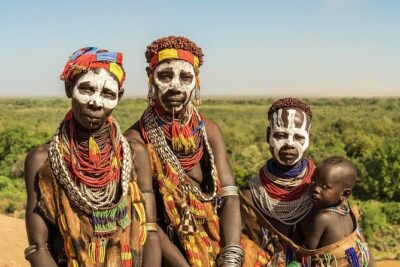
The second day is one of the cultural high points. You travel across dry plains to Kolcho village on the banks of the Omo River, where the Karo are known for traditional body painting. The setting is important: this is not a museum display, but a community visit where local customs and visitor access need to be handled with care.
Your guide and local arrangements matter greatly here. Village and elder payments are included, which helps make the visit more organized. You should still ask before taking photographs and follow the guide’s instructions about where to stand and when to approach people.
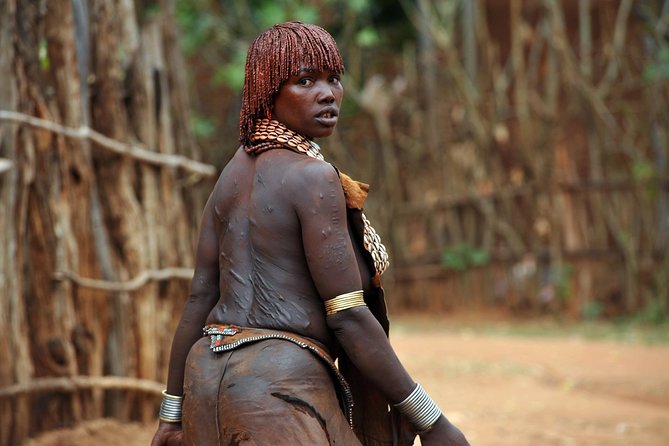
In the evening, you visit a Hamer village near your accommodation. The Hamer are known for red-dyed, plaited hair, leather skirts decorated with shells, and careful personal presentation. Their homes are made from local mud, wood, and thatch, and a typical settlement is described as an extended family group of roughly 10 to 15 huts.
I like the way this visit offers more than a quick photo stop. You get a sense of how the village is arranged around family life and daily work. At the same time, the description of villages being free from western influence should not lead you to expect a frozen world. Customs change, and your guide should explain what is traditional, what is changing, and what is appropriate for visitors.
The day is listed at about seven hours. That includes substantial driving, so this is not a relaxed walking tour. Bring water, sun protection, and patience for rough or slow roads.
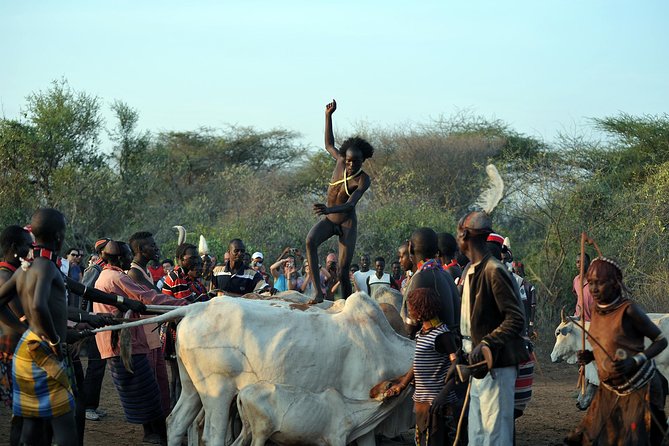
A family account included a visit to Hamer bull jumping during a five-day Omo trip, but this is not promised in the stated schedule. Treat it as a possible cultural event only if local timing and permission allow it.
Day 3: Key Afar, Jinka, and a small museum
Day three crosses dry sandy plains toward Key Afar, then continues through more fertile rolling hills to Jinka. The change in terrain gives you a useful sense of how quickly conditions shift in southern Ethiopia.
In Jinka, you visit a small museum focused on local tribal customs. This is a valuable stop because it can give context before the more personal village visits that follow. I prefer seeing cultural information explained first, rather than arriving with only a collection of photographs and no understanding of what you are seeing.
You may also take an optional walk through town, meeting local people along the way, before driving to your accommodation. The word optional matters. If the heat, road fatigue, or timing has caught up with you, you may prefer to use the time to rest.
The schedule again allows about seven hours. The published stop label says Dasenech Village, but the description focuses on the drive to Key Afar and Jinka. That mismatch is worth clarifying with Ethio Travel And Tours before departure. Ask exactly which communities and stops are planned for each day.
More Omo Valley journeys south:
- 6 Days Lalibela, Omo Valley and Harar
★ 5.0 · 15 reviews - 5 Days Omo Valley Tours
★ 5.0 · 15 reviews - Private Omo Valley Tours From Addis Ababa
★ 5.0 · 12 reviews - 9 Days Tours To Danakil Depression, Simen MNP, Lalibela With Omo Valley Tribes
★ 5.0 · 11 reviews
Day 4: Mago National Park and a Mursi village
Day four starts early, and that is sensible. You drive across the mountains through some of southern Ethiopia’s finest scenery, then enter the drier Mago National Park area. You might see dik-dik and lesser kudu, though wildlife sightings are never guaranteed.
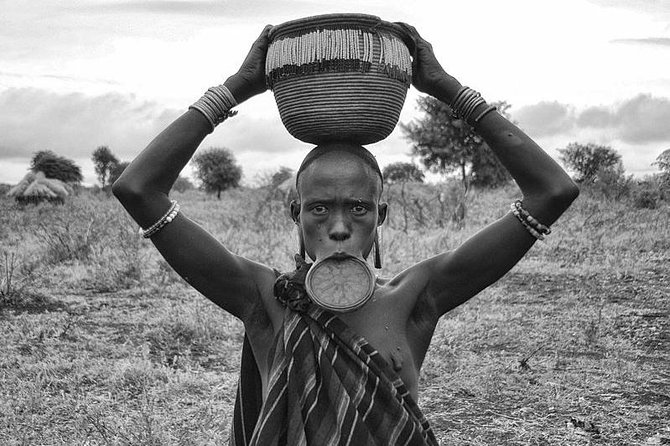
The main cultural visit is a Mursi village. Mursi women are widely known for decorated clay plates placed in the lower lip, a practice that begins in adolescence and may involve increasingly large plates. The description also notes that the custom is used less often now, and some older women have loose skin but no plate in place.
That detail is important. You should not treat the lip plates as a spectacle detached from the people wearing them. Ask your guide about the custom, request permission for photographs, and remember that a village visit involves real families, not performers waiting for a camera.
The day ends with a drive to Konso. That makes it a demanding day, with an early start, a park visit, a community visit, and a long transfer. The reward is variety: mountain scenery, dry plains, possible wildlife, and a cultural encounter that is very different from the Karo and Hamer visits.
Local guides and scouts are provided where needed. That is particularly useful in a remote park setting, where access and route conditions may depend on local knowledge.
Day 5: Dorze homes and the crocodiles of Lake Chamo
The final day begins with a drive toward Arba Minch, crossing from fertile ground into drier plains. Arba Minch means Forty Springs and is known here for its fruit-growing valley and ensete, often called the false banana.
From Arba Minch, you drive into the Chencha mountains to visit a Dorze village. The Dorze are noted for wool and cotton weaving, and the visit includes a look inside a tall, beehive-shaped thatched home. You can also see weaving and a demonstration of the many uses of the false banana.
This is one of the best stops for practical cultural understanding. The focus is not only on clothing or architecture. You see how a local plant supports daily life and how weaving remains an important skill. Shopping is part of the visit, especially for woven goods, so carry a little room in your luggage if you want to buy something directly from the makers.
After a picnic lunch, you drive to Lake Chamo for a boat trip. The aim is to spot large crocodiles and possibly hippopotamuses before returning to the airport. The boat ride gives the trip a welcome change from the Land Cruiser, though animal sightings depend on conditions and luck.
The day is listed at about five hours, followed by the return flight from Arba Minch to Addis Ababa. Because the flight is the final link in a tightly timed day, confirm how the tour handles delays and whether the domestic ticket is arranged separately.
Roads, vehicles, guides, and group size
The main road transport is by 4WD Toyota Land Cruiser. That is the right type of vehicle for the route, but it does not turn rough roads into smooth ones. Seven-hour driving days can feel longer than they sound, especially after early starts and visits in the heat.
The maximum group size is 12. That is small enough to make village visits more manageable than a large coach tour, although the quality of the experience will still depend on the guide’s communication and local relationships.
One guide praised in the supplied feedback is Euale, who worked in the Omo Valley. If you want him specifically, ask whether he is available for your dates rather than assuming he will lead the trip.
The company is Ethio Travel And Tours. Feedback includes both strong praise for the route, accommodation in Konso, the boat trip, and overall help, as well as a serious complaint about poor communication and an unexpected group arrangement. That contrast gives you a clear practical lesson: confirm whether your booking is private or shared, who your guide will be, and exactly what is included.
What is included, and what you still pay for

Included services are:
- Accommodation as stated in the program
- Addis Ababa airport transfers and other listed transfers
- 4WD Toyota Land Cruiser transport
- Local guides and scouts where needed
- Lake Chamo boat trip
- Entrance fees
- Village and elder payments
- Bed and breakfast
- Four breakfasts
Not included are domestic and international flights, alcoholic drinks, camera or videography fees, laundry, internet, fax, telephone, and personal expenses.
The word bed and breakfast can be confusing beside the separate breakfast line. I would ask whether all four breakfasts are included, which the information indicates, and whether lunch and dinner are always at your own expense. The picnic lunch on day five is mentioned in the route, but the inclusions do not clearly say whether it is covered.
Who will get the most from this trip
I would recommend this tour to you if you want a compact introduction to several southern Ethiopian cultures and do not mind long drives. It suits adults who value local encounters, changing scenery, and a structured route more than comfort or free time.
It can also work for families. A five-day trip through the Omo Valley was completed by a family with children aged 14 and 8, including cultural visits and the Hamer bull jumping event. Even so, you should consider the early starts, heat, road time, and the need to behave respectfully in villages.
I would be more cautious if you want a private, slow-paced trip with extensive time in each community. The group cap of 12 is helpful, but it does not guarantee a private departure. Ask that question directly.
The tour requires good weather. If poor weather cancels the experience, you are offered another date or a full refund. For other cancellations, you receive a full refund only if you cancel at least three full days before the start time. Within three days, the payment is not refunded.
Should you book the Omo Valley five-day tour?
Book it if you want a tightly planned route that combines Karo, Hamer, Mursi, and Dorze communities with Mago National Park and Lake Chamo. The included local payments, 4WD transport, guide support, and boat trip give the $1,153.85 price real value, provided your domestic flights are added to the budget with full clarity.
Before booking, send three questions: Is the trip private or shared? Are the Addis Ababa to Arba Minch and return flights included in the final quoted price? Who will guide the Omo Valley section, and is Euale available?
If the answers are clear, this is a strong choice for a short, demanding cultural tour. If communication remains vague, choose a provider that gives you a precise day-by-day plan and complete cost before you commit.
FAQ
How long is the Omo Valley tour?
The experience lasts approximately five days.
Where does the tour begin and end?
It begins in Addis Ababa, with a flight to Arba Minch, and ends with a flight from Arba Minch back to Addis Ababa.
What communities are visited?
The route includes visits connected with the Karo, Hamer, Mursi, and Dorze communities. It also includes Konso, Jinka, and Arba Minch.
Is transportation included?
Ground transportation in a 4WD Toyota Land Cruiser and listed transfer services are included. Domestic flights are listed as excluded, so confirm the flight cost before booking.
What is the maximum group size?
The tour accepts a maximum of 12 people.
Is the Lake Chamo boat trip included?
Yes. The boat trip on Lake Chamo is included, with the aim of seeing large crocodiles and possibly hippopotamuses.
Are meals included?
Accommodation is provided on a bed and breakfast basis, and four breakfasts are included. Other meals are not clearly listed as included.
What happens if I cancel?
You receive a full refund if you cancel at least three full days before the experience start time. Cancellations or changes made within three days are not refunded or accepted.
More Five-Day Trips from Addis Ababa
- 5 DAYS Lalibela, Axum, Tigray churches and Danakil
★ 5.0 · 34 reviews - Danakil Depression and Lalibela 5 Days Tours
★ 5.0 · 28 reviews - 5 Days North Ethiopia Tours
★ 5.0 · 23 reviews - 5 DAYS Axum, Lalibela, Tigray churches and Danakil
★ 4.5 · 22 reviews
Just added around Addis Ababa
- 6 days 5 nights Addis Abeba sightseeing & Lalibela Rock-Hewn Churches★ 5.0 · 3 reviews
- Addis Ababa Essentials: Flexible Full-Day City Sightseeing★ 5.0 · 3 reviews
- 4 Hours Addis Ababa Cultural Discovery Tour★ 5.0 · 3 reviews
- Northern Ethiopia (Historic route)★ 5.0 · 3 reviews
- Day Trip Around Addis Ababa★ 5.0 · 3 reviews
- Addis Ababa Half Day Shopping Tour★ 5.0 · 3 reviews
- Monastic Marvels Exploring the beauty of Debre Libanos Monastery★ 5.0 · 3 reviews
- 6 days Omo valley cultural Tour★ 5.0 · 3 reviews
Omo Valley Tribal Tours, compared.

Lalibela, Axum, Danakil and Omo Valley 8 DAYS
Read our review →
3 days around Arbaminch and Konso Adventure Tours Life Time
Read our review →Danakil Depression, Lalibela, Omo Valley and Simien Mountains
Read our review →


9 Days Tours To Danakil Depression, Simen MNP, Lalibela With Omo Valley Tribes
Read our review →
8 Days Lalibela,Danakil Depression and Omo Vally Tours
Read our review →Browse the lists this tour appears in