
Reviewed · ADDIS ABABA
Ethiopia coffee cupping class/Ethiopian food injera making
Ethiopian coffee and injera are not just food and drink here. They are part of how people welcome one another, spend time together, and share daily life. This four-hour Addis Ababa experience lets you taste that culture through a guided coffee cupping session and a hands-on injera class.
I like the direct, practical format: you learn how coffee is grown, processed, roasted, and tasted, then put your hands to work making bread. I also like the private setup, since guides such as Joe, Mike, Aelaf, and Jonas have adjusted timing and conversation to suit individual interests. The main consideration is that the actual injera class is fairly short, around 30 minutes in the stated schedule, so this is more of a cultural introduction than a full cooking course.
Key points to know
- Coffee cupping with a local expert: Compare Ethiopian coffees, notice tasting notes, and learn about growing areas, roast levels, and quality control.
- Injera made on a traditional mitad: Mix, ferment, and cook Ethiopia’s sourdough flatbread, including the tricky flip.
- A shared Ethiopian meal: Eat your handmade injera with dishes such as shiro and misir wot.
- Private pickup in Addis Ababa: An English-speaking guide collects you and helps coordinate the day in advance.
- More than a food lesson: Guides often add context about Addis Ababa, local customs, religion, and everyday life.
- Best for adults and older teenagers: The activity is not suitable for children under 15 or people with altitude sickness.
Why coffee and injera make such a good pair
Coffee and injera tell two different parts of the Ethiopian story. Coffee gives you a close look at farming, roasting, tasting, and ceremony. Injera brings you into the kitchen and shows how food becomes a social event.
The experience begins with coffee, where you learn to pay attention rather than simply drink. A local coffee expert explains the difference between growing regions, roast levels, aromas, and tasting notes. You might notice fruit, spice, acidity, or other flavors, but the point is not to memorize fancy coffee language. It is to understand why two Ethiopian coffees can taste so different.
Injera offers a more physical lesson. You work with fermented batter, learn how it is spread across a hot mitad, and try to lift or flip the finished bread without tearing it. That last step sounds simple until you see how thin and flexible injera needs to be.
The two activities also balance each other well. Coffee is guided tasting and conversation. Injera is hands-on work followed by lunch. You are not simply watching a demonstration, and you are not expected to prepare an entire Ethiopian feast from scratch.
More coffee ceremonies in Addis Ababa:
- Ethiopian Culinary Tour – Market, Food, Coffee Ceremony & more
★ 5.0 · 65 reviews - Market Tour and Cooking Class with a Coffee Ceremony at a Home in Addis Ababa
★ 5.0 · 32 reviews - Vintage Coffee Shops, Restaurants, Sightseeing in Addis Ababa
★ 5.0 · 17 reviews
Addis Ababa pickup and the shape of the four-hour visit
Pickup is included within Addis Ababa, and the provider contacts you the day before to organize the details. That small bit of planning matters in a city where road time can affect the shape of a half-day outing.
The published schedule lists about 45 minutes for coffee and 30 minutes for the cooking class, with the full experience lasting four hours. The remaining time allows for pickup, transfers, explanation, eating, and the coffee ceremony. Exact starting times depend on availability, so check the schedule before booking.
This is a private group, not a large shared class. You can ask questions without waiting for a dozen other people, and the guide can explain unfamiliar food or customs at your pace. The guides also act as local interpreters between the activity and the city around it.
That wider context is one reason this can feel like more than a restaurant meal. Joshua, for example, spent time with Aelaf, also called Ale, who explained city life, culture, and religion during the drives. The day included coffee production details, an injera class near Entoto, and extra sightseeing at Menelik Palace and its church museum. Those additions are not guaranteed parts of this package, but they show how the private format may allow some flexibility if time and plans permit.
Do not count on every extra stop. Book this for the coffee and injera experience first, and treat additional sightseeing as something to discuss with your guide.
The coffee cupping session, from bean to tasting cup
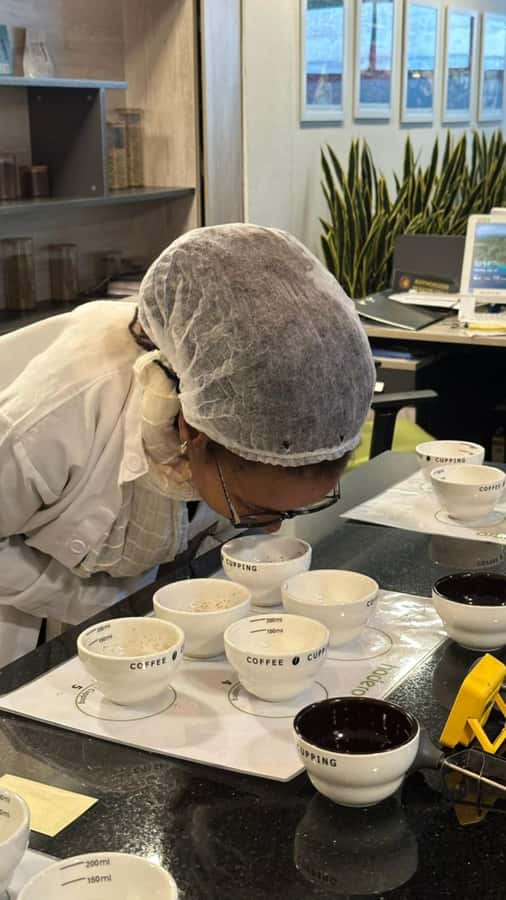
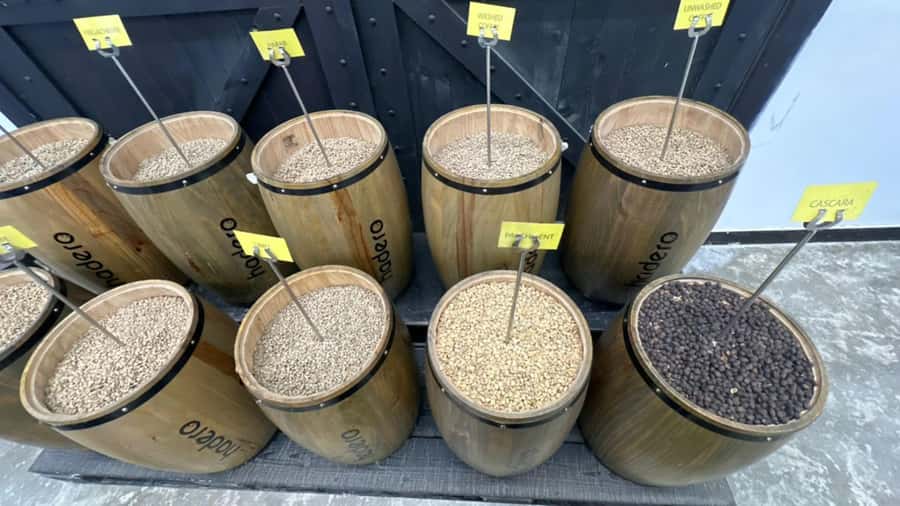
The coffee segment is the strongest choice for anyone who wants more than a quick ceremonial cup. You learn about Ethiopian coffee from cultivation and processing through roasting and quality control, then taste different varieties in a guided session.
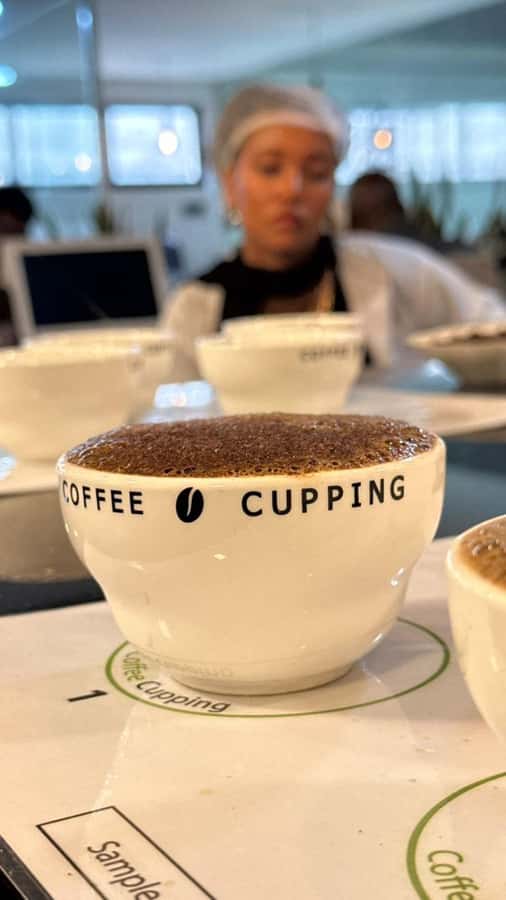
At a coffee cupping, the goal is comparison. You smell the grounds, taste the brewed coffee, and look for differences in aroma, body, acidity, and finish. The local expert helps you identify tasting notes instead of leaving you to guess what you are drinking.
You also learn about Ethiopian growing regions and roast levels. This is useful because Ethiopian coffee is not one single flavor. The growing area, processing method, and roast can all change what reaches your cup. Even if you are not a coffee specialist, you leave with a better way to judge what you like.
Some bookings have included a visit to the Hadero Coffee building, where the coffee session covered cultivation, processing, quality control, cupping, and tasting. One guide, Joe, also arranged a visit to Hadero for a more detailed look at the coffee side of the experience. The exact setting may vary, but the useful question to ask at the start is how the beans move from farm to cup.
The tasting lasts about 45 minutes in the basic schedule. That is enough time for a clear introduction, though serious coffee enthusiasts may wish it were longer. You should expect an informative tasting rather than a professional certification course.
I would pay close attention to the guide’s explanation of roasting. A darker roast can change the balance of the coffee, sometimes making the roast character more obvious than the original bean. Comparing roast levels side by side helps make that point in a way a lecture cannot.
Making injera on a traditional mitad
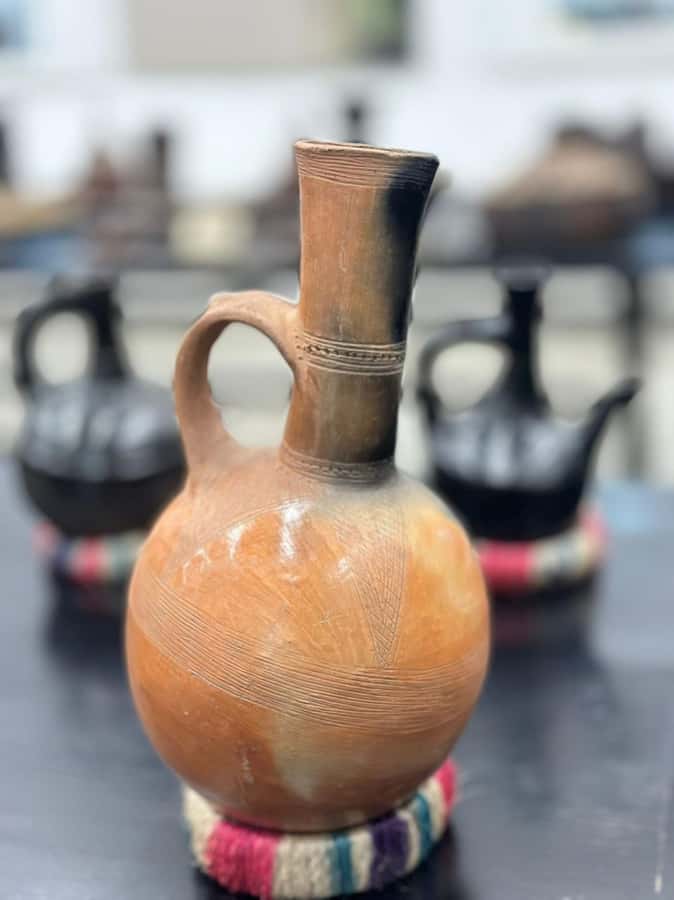
After coffee, you move into the cooking portion. The class introduces you to the batter, fermentation, spreading, and baking of injera, Ethiopia’s familiar sourdough flatbread.
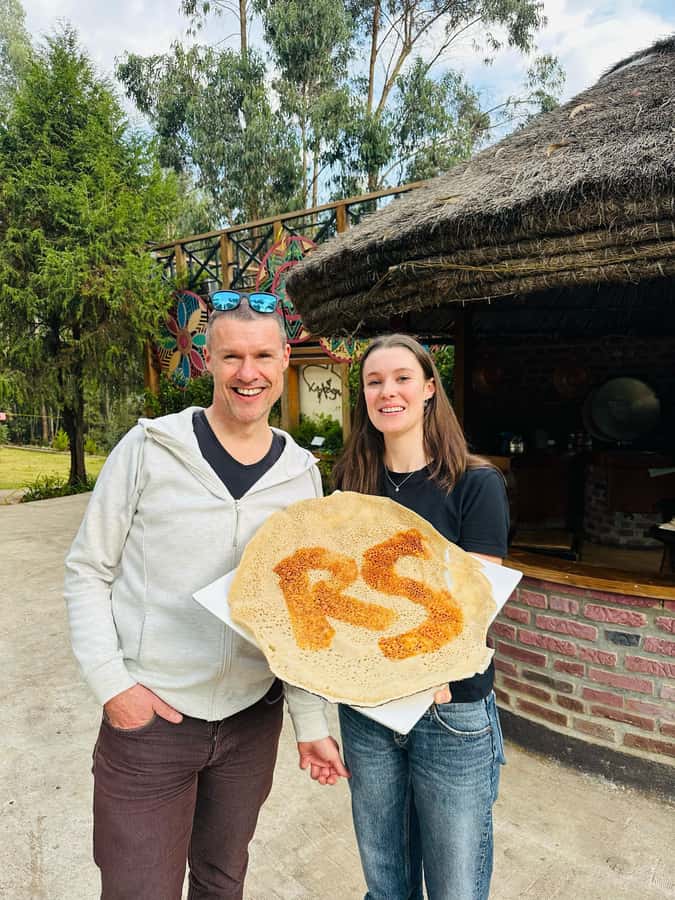
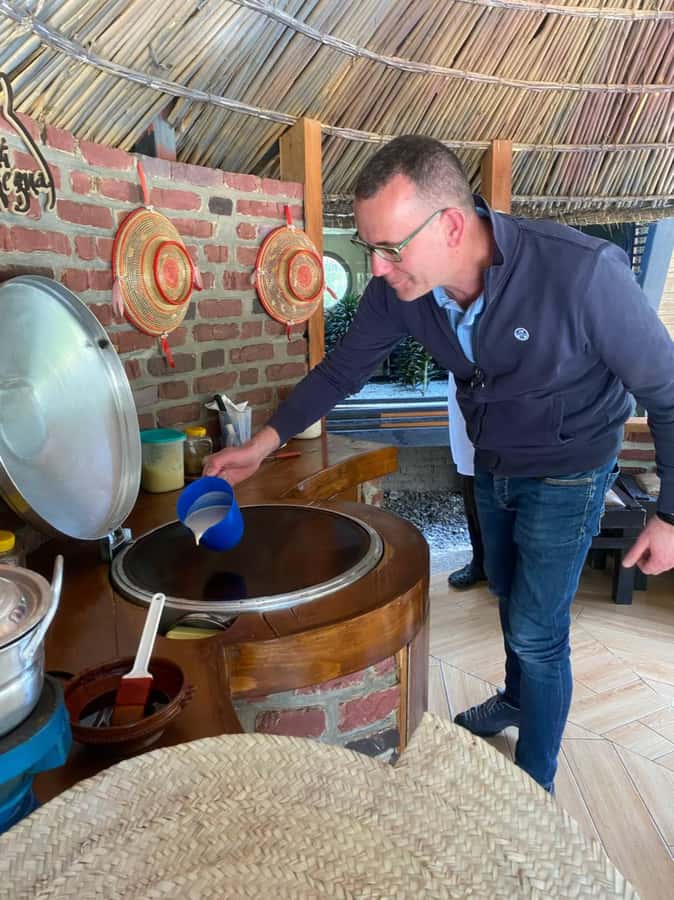
The batter is mixed and fermented before it is cooked. The fermentation gives injera its distinct sour taste and soft, slightly spongy texture. You learn how the batter is poured onto the hot mitad in a broad circle, then cooked until the surface develops its characteristic pattern.
The most memorable skill is the flip. Injera is large, thin, and delicate, so lifting it cleanly takes practice. You will receive hands-on instruction, but do not expect a perfect restaurant-style result on your first try. That is part of the fun, and the final meal does not depend on your producing a flawless circle.
The cooking class is listed at roughly 30 minutes, so the lesson moves quickly. You get an introduction and a chance to participate, rather than a long course covering every stage of batter preparation. Since fermentation takes time, the host must prepare some elements ahead of the live session.
You use traditional cooking tools, including the mitad. Ingredients and spices are supplied, and cooking equipment is included. The setting is described as a clean, comfortable indoor or outdoor kitchen, which gives the class a more personal feel than a demonstration behind a restaurant counter.
The lesson also gives you a useful way to understand Ethiopian eating customs. Injera is not just a side dish. It serves as the base and the utensil for the meal, with stews and vegetables arranged on top. You tear off a piece, use it to pick up food, and share the plate with the people around you.
More food tours in Addis Ababa:
- Hidden Treasures of Addis Ababa – Food, Culture and History Tour
★ 5.0 · 57 reviews - Addis Ababa City Tours With Cocking Class of Ethiopian Food
★ 5.0 · 20 reviews - Food tours in Addis Ababa tastever with lunch
★ 5.0 · 9 reviews - city tour of Addis Ababa ( history ,culture , food and more)
★ 5.0 · 7 reviews
Lunch with shiro, misir wot, and fresh injera
Once the injera is ready, you eat it with a range of Ethiopian dishes. The supplied meal includes local sides such as shiro and misir wot, along with other dishes prepared for the class.
Shiro is a smooth stew made from ground chickpeas or other pulses, while misir wot is a lentil stew seasoned with Ethiopian spices. The meal lets you compare different textures and levels of heat against the sourness of the injera.
This is where the cooking lesson pays off. You can taste the bread while it is fresh, then see how its mild sour flavor works with stews. If you are new to Ethiopian food, ask your guide to explain each dish before you begin. The English-speaking guide can translate and help you understand what you are eating.
The meal is communal, in keeping with the social role of Ethiopian food. You are not rushing through a plated lunch between sightseeing stops. You have time to sit, eat, and talk with the guide or local hosts.
The package includes the traditional lunch, local dishes, bottled water, ingredients, and equipment. Personal expenses and extra food or drinks are not included, so bring money if you want something beyond the provided meal. Alcohol and drugs are not allowed.
The coffee ceremony brings the day together
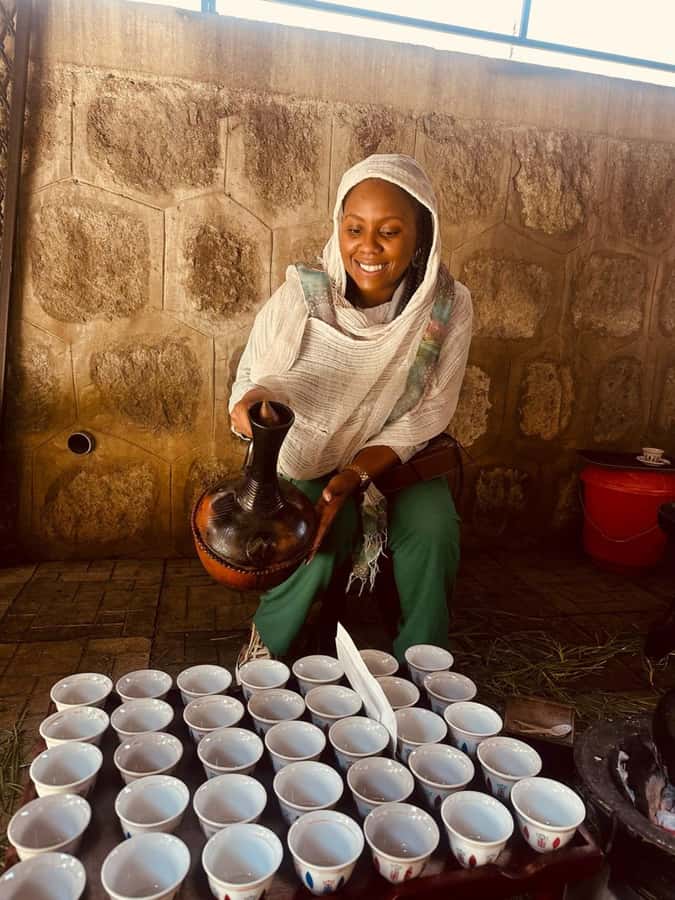
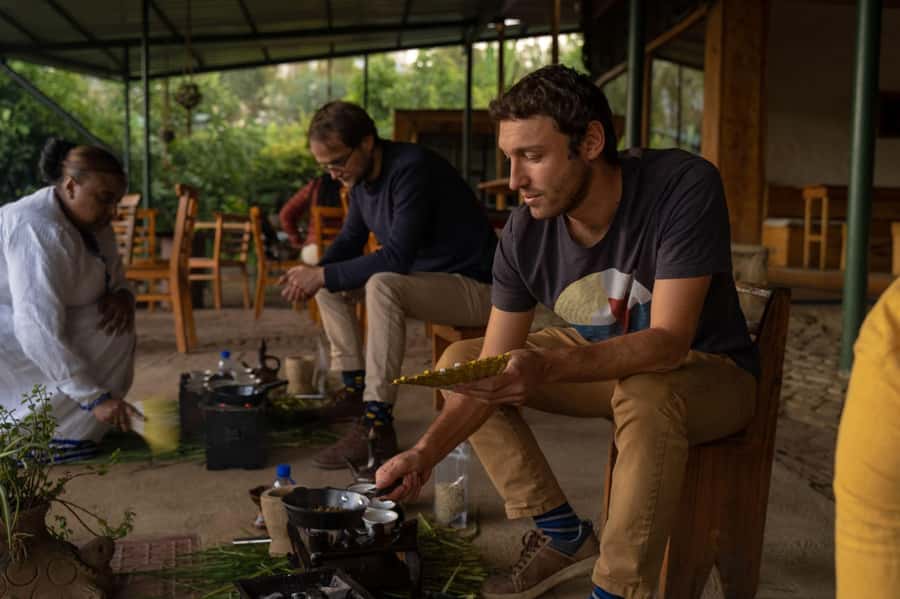
The final coffee ceremony gives the experience a slower finish. Ethiopian coffee is often linked with welcome, conversation, and hospitality, so the ceremony helps explain why coffee matters beyond its flavor.
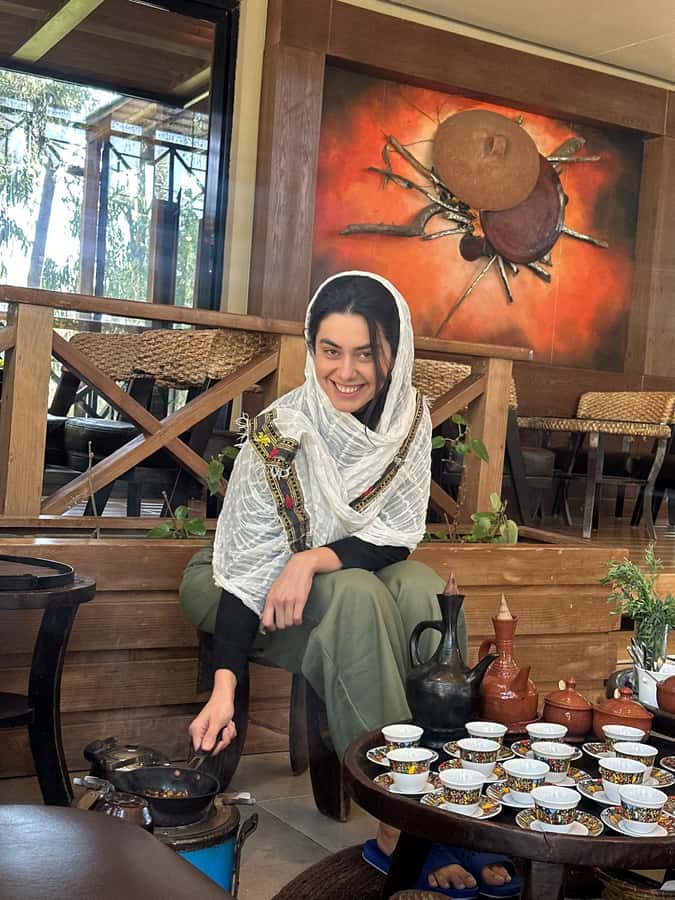
You can expect the coffee to be prepared using traditional equipment, including a clay coffee pot. The ceremony is not simply another tasting round. It is a chance to sit with the people who hosted you and talk about what you have learned.
This is also a good time to ask practical questions. You might ask how coffee fits into a typical day, how people serve it at home, or what makes a particular coffee different from another. The value comes from the exchange, not just from the drink.
The combination of tasting and ceremony is especially useful for coffee lovers who normally experience Ethiopian coffee only in a cafe abroad. Here, you see the product in a social and cultural setting. You also get a clearer sense of why serving coffee can take time and why that time is considered worthwhile.
Guides who add local context
The provider uses English-speaking local guides, and several names appear in the experience: Joe, Mike, Aelaf or Ale, and Jonas. Your guide may be different, but the format depends heavily on the person leading the day.
Joe has guided visitors through coffee and injera in Entoto, then added views of Addis and a stop at a honey shop. Mike has been described as a caring guide with strong storytelling, and one day included a meal with his friends after plans changed. Aelaf coordinated pickup carefully, drove safely, translated during the injera lesson, and explained local culture along the way.
Jonas has also handled pickup and conversation in a personal, relaxed manner. He helped one visitor learn more about Addis than expected through local explanations and easy discussion.
These details matter because a food class can feel flat if the guide only gives instructions. Here, the guide may help you connect the food to daily life, religion, family customs, and the city itself. Still, your exact experience depends on who is assigned and what the schedule allows.
If you have extra interests, mention them before the day begins. You may be able to shape the conversation or discuss an added stop, but only the coffee, injera, meal, ceremony, transport, and stated equipment should be treated as part of the booked experience.
What the $94 price includes
At $94 per person, this is not the cheapest way to eat lunch in Addis Ababa. You are paying for a private half-day outing, pickup, an English-speaking guide, a coffee expert, tasting samples, a cooking lesson, food, equipment, and cultural explanation.
The value is strongest if you want structure and personal attention. Arranging a coffee cupping, a private kitchen lesson, transport, and a local host separately could take time, especially if you do not speak the local language. Here, those pieces are brought together in one booking.
It is less valuable if you only want to sample Ethiopian food. A restaurant meal will cost less and may offer a broader menu, while this experience gives you participation and context rather than a simple lunch.
I also like that there are no surprise equipment or ingredient costs. The class supplies the spices, cooking tools, bottled water, and traditional items such as the mitad and clay coffee pot. You still need to budget for souvenirs or anything beyond the included food and drinks.
The private format makes the price easier to justify for couples, solo visitors who want a guide, or small groups with a strong interest in food and coffee. Families with younger children should note the minimum age of 15.
Who should book this experience
I would recommend it to coffee drinkers who want to understand Ethiopian coffee at its source, food lovers who enjoy getting involved, and culture seekers who prefer a kitchen table to a standard city tour.
It is also a good choice for a first visit to Addis Ababa. The guide can help you get oriented, explain parts of city life during the drive, and introduce food customs that you might otherwise miss.
You should be comfortable with a flexible half-day. Transport time, pickup coordination, and the setting of the coffee and cooking portions are part of the experience. The tour may include time near Entoto or other Addis locations, but the exact arrangement should be confirmed with the provider.
This is not the right pick if you want a long professional cooking course, a full-day sightseeing tour, or a child-focused activity. The injera lesson is brief, and the main focus is cultural introduction through coffee and food.
People with altitude sickness should not book it, and children under 15 are not considered suitable. The activity is conducted in English, so you should be comfortable following an English-speaking guide.
Booking advice and final verdict
Book this experience if you want to leave Addis Ababa with more than photographs and a restaurant recommendation. You will learn how Ethiopian coffee is assessed, try making injera yourself, eat the results with local stews, and share a ceremony built around conversation.
The best reason to choose it is the combination of hands-on food preparation and personal guiding. The strongest praise has gone to guides who communicate clearly, arrive early, coordinate pickup, translate instructions, and add local stories without making the day feel stiff.
The main limitation is scope. Four hours cannot provide a full course in coffee production and injera baking. The class is a well-shaped introduction, with the coffee portion lasting about 45 minutes and the cooking lesson about 30 minutes before the meal and ceremony.
For $94, I think it is good value for a private group that wants food, coffee, transport, and local interpretation in one half-day. I would confirm the pickup time and planned locations the day before, arrive ready to participate, and ask the guide whether any extra Addis stops can fit. Free cancellation is available up to 24 hours ahead, and you can reserve now and pay later, which helps if your city plans are still changing.
FAQ
Where does the experience take place?
The experience begins with pickup in Addis Ababa and returns to Addis Ababa. Some arrangements have included coffee at the Hadero Coffee building and injera making in or near Entoto National Park.
How long does the activity last?
The full experience lasts four hours. The stated schedule includes about 45 minutes for coffee and about 30 minutes for the cooking class, with the remaining time covering transport, food, explanations, and the coffee ceremony.
What language is the tour conducted in?
The live tour guide speaks English.
Is this a private tour?
Yes. The experience is arranged for a private group.
Is pickup included?
Yes. Pickup in Addis Ababa is included. The provider contacts you the day before to organize the pickup details.
What will I learn during coffee cupping?
You will learn about Ethiopian coffee-growing regions, roast levels, aromas, tasting notes, brewing methods, cultivation, processing, and quality control.
Do I get to make injera myself?
Yes. The workshop includes hands-on instruction for mixing, fermenting, and baking injera on a traditional mitad, including guidance on flipping it.
What food is included?
A traditional Ethiopian lunch is included, with your handmade injera and local dishes such as shiro, misir wot, and misir wot, along with other accompanying dishes. Wait, duplication? Need correct final must edit. We must not have duplicated. Say shiro, misir wot, and other local sides. Continue.
Are cooking equipment and ingredients included?
Yes. The activity includes cooking and tasting equipment, ingredients, spices, and traditional tools such as a mitad and clay coffee pot.
Can children join the experience?
The activity is not suitable for children under 15 years old.
What is the cancellation policy?
You can cancel up to 24 hours in advance for a full refund. Reserve now and pay later is also available.
More Workshops in Addis Ababa
- Ethiopian Cooking Class and Coffee Ceremony with a Local in Addis with transfers
★ 5.0 · 14 reviews - Unique Ethiopian Cooking Class and Coffee Ceremony with a Local in Addis Ababa
★ 4.5 · 7 reviews - Addis abeba Full Cooking class.
★ 5.0 · 6 reviews - Private Ethiopian Home Cooking Class in Addis Ababa with Transfer
★ 5.0 · 5 reviews
More Food in Addis Ababa
- Local Ethiopian Food Tour
★ 4.0 · 7 reviews - Local Ethiopian Food Tour
★ 4.0 · 4 reviews - Addis Food Tasting Tour
★ 5.0 · 4 reviews - Half Day Food Tour Addis Ababa With Airport pickUp And Drop-Off
★ 5.0 · 4 reviews
Just added around Addis Ababa
- 6 days 5 nights Addis Abeba sightseeing & Lalibela Rock-Hewn Churches★ 5.0 · 3 reviews
- 4 Hours Addis Ababa Cultural Discovery Tour★ 5.0 · 3 reviews
- Addis Ababa Essentials: Flexible Full-Day City Sightseeing★ 5.0 · 3 reviews
- Day Trip Around Addis Ababa★ 5.0 · 3 reviews
- Northern Ethiopia (Historic route)★ 5.0 · 3 reviews
- Monastic Marvels Exploring the beauty of Debre Libanos Monastery★ 5.0 · 3 reviews
- Addis Ababa Half Day Shopping Tour★ 5.0 · 3 reviews
- 6 days Omo valley cultural Tour★ 5.0 · 3 reviews
Addis Ababa Tours, compared.

Full Day Tour of Addis Ababa with Hotel Pickup and Drop-off
Read our review →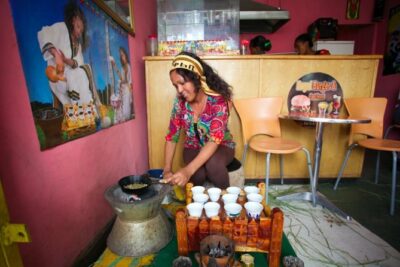
Day Trip From Addis Ababa See Historical Monastery,Stunning Nature,Animals,Birds
Read our review →
Addis Ababa: Debre Libanos, Blue Nile Gorge, and Cave Tour
Read our review →
Addis Ababa Guided City Tour With Airport & Hotel Pick Up
Read our review →
Breathtaking Nature, Wildlife and Cave Church Tour – Free Pickups
Read our review →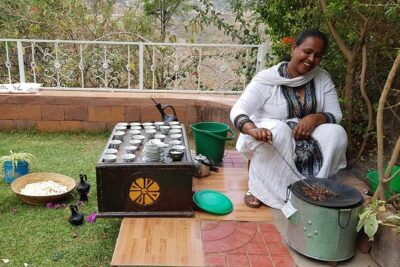
Browse the lists this tour appears in